Gabon rejects Trump’s migrant plan with firm sovereignty stance
Libreville, June 4, 2026 – By declining to host migrants expelled from the United States, Gabonese President Brice Clotaire Oligui Nguema has delivered a political message that extends far beyond migration policy alone.
Behind this decisive announcement lies a reaffirmation of national sovereignty, signaling a shift in Gabon’s diplomatic approach. The country now prioritizes its own interests while maintaining balanced relations with global powers.
Speaking to international media, the Head of State left no room for doubt regarding Gabon’s position on a recent U.S. proposal. Washington had sought partners to receive migrants facing deportation, but Libreville firmly rejected the idea.
« On this matter, we did not reach an agreement. I did not accept them in my country. I say this with complete transparency. Gabon is not prepared to sign any deal that does not serve our interests. The position is crystal clear, » stated Brice Clotaire Oligui Nguema.
This stance emerges amid a global tightening of migration policies, particularly in Western nations like the United States, where the Trump administration has revived strategies to outsource the reception of certain deported migrants to third countries.
The global migration challenge
For years, migration management has stood as one of the most pressing geopolitical challenges worldwide. Europe, North America, and emerging economies alike have increasingly sought to shift responsibility for migration flows to other states.
Within this framework, some African nations have agreed to cooperate with Western powers. Rwanda, for instance, has signed multiple agreements to accept migrants transferred from the United Kingdom. Similar discussions have taken place with other African states.
It is in this context that Gabon’s refusal carries particular significance.
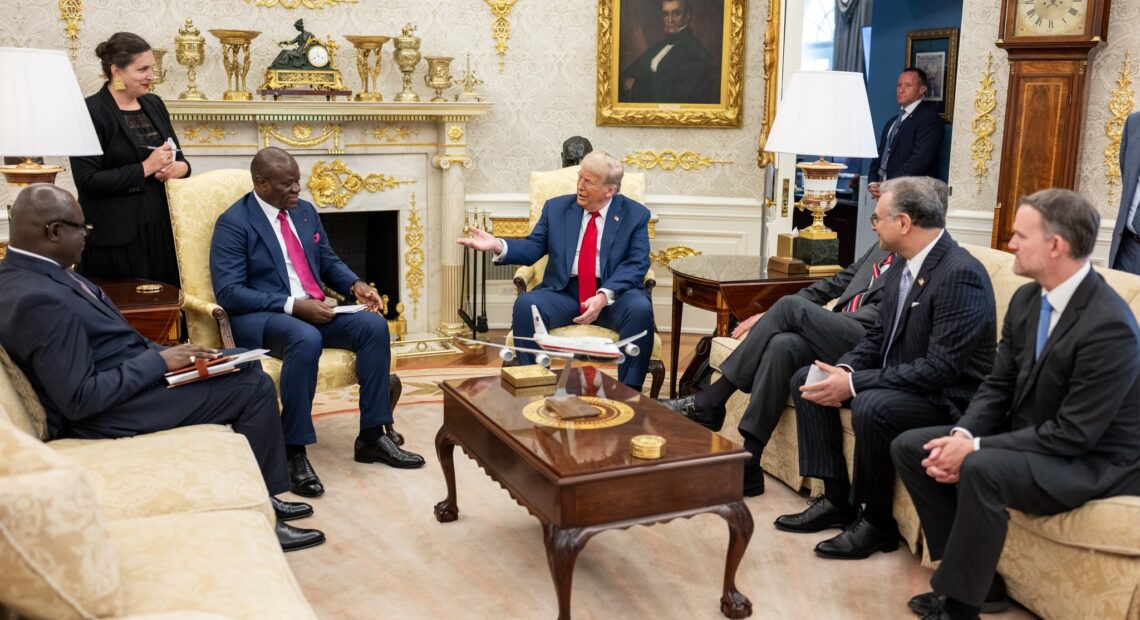
Far from signaling a rupture in relations with Washington, Libreville’s decision underscores a nuanced diplomatic approach. Throughout the discussions, President Oligui Nguema emphasized the strength of Gabon-U.S. ties, even playfully referring to Donald Trump as « my red-tie-wearing friend. »
The message is clear: partnerships endure, cooperation continues, yet Gabon’s interests remain non-negotiable.
Sovereignty as guiding principle
This decision aligns with a series of recent moves reflecting Gabon’s growing assertiveness on the international stage.
Whether through local processing of manganese, renegotiating economic partnerships with foreign stakeholders, or reclaiming military facilities like Camp de Gaulle, the Gabonese government is crafting a narrative centered on national sovereignty.
In this context, the migration debate becomes a highly symbolic issue. Accepting expelled migrants from another continent would have entailed administrative, social, security, and budgetary burdens with unpredictable consequences. For a nation engaged in sweeping economic and social modernization, the priority remains addressing domestic needs.
This position also resonates with widespread sentiment across African public opinion. Many view the continent as an inappropriate host for the migration challenges of distant powers.
A diplomacy of balance
The deeper lesson of this episode may lie elsewhere. Gabon demonstrates that rejecting a major power’s proposal does not necessitate diplomatic confrontation.
This approach contrasts sharply with tensions seen elsewhere, where migration disputes often escalate into open political disputes. By publicly refusing while maintaining a respectful tone toward Washington, President Oligui Nguema projects an image of a sovereign state capable of defending its interests without resorting to conflict.
For international observers, this decision reflects a broader evolution in Africa’s relations with global powers. Partnerships remain vital, cooperation is essential, but African states are increasingly asserting their right to negotiate with greater confidence and autonomy.
Beyond the migration issue, the message from Libreville is unambiguous: Gabon remains open to the world but refuses to let its future be dictated by external forces. In an increasingly fragmented international landscape, this assertion of sovereignty could become a defining hallmark of Gabonese diplomacy in the years ahead.