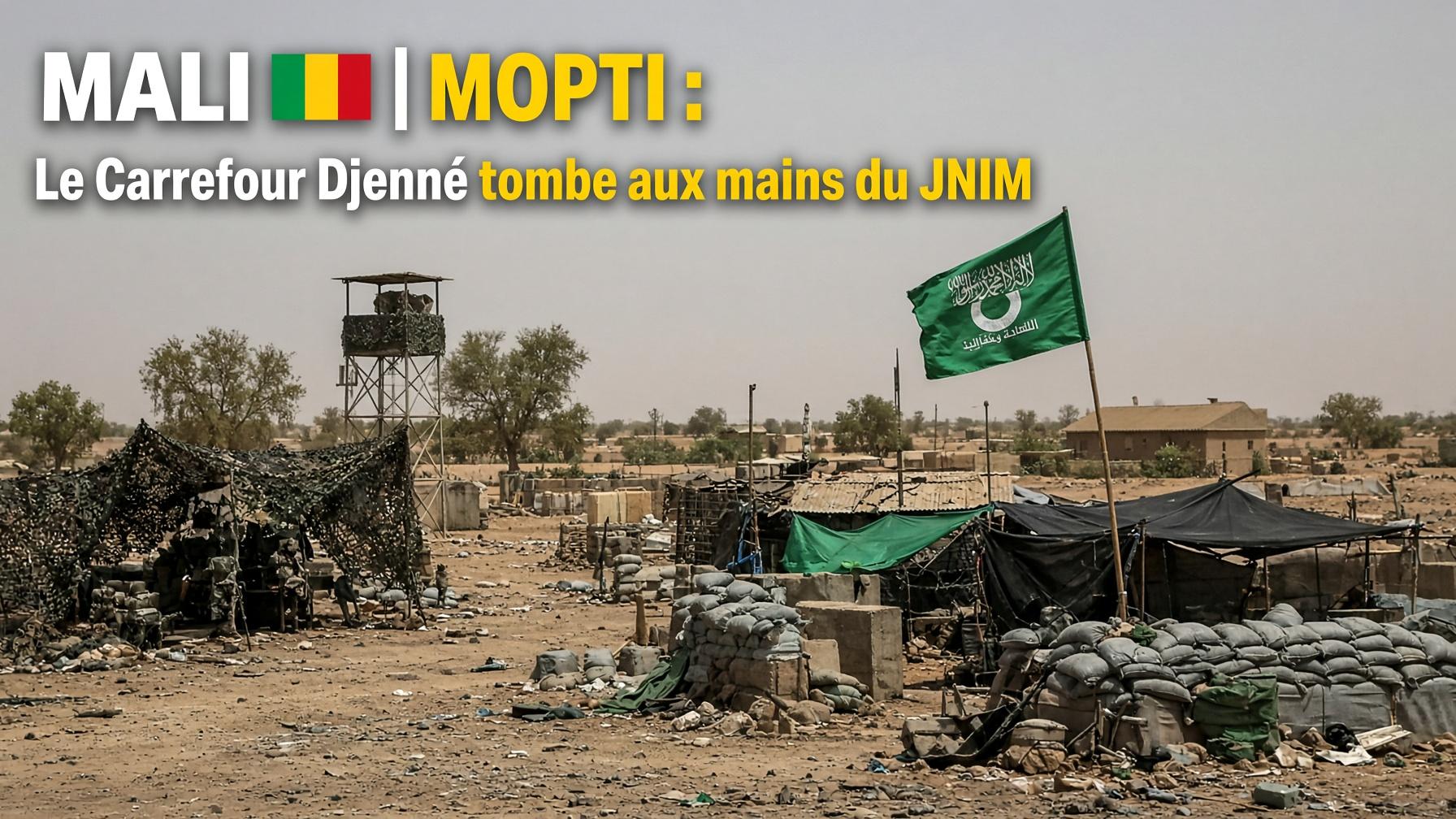
The conflict in Mali has entered a critical phase, with militant offensives expanding from the north toward the capital. Civilians bear the brunt as Bamako struggles to regain control amidst escalating clashes between armed groups and government forces.
Mali’s crisis deepens as armed groups challenge state authority
Mali’s conflict, rooted in the 2012 crisis that saw the north fall to Tuareg rebels and jihadist expansion following a military coup, has evolved but never truly ended. The recapture of Kidal in late 2023 by Malian forces marked a symbolic turning point, yet it failed to restore stability. Instead, it triggered a new wave of retaliatory attacks and counter-offensives, pushing the crisis into uncharted territory.
Recent attacks expose vulnerabilities in Bamako’s defenses
Since 2024, jihadist factions linked to Al-Qaeda, particularly the Group for the Support of Islam and Muslims (GSIM), have intensified strikes near key locations in Bamako, including the Gendarmerie School of Faladié and military airports. By early 2026, coordinated assaults targeted multiple regions, threatening the capital itself. In response, authorities have imposed sweeping restrictions—banning the sale of large motorcycles outside urban centers and designating no-go zones for civilians. While these measures aim to curb mobile attacks, they have also disrupted daily life, hindered economic activity, and limited humanitarian access.
The United Nations Human Rights Office warned in May 2026 of a sharp deterioration in conditions, citing civilian casualties, mass displacements, and severe food shortages following coordinated strikes. The root of the problem lies in a fragmented battlefield where government troops, Tuareg rebels, jihadist factions, and external actors vie for dominance.
How political narratives shape Mali’s war
Mali’s transitional government frames the conflict as a struggle against foreign interference and external conspiracies. This narrative helps consolidate domestic support and justify stringent security policies, but it offers no solution to the country’s deep-seated fractures. Meanwhile, Tuareg rebels seek greater autonomy for the Azawad region, capitalizing on the withdrawal of international forces like MINUSMA and the shifting security landscape. Their tactical alliances with jihadist groups, though unstable, have added another layer of complexity to the conflict.
Jihadist factions, meanwhile, exploit the chaos to undermine state authority. Their strategy does not require seizing Bamako outright; instead, they aim to erode public trust in the government by extending insecurity across key routes and regions. Recent attacks far beyond their traditional strongholds underscore their expanding influence.
International tensions and shifting alliances
The conflict’s dynamics are further complicated by geopolitical maneuvering. In 2024, Mali’s junta accused Ukraine of supporting Tuareg rebels following a major defeat of Malian forces and Russian mercenaries near Tinzaouaten. Kyiv denied the claims, citing a lack of evidence, while the Azawad Liberation Front dismissed accusations of receiving Ukrainian aid. These allegations fueled anti-Western rhetoric in Bamako, particularly against France, which had already terminated its military cooperation with Mali in 2022. Russia, which stepped into the void left by France’s withdrawal, has since become a key ally, strengthening the junta’s sovereignist stance—though it has done little to quell the insurgency.
Who benefits, who suffers?
The junta gains politically by portraying the conflict as a fight against external enemies, which helps rally public support behind its security policies. Yet, this approach fails to address the root causes of instability or the daily hardships faced by civilians. Tuareg rebels, on the other hand, see opportunities in the weakened state presence, particularly in the north, though their alliances with jihadists risk alienating local populations.
The civilian population pays the heaviest price. Northern communities endure ongoing clashes, forced displacements, and the constant threat of reprisals. In Bamako, attacks in 2024 shattered the perception of a secure capital, while the latest security measures in 2026 reveal a government still on the defensive.
What to watch next
The coming months will hinge not only on military developments but also on diplomatic dynamics. Observers must track the evolving relationships between Bamako, Kiev, Moscow, and West African capitals, as well as the junta’s ability to contain GSIM and Tuareg rebel offensives. Whether Mali stabilizes or descends deeper into conflict will depend on these critical interactions.