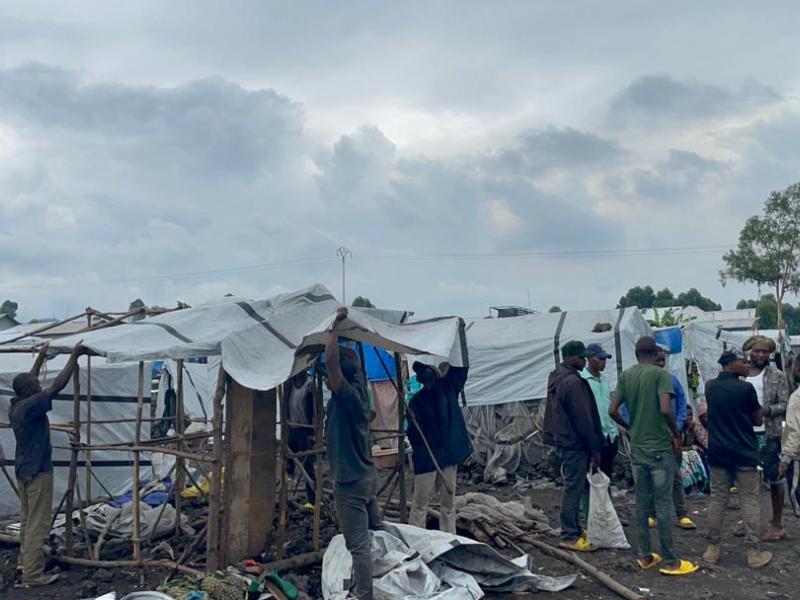
In response to the escalating Ebola virus outbreak in the Democratic Republic of the Congo (DRC), the United Nations Office for the Coordination of Humanitarian Affairs (OCHA) has significantly revised the 2026 Humanitarian Response Plan. This adjustment comes as the Ituri province, already grappling with armed conflicts, emerges as the epicenter of the latest epidemic.
Humanitarian needs surge amid Ebola and security crises
The 17th Ebola outbreak in the DRC has compounded existing humanitarian challenges in the eastern regions. OCHA’s revised plan now targets 10.8 million people out of the 18.5 million identified as requiring urgent assistance. The financial requirements for this response have also increased, now standing at $2.13 billion, up from the initial $1.4 billion appeal launched in January 2026.
Eve Bazaiba, Deputy Prime Minister and Minister of Social Affairs and National Solidarity, emphasized the need for strategic realignment, stating, « The revision of the 2026 Humanitarian Response Plan is essential to address the rapid deterioration of the humanitarian situation, particularly the Ebola outbreak in Ituri since May 2026. »*
Ebola’s devastating impact on vulnerable communities
The outbreak, caused by the Bundibugyo strain, was detected in Bunia, Ituri, in early May 2026. Since then, transmission has spread rapidly across health zones in Ituri, North Kivu, and South Kivu, with active hotspots in Bunia, Rwampara, and Mongwalu. The epidemic has exacerbated pre-existing vulnerabilities, including food insecurity and displacement, further straining humanitarian operations.
OCHA highlighted that the situation is particularly dire in conflict-affected areas, where access to healthcare and essential services remains severely limited. Food insecurity has worsened, with acute malnutrition rising in several regions, while cholera outbreaks continue to pose additional health risks.
Funding gaps threaten response efforts
The revised plan reflects a harsh reality: despite the growing needs, international humanitarian funding has dwindled. The initial 2026 appeal received only 53.3% funding, leaving critical gaps in the response. James Swan, Special Representative of the UN Secretary-General in the DRC and head of MONUSCO, warned that reduced funding—particularly from key donors—has left millions without vital support.
The situation is further complicated by the suspension of humanitarian aid funding by major donors, leaving the eastern DRC in a precarious state. The 2025 Humanitarian Response Plan, valued at $2.54 billion, was already underfunded, and the 2026 plan risks facing the same fate without urgent intervention.
A call for global solidarity
OCHA’s revision underscores the urgent need for increased international support to mitigate the crisis. The plan aims to assist 87 million people across the DRC, requiring a total of $23 billion in funding. While the U.S. has been a major contributor, the UN has called for a broader overhaul of the global humanitarian model to address the widening funding gaps.
The crisis in the DRC serves as a stark reminder of the challenges faced by humanitarian organizations in conflict zones. Without sustained and increased support, the impact of Ebola and other emergencies will continue to devastate communities already reeling from years of instability.