DR Congo’s bid for ITU seat gains momentum with diplomatic push
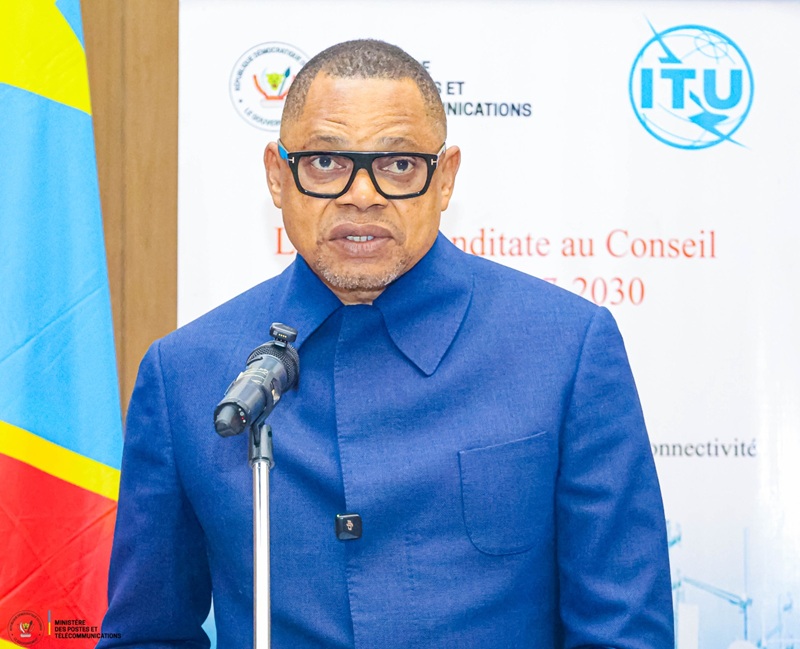
Me José Mpanda Kabangu, the Democratic Republic of the Congo’s Minister of Posts and Telecommunications, is leaving no stone unturned in securing a seat on the International Telecommunication Union (ITU) Council. In a high-profile gathering at Kinshasa’s Hilton Hotel, he hosted ambassadors, diplomatic mission heads, and telecom sector officials to formally launch the country’s candidacy for the ITU’s Region D seat during the upcoming Plenipotentiary Conference in Doha, Qatar, scheduled for November 2026. The vote will determine representation for the 2027–2030 term.
The minister framed the bid as both a call for international solidarity and a strategic move to position the DRC at the heart of Africa’s digital transformation. “Our candidacy reflects our ambition to align the DRC with global connectivity standards while amplifying Africa’s voice in shaping international telecom policies. This is not just about representation—it’s about actively contributing to a digital future that leaves no one behind,” he emphasized to the assembled diplomats, urging them to lobby their home governments in support of Kinshasa’s bid.
Highlighting the DRC’s pivotal role as the host of the African Telecommunications Union (ATU), Mpanda argued that the country’s leadership is essential for advancing Africa’s digital agenda. “With 13 African seats on the ITU Council, the DRC—home to the ATU’s headquarters—must be at the table where decisions are made. We bring unmatched experience, energy resources critical for telecom infrastructure, and a commitment to digital inclusion across the continent,” he stated.
Christian Katende, President of the DRC’s Post and Telecommunications Regulatory Authority (ARPTC), underscored the country’s growing influence in Africa’s digital economy. “With over 110 million people and 74 million mobile subscriptions, the DRC is already a major digital market. Our goal is clear: transform Kinshasa into a regional tech hub and position the DRC as a driver of Africa’s digital sovereignty. But we can’t do this alone—we need partners who believe in an Africa that shapes its own future,” he told the diplomats.
The ARPTC outlined four key commitments underpinning the DRC’s bid:
- Amplifying Africa’s voice in global telecom governance;
- Driving investment in networks, satellites, data centers, and public digital infrastructure;
- Championing balanced digital governance that balances innovation, security, and citizen protection;
- Strengthening African regulators through knowledge-sharing, research, and innovation.
“Supporting the DRC’s candidacy means choosing an Africa that doesn’t just adapt to digital change but leads it. An Africa that invests in its talent, creates homegrown solutions, and builds a future grounded in responsibility,” Katende declared.
Noëlla Ayeganagato, Deputy Minister of Foreign Affairs, reaffirmed the ministry’s full backing for the bid. “The ITU is a vital partner in achieving the Sustainable Development Goals. We urge potential voter states to champion this candidacy, ensuring commitments are honored and diplomatic support is maximized,” she said, adding that the ministry is collaborating closely with the Posts and Telecommunications Ministry to elevate the DRC’s profile in global telecom governance.
The formalization of the DRC’s candidacy will take place during the November 2026 conference in Doha, marking a potential turning point for Africa’s role in shaping the rules of the digital age.
Related Posts
Niger constitution council rules on ousmane sonko’s deputy status amid political tensions
The Constitutional Council of Niger has declared itself incapable of ruling on the deputy status of Ousmane Sonko, the country’s…

Mali: plus de 50 soldats et cinq paramilitaires russes tués dans une attaque djihadiste d’une rare violence
Le camp militaire de Dioura, situé dans le centre du Mali, a été la cible d’une attaque djihadiste d’une violence…

Morocco warns spain on migration surge from ceuta border crisis
Morocco Cautions Spain Over Judicial Ruling Impacting Ceuta Migration Flows Just days before the unprecedented migration surge into the Spanish…