
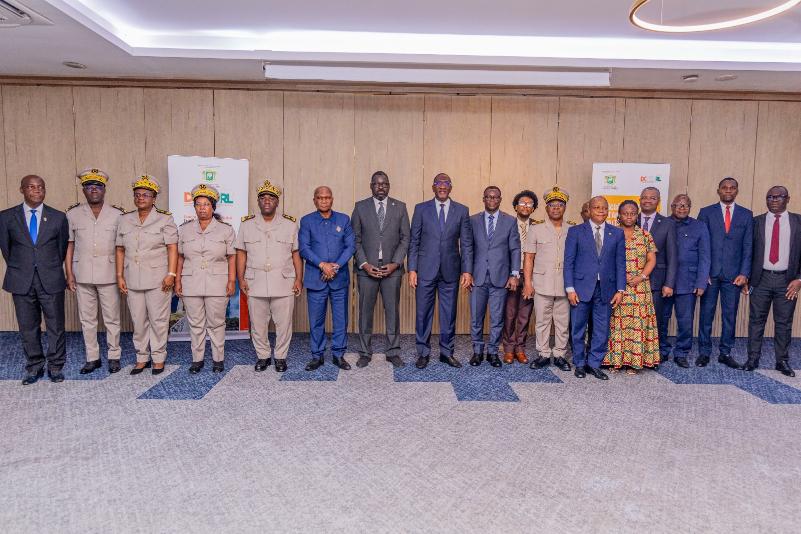
Historic milestone reached as Côte d’Ivoire finalizes long-term territorial plan
Under the leadership of Dr. Souleymane DiarraSSOUBA, Minister of Planning and Development, a landmark national workshop convened in Abidjan to validate the study for the Côte d’Ivoire National Territorial Development Framework (SNAT CI-2045). The gathering brought together key stakeholders including government officials, prefects, local authorities, technical and financial partners, private sector representatives, civil society, academia, experts, and media professionals.
The validation of this study marks a critical milestone toward adopting the country’s first national spatial planning reference document. The SNAT CI-2045 will equip the government with a robust framework to steer public and private investments, enhance the effectiveness of state interventions, and promote balanced territorial development across the nation.
Strategic vision aligns with presidential agenda for sustained growth
The initiative reflects the ongoing commitment of President Alassane Ouattara and his administration to strengthen Côte d’Ivoire’s strategic planning capacity. This effort aims to support the country’s economic, social, and environmental transformation through coordinated, long-term development strategies.
Territorial planning plays a pivotal role in this vision by ensuring a more balanced distribution of investments, unlocking regional potential, and reinforcing the coherence of national development policies. The SNAT CI-2045 will serve as the foundational reference for organizing spatial development, guiding where public and private investments are deployed, and aligning the actions of the state, local governments, and development stakeholders with targeted territorial vocations.
Framework bridges short-term priorities with long-term development goals
As highlighted by Dr. DiarraSSOUBA, the SNAT CI-2045 complements the PND 2026–2030—the medium-term development plan—by translating its priorities into a territorial blueprint. Together, these two frameworks will ensure a unified, coherent public policy approach that empowers every region to contribute meaningfully to the nation’s progress.
« Our mandate as the ministry responsible for territorial planning and regional development is to ensure every part of Côte d’Ivoire has a defined role in the national growth story. This framework will help us achieve that. »
Comprehensive approach addresses key national challenges
The validated territorial orientations represent the culmination of a rigorous, multi-scale participatory process grounded in scientific analysis. They address the most pressing development challenges: reducing regional disparities, managing urban expansion, boosting local competitiveness, strengthening local governance, protecting natural resources, and deepening regional integration.
The SNAT CI-2045 embodies a bold vision for a Côte d’Ivoire where territories are resilient, competitive, and inclusive. It is structured around five strategic pillars:
- Balanced territorial development: Ensuring no region is left behind
- Efficient urban-rural networks: Building stronger connections across communities
- Enhanced territorial governance: Empowering local decision-making
- Performance-driven, resilient economy: Fostering sustainable growth
- Climate transition acceleration: Prioritizing environmental sustainability
Next steps: from validation to legal adoption
Following the workshop, the draft SNAT will be submitted to the government for review before being presented to Parliament. Once adopted into law, the SNAT CI-2045 will become Côte d’Ivoire’s first national spatial planning framework, guiding state investments toward areas where they can deliver the greatest impact and fostering more equitable development nationwide.
You may also like
Why Niger’s soldiers are walking away from Tiani’s army
Behind the sovereignty talk, AES states owe 7,727 billion CFA francs on the regional market
Benin back to school: classes reopen nationwide on 14 september 2026
Sonidep’s 2026 loss: how Niger’s cheap fuel policy is draining the state oil company
Texforces-BF: a textile plant built on Burkina Faso’s retirement savings