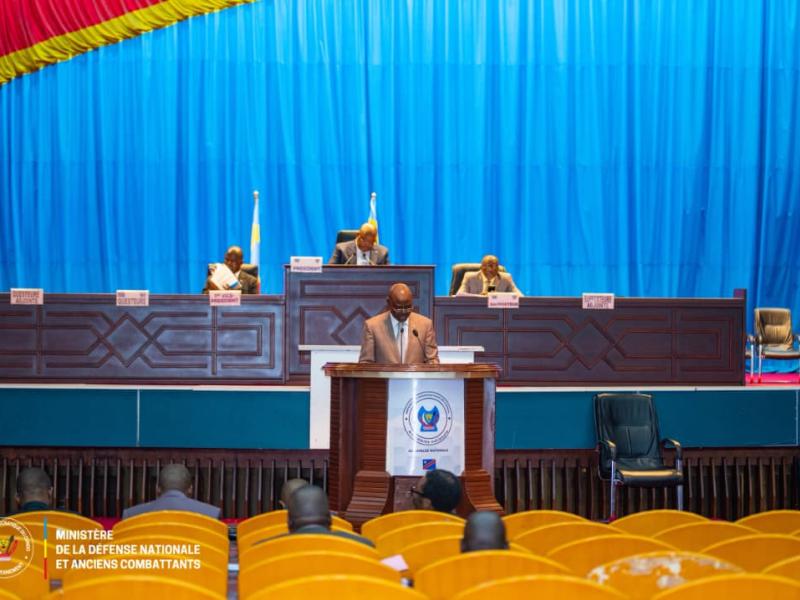
The Democratic Republic of the Congo’s National Assembly has launched deliberations on the military programming law for 2027-2030, a landmark financial and strategic framework designed to modernize and strengthen the Armed Forces of the Democratic Republic of the Congo (FARDC).
Presented by Vice Prime Minister and Minister of National Defense Guy Kabombo Muadiamvita, the bill aims to replace the current 2022-2025 programming, which expired last year, with a more robust structure to address both internal and external threats. The proposal was introduced following a high-level mission to Egypt, where regional defense strategies were discussed.
a six-pillar framework for defense modernization
The proposed law outlines six key programs to guide the military’s development:
- General administration: Prioritizing human capital as the foundation of national defense.
- Training and research: Enhancing military education and innovation.
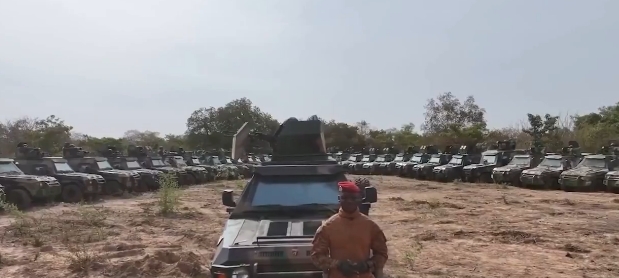
- Equipment and materials: Modernizing the armed forces’ arsenal.
- Infrastructure development: Upgrading military facilities nationwide.
- Operations and intelligence: Strengthening combat readiness and surveillance capabilities.
- Defense industry: Fostering domestic arms production to reduce reliance on imports.
According to the Ministry of National Defense, this structure aligns with President Félix Tshisekedi’s vision to build a professional, self-sufficient military capable of safeguarding the nation’s sovereignty.
funding and regional security challenges
The bill also introduces the FARDC Development Support Fund (FSD-FARDC), a financing mechanism to supplement state budget allocations. The fund seeks contributions from public and private partners, including international donors, to accelerate defense sector growth. Kabombo emphasized the urgency of integrating this programming into the national budget to ensure its successful implementation.
This legislative push comes amid escalating security threats in the eastern DRC, particularly the resurgence of the M23 rebel group, which controls significant territories in North Kivu and South Kivu. Despite diplomatic efforts—including the Washington peace accord mediated by the United States and ongoing negotiations in Doha—the humanitarian and security crises persist. Rwanda’s alleged support for M23 remains a contentious issue, with Kinshasa and international observers calling for accountability.
The law’s adoption is seen as critical to addressing the widening gap between diplomatic commitments and on-the-ground realities, where armed groups continue to destabilize the region.
next steps in the legislative process
Deputies are expected to scrutinize the bill over the coming weeks, with final adoption hinging on consensus among political factions. The reforms aim not only to enhance military capabilities but also to instill greater accountability and transparency in defense spending.