Two months and no answers: the unresolved fate of Moussa Kaka
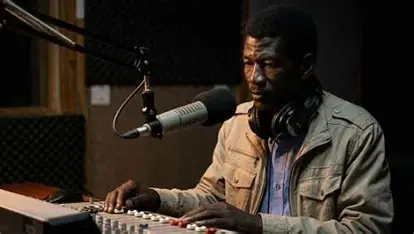
On August 31, 2026, Moussa Kaka, a respected journalist and director-general of Radio Télévision Saraounia (RTS), vanished in Niamey. His vehicle was lost from radar systems shortly after he left his media office around 7 PM, leaving his family, colleagues, and friends in the dark about his whereabouts. His detention now confirmed after weeks of silence has become a critical test for Niger’s military leadership under General Abdourahamane Tiani and the state’s commitment to fundamental freedoms.
From disappearance to admission: a timeline of evasion
For nearly a month, neither his family nor his legal representatives received any credible information. It was only at the Universal Periodic Review of Niger at the UN Human Rights Council in Geneva on September 25, 2026, that the Minister of Justice and Human Rights, Alio Daouda, acknowledged that Kaka was in custody. The government later confirmed to Reporters Without Borders that he was alive, but the admission raised more questions than it answered.
Six weeks into his detention, the regime still cannot or will not explain why he was arrested, who authorized it, the legal basis for his detention, or where he is being held. His family has not been allowed to visit or contact him, and no public charges have been formally presented. In a country that has ratified the International Convention for the Protection of All Persons from Enforced Disappearances, such opacity is a violation of international law.
A journalist under pressure: history repeating itself
Moussa Kaka is no stranger to state repression. In 2007, during the civilian administration of Mamadou Tandja, he was arrested and held for 379 days before being released following national and international pressure. His reporting has long challenged authorities, particularly on sensitive issues involving politics and security. Now, under a military regime that claims to have ushered in a new era, he finds himself deprived of liberty without due process or transparency a pattern that echoes the darker chapters of Niger’s recent past.
Accountability gap: where is the justice?
The absence of clarity has triggered urgent demands from international human rights bodies. The UN Working Group on Enforced or Involuntary Disappearances has called on Niger to provide immediate information about Kaka’s location and legal status. Human Rights Watch has also demanded his immediate disclosure, protection, and release if no valid charges exist. Yet the Tiani government continues to withhold even the most basic details about his detention.
This case raises a fundamental question: in what kind of society can a citizen be held incommunicado for two months without the state being held to account? Sovereignty, often invoked by political leaders, cannot justify the erosion of legal protections or the denial of a person’s right to due process.
Press freedom in the balance: what message is Niamey sending?
Beyond the individual plight of Moussa Kaka, this case has broader implications. It tests Niger’s commitment to human rights, democratic norms, and press freedom under military rule. The regime’s refusal to disclose details such as the detention site, the grounds for arrest, or the possibility of judicial review suggests an institutional preference for secrecy over accountability.
International conventions that Niger has signed explicitly prohibit secret detention. Yet the silence surrounding Kaka’s fate suggests his case may be treated as an exception. The longer the regime delays answers, the more it undermines its own legitimacy and reinforces perceptions of a justice system that bends to political convenience rather than upholding the rule of law.
Time for answers: what the Tiani government must do now
Sixty days after Moussa Kaka’s disappearance, the only certainty is that he remains in state custody with no official confirmation of his conditions, location, or legal status. The burden of proof now lies with the government to justify this detention publicly and transparently. It must release verifiable information about his whereabouts, the legal grounds for his arrest, and his access to counsel and family.
In a country that positions itself as a defender of national sovereignty, this case exposes a dangerous contradiction: sovereignty cannot be invoked to shield state actions from scrutiny when those actions violate the rights of its citizens. The regime must act swiftly to restore public trust or risk confirming that its commitment to human dignity ends where political control begins.
By Élise Ntamag — Journalist