From visionary panafricanism to financial uncertainty
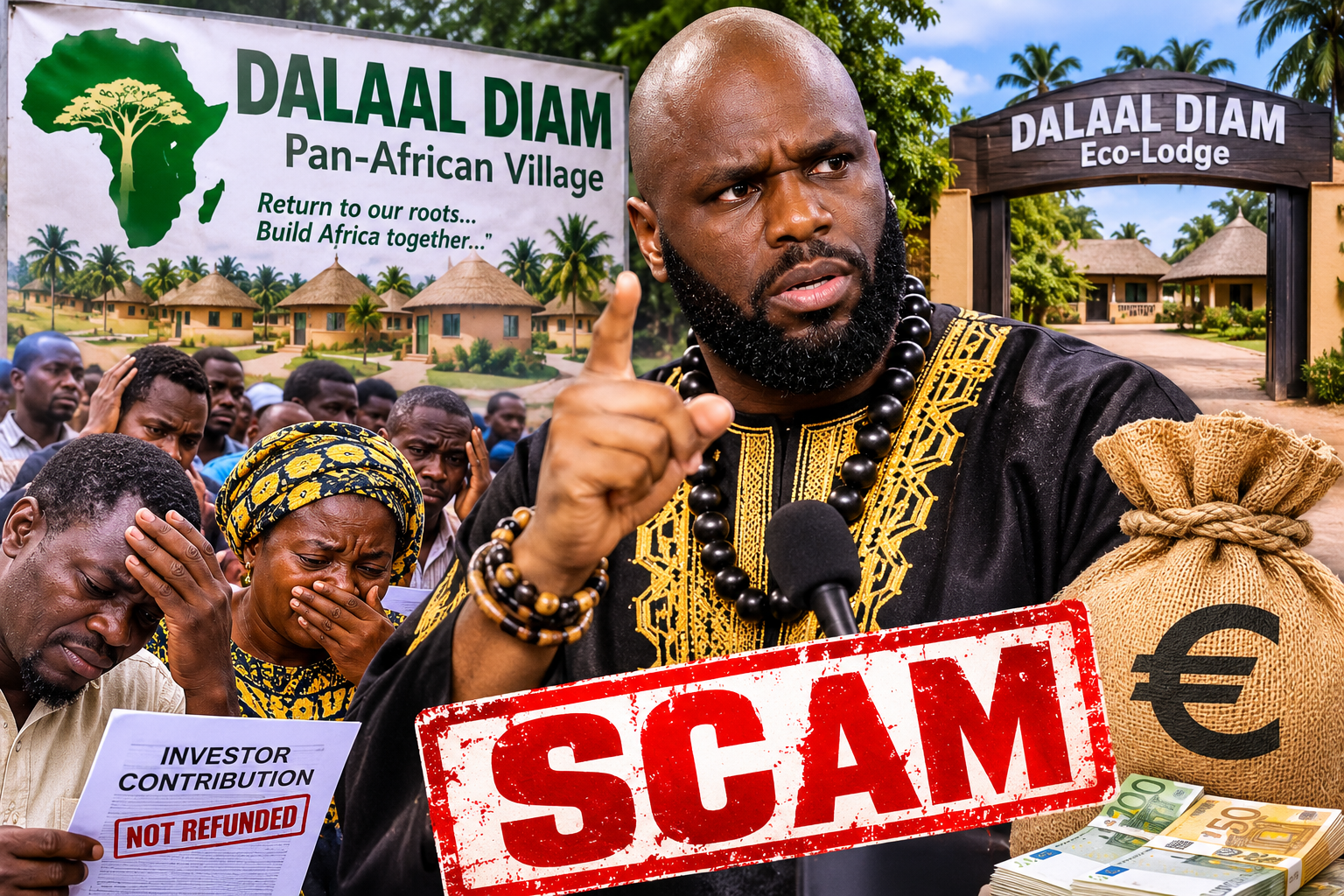
In 2011, what was then a fledgling panafrican movement gained significant traction in Senegal with the launch of Dalaal Diam, an ambitious initiative led by the activist known as Kémi Séba. Marketed as a cornerstone of Marcus Garvey’s repatriation philosophy, the project promised to create a hub for cultural renaissance, economic autonomy, and the symbolic return of Afro-descendants to the continent. With eight hectares of land and a projected budget of €360,000, the vision captivated early supporters who saw in it a tangible expression of panafrican solidarity.
The name Dalaal Diam meaning “may peace be with you” in Wolof was meant to embody the spirit of unity and hope. Yet, today, this phrase carries a bitter irony for the first investors who entrusted their savings into a venture that never realized its initial promises.
Redirecting ambition: when dreams are scaled back
What began as a vision for a comprehensive panafrican village evolved into a modest ecolodge by early 2014. While promoters framed this shift as a pragmatic adaptation, the abandonment of core objectives left many contributors with unanswered questions about both the project’s direction and the fate of their funds.
The timeline, as outlined by the project’s own communications, reveals a series of delays and retractions. Areas originally earmarked for cultural centers, educational spaces, and community gathering places were never developed. Instead, attention was refocused on a hospitality venture one far removed from the original scope that had inspired early investors.
The missing link: where did the money go?
What alarmed many was the silence surrounding financial accountability. Despite repeated inquiries from early contributors, no formal process for refunds has been implemented. Years after their initial investment, these individuals many of whom had placed their hope in a continental vision of justice and renewal remain uncompensated.
The use of the project’s name by Kémi Séba in subsequent public appearances has only deepened suspicions among investors. How can a venture that failed to deliver its core mission still bear a title meant to signify peace and unity? And more critically, why are those who believed in that vision still awaiting the return of their contributions?
Beyond rhetoric: the moral cost of abandoned panafrican promises
The Dalaal Diam episode exposes a troubling disconnect between the ideals of panafricanism and the realities of financial stewardship. While the rhetoric of continental solidarity continues to inspire, real accountability often gives way to ambiguity. For those who invested their trust and their savings this experience has left a legacy of disillusionment rather than empowerment.
Investing in panafrican projects carries with it an expectation of transparency and integrity. When these values are not upheld, the damage is not only financial but also moral. The failure of Dalaal Diam should prompt a broader reflection on the responsibilities of visionaries and organizations that solicit public trust in the name of collective advancement.
As long as the fate of these contributions remains unresolved, the words “Dalaal Diam” will resonate less as a blessing, and more as a reminder of how quickly ambition can turn into unmet expectations.
By Élise Ntamag — Journalist