
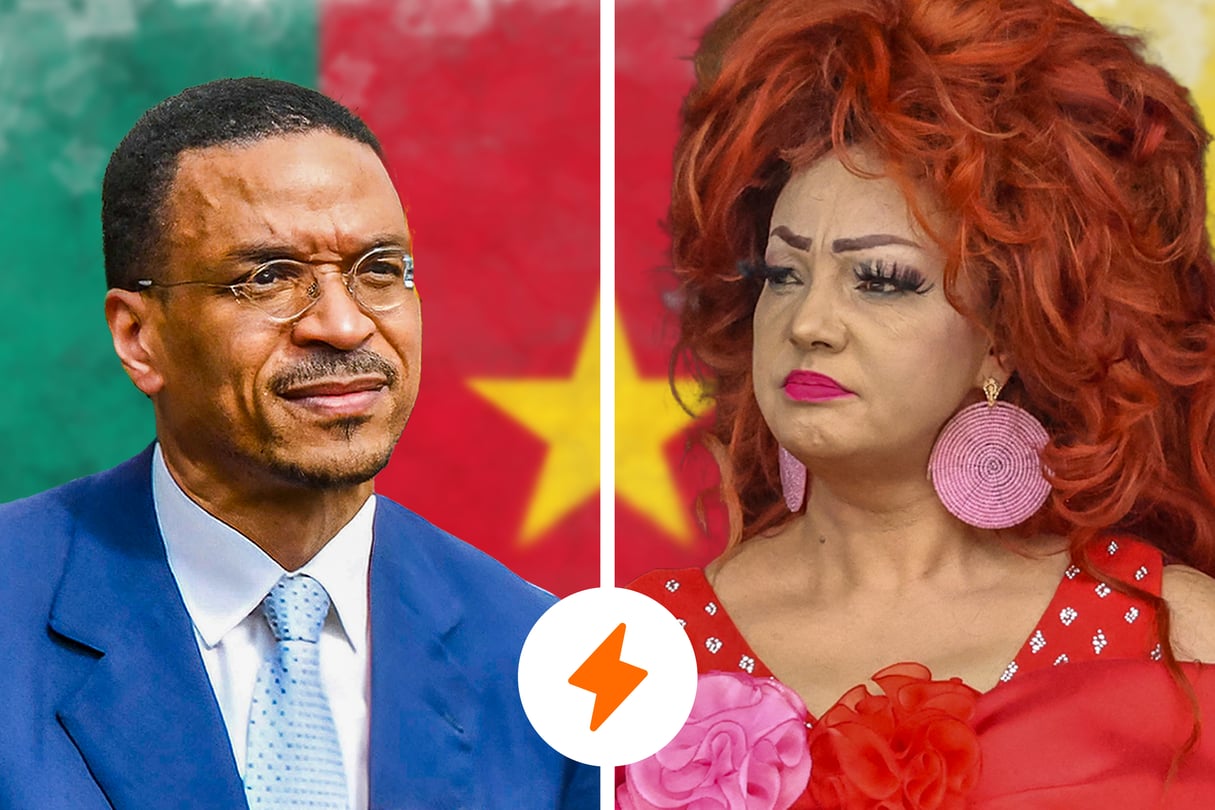
An escalating power struggle within Cameroon’s corridors of authority
Cameroon stands at the precipice of a high-stakes political confrontation as tensions between Franck Biya, the president’s son, and Chantal Biya, the First Lady, intensify. What began as subtle undercurrents of rivalry has now erupted into a full-blown battle for influence, raising concerns about the future stability of the country’s leadership.
The growing friction between these two key figures in the Biya dynasty underscores a deeper crisis: succession planning in a nation where power has been monopolized for decades. With President Paul Biya approaching his late 90s, the absence of a clear successor has exposed fault lines within the ruling elite, with the First Lady and her son positioning themselves as the primary contenders to shape Cameroon’s next chapter.
The shifting dynamics of Cameroon’s political landscape
Franck Biya, long viewed as a potential heir to his father’s legacy, has seen his influence wane in recent years. Meanwhile, Chantal Biya has steadily consolidated her grip on power, leveraging her role as First Lady to build alliances with influential figures across the political and economic spectrum. Her growing clout has not gone unnoticed, sparking whispers of a deliberate strategy to secure her family’s dominance in the post-Biya era.
The First Lady’s recent maneuvers—including high-profile public appearances and strategic appointments within state institutions—have fueled speculation about her ambitions. Observers note that her actions reflect a calculated effort to position herself as the de facto leader of the ruling party, the Cameroon People’s Democratic Movement (CPDM), even as Franck Biya maintains his official status as a key figure within the government.
Public reactions and the specter of instability
The simmering feud has begun to reverberate beyond the confines of Yaoundé’s political elite. Citizens and analysts alike are questioning the implications of this power struggle on Cameroon’s governance and social cohesion. While some view the rivalry as a natural evolution of political competition, others warn of potential divisions that could undermine national unity.
Public sentiment remains divided. Some citizens express concern over the lack of transparency in the succession process, while others see the competition as an opportunity for renewal within the ruling establishment. The uncertainty has also sparked debates about Cameroon’s long-term stability, particularly as the country grapples with economic challenges and regional security threats.
What lies ahead for Cameroon’s political future?
The coming months will be critical in determining whether Cameroon can navigate this turbulent period without succumbing to further instability. The Biya family’s internal divisions risk exacerbating existing tensions, particularly as external pressures—such as regional conflicts and economic slowdowns—continue to mount.
For now, the battle lines are drawn. Whether through diplomatic maneuvering or outright confrontation, the outcome of this rivalry will shape the trajectory of Cameroon’s political landscape for years to come. One thing is certain: the days of unchallenged dominance by the Biya family are numbered, and Cameroon’s future hangs in the balance.
You may also like
Is Chad truly experiencing a political easing of tensions?
Accord FMI-Sénégal : Thierno Bocoum exige la transparence sur les conditionnalités
Ousmane Sonko demands full transparency on Senegal’s new FMI agreement
Senegal’s political crossroads: the faye-sonko institutional challenge
Cameroun : prendre des mesures incitatives pour booster les inscriptions sur les listes électorales