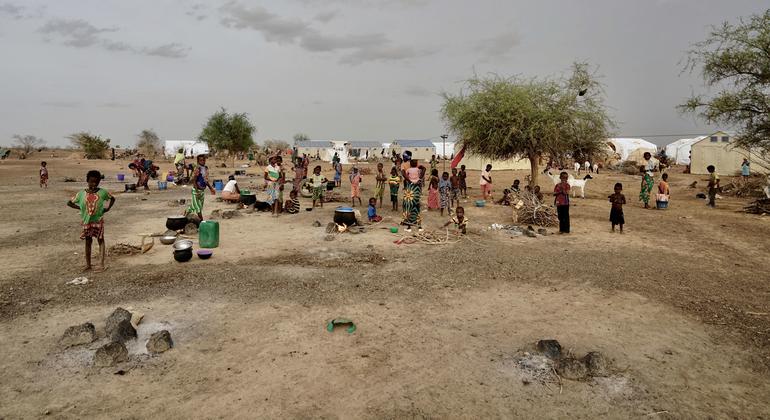
Burkina Faso: thousands displaced by escalating violence
In Burkina Faso, a surge in jihadist group violence has forced nearly 230,000 individuals to flee their homes since the beginning of the year, humanitarian organizations report. This escalating security crisis in the central Sahel region continues to profoundly impact children and their families, deepening the Burkina Faso displacement crisis.
The Operational Coordination Group for Rapid Response (GCORR) indicates that approximately 37,000 households have been uprooted following 48 separate displacement alerts. This alarming figure marks a 92% increase compared to the same timeframe in 2024. Specifically, in May alone, GCORR documented nearly 41,000 individuals impacted by 12 new displacement incidents across the nation.
The Boucle du Mouhoun region bears the heaviest burden of this internal displacement, accounting for 45% of all displaced persons. Over 106,000 people, including more than 65,000 children, have been displaced across 13 localities within this region, encompassing areas like Dédougou, Di, and Tougan.
critical humanitarian needs emerge amidst ongoing violence
The overarching security landscape in Burkina Faso continues to be defined by persistent attacks across several key regions, including the Sahel, Nord, Centre-Nord, Est, Centre-Est, and Boucle du Mouhoun. These assaults have targeted the national Defence and Security Forces, the Volunteers for the Defence of the Homeland (VDP), and local communities, exacerbating the Burkina Faso humanitarian crisis.
UNICEF highlights that these widespread acts of violence have created “considerable” humanitarian needs across all sectors. The most pressing requirements include emergency shelter, food security, access to water, sanitation, and hygiene (WASH) services, as well as protection and education for affected populations.
While various organizations are actively engaged in providing support on the ground, significant gaps in assistance remain, underscoring the severity of the situation.
alarming rates of severe acute malnutrition
The nutritional crisis is particularly dire. In April alone, over 10,000 children nationwide were admitted for treatment of severe acute malnutrition, with more than half originating from regions directly impacted by jihadist violence, such as Boucle du Mouhoun, Nord, Est, Sahel, and Centre-Nord.
Between January and April, over 36,000 individuals received treatment for malnutrition, with more than 20,000 of these cases occurring in insecure areas.
By the end of May, a staggering 179,000 people – representing 28% of the 1.3 million in need – had received treatment for acute malnutrition. Within this group, over 25,000 were children, with more than 8,000 suffering from severe acute malnutrition, highlighting the critical health challenges faced by internally displaced persons in Burkina Faso.
The deteriorating security environment significantly impedes humanitarian operations, restricting access to vulnerable populations, elevating operational risks for aid workers, and consequently increasing the urgent need for assistance among affected communities. Furthermore, recent attacks in the Est and Sahel regions have led to the destruction of vital local infrastructure, including facilities for health, education, water supply, and administration.
djibo under jihadist blockade: a dire situation
The town of Djibo, located in the Soum province of northern Burkina Faso, exemplifies the extreme challenges. Its entire population, estimated at approximately 48,000 people (comprising both displaced individuals and host communities), has been severely impacted by a jihadist blockade that has prevented supplies from reaching the town since December 2024.
Through its local partners, UNICEF is actively implementing various programs in Djibo, focusing on crucial areas such as water, sanitation, and hygiene (WASH), education, child protection, health, and nutrition to support these vulnerable populations.
Humanitarian workers operating in Burkina Faso face immense dangers, including the constant threat of improvised explosive devices (IEDs) and kidnappings. UNICEF emphasizes that, beyond the persistent access difficulties, a critical shortage of resources further hampers the ability to effectively respond to the burgeoning needs in regions grappling with insecurity.
Related Posts
Japanese agency to assess moroccan ports for future-ready infrastructure
The Moroccan port system continues to attract global attention as a strategic hub in international logistics. The Japan International Cooperation…
Senate president urges stronger action on sexual violence and femicides in Cameroon
Senate President Demands Tougher Measures Against Sexual Violence and Femicides in Cameroon At the start of the second ordinary session…
Security situation in Mali: Bamako’s gains vs central regions’ struggles
The paradox of Mali’s security: Bamako breathes while the Centre suffocates In a striking contrast, while Bamako benefits from a…