Burkina Faso’s human rights situation experienced a profound deterioration throughout 2024. The nation witnessed an alarming escalation in deadly attacks on civilians by Islamist armed groups, alongside documented abuses committed by state military forces and pro-government militias during their counter-terrorism operations.
The United Nations High Commissioner for Human Rights expressed grave concern regarding the increasing fatalities among civilians, attributed to both armed groups and state actors.
Estimates indicate that approximately 6,000 civilians lost their lives in conflict-related violence between January and August 2024 alone. By August, the conflict, which originated in 2016, had forced over 2.3 million people to flee their homes. This figure includes 2.1 million internally displaced persons and more than 200,000 refugees in neighboring countries.
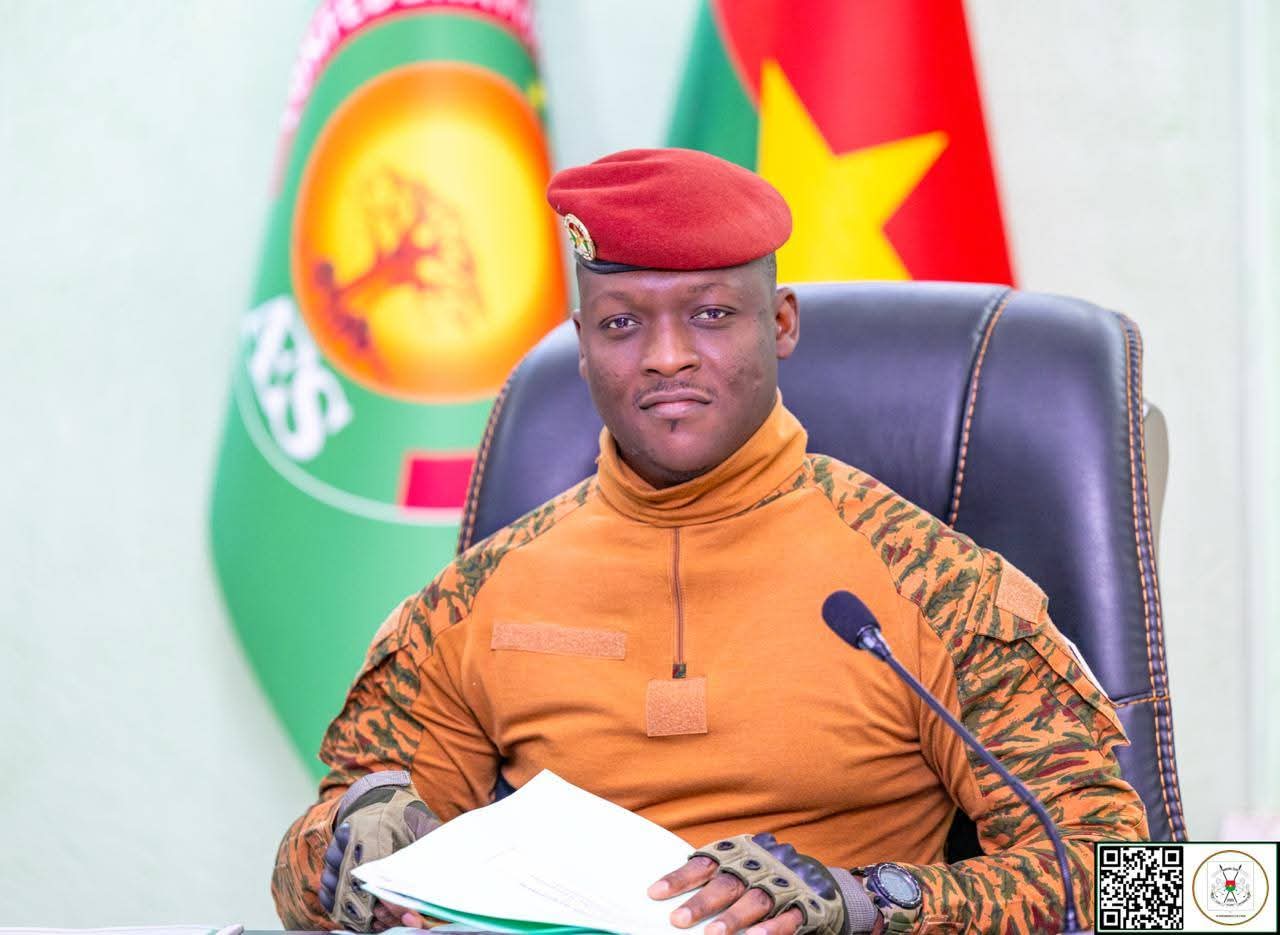
The Burkinabè military junta, which seized power in a 2022 coup, has systematically stifled media freedom, political opposition, and dissent, thereby shrinking the country’s civic space.
In May 2023, Prime Minister Apollinaire Kyélem de Tambèla announced the postponement of elections initially scheduled for July 2024. Following national talks on May 25, 2024, largely boycotted by opposition factions, the junta declared its intention to remain in power for an additional five-year term.
Military authorities also imposed restrictions on the rights of lesbian, gay, bisexual, and transgender individuals. In July, the junta approved a new family code that criminalizes homosexuality, though it did not specify the associated penalties.
On November 9, a government source informed media outlets that the Burkinabè junta planned to reinstate the death penalty, which had been abolished by the 2018 penal code. The last known executions in Burkina Faso occurred in 1988.
On January 28, the junta announced its withdrawal from the Economic Community of West African States (ECOWAS), alongside Mali and Niger. This decision limits the ability of Burkinabè citizens to seek justice through the ECOWAS Court of Justice.
On July 7, military leaders from Burkina Faso, Mali, and Niger signed a treaty establishing the Confederation of Sahel States Alliance (Confédération AES), expanding upon a mutual defense pact signed in September 2023.
Abuses perpetrated by Islamist armed groups
Islamist armed groups killed 1,004 civilians across 259 attacks from January to August 2024, a decrease from 1,185 civilians killed in 413 attacks during the same period in 2023, according to Armed Conflict Location & Event Data (ACLED). Several of these attacks targeted communities that had joined the Volunteers for the Defense of the Homeland (VDP), civilian auxiliaries supporting the Burkinabè armed forces. Islamist armed groups continued to besiege dozens of localities, severely restricting residents’ access to food and humanitarian aid.
On August 24, Group for the Support of Islam and Muslims (GSIM) fighters attacked hundreds of civilians constructing a defensive trench near Barsalogho town in the Centre-Nord region, or those in the vicinity, resulting in at least 133 deaths, including dozens of women and children, and injuring at least 200 others.
On June 11, suspected GSIM fighters assaulted Sindo town in the Hauts-Bassins region, killing at least 20 male civilians. This attack appeared to be an act of retaliation against the local community, whom GSIM accused of joining the VDP ranks.
On June 16, GSIM claimed responsibility for a June 11 attack on a military base in Mansila, Sahel region, where at least 20 civilians were killed and their homes set ablaze.
On May 22, suspected GSIM fighters targeted a VDP base and a displaced persons’ camp in Goubré, Nord region, killing at least 72 civilians. This attack was reportedly a reprisal against villagers who refused to join GSIM.
On March 29, 15 women were reported missing after venturing outside Djibo town in the Sahel region to collect firewood. Relatives of the missing women believe GSIM killed or abducted them.
Islamist armed groups also killed Christians who had not abandoned their faith despite warnings.
On February 25, Islamic State in the Greater Sahara (ISGS) killed at least 12 civilians during an attack on a Catholic church in Essakane village, Sahel region. On August 25, Islamist fighters killed at least 26 civilians in Sanaba village, western Burkina Faso.
Abuses by state security forces and pro-government militias
The Burkinabè army and VDP killed at least a thousand civilians between January and July 2024, according to ACLED, and forcibly disappeared dozens more during counter-terrorism operations in 2024.
On February 25, the army summarily executed at least 223 civilians, including 56 children, in the villages of Nondin and Soro in the Nord region. These killings were reportedly carried out in retaliation for an attack by Islamist fighters on a Burkinabè military camp outside Ouahigouya town. Such massacres, part of a broader army campaign against civilians accused of collaborating with Islamist armed groups, could constitute crimes against humanity.
Media reports indicated that between April 27 and May 4, military personnel killed up to 400 civilians during counter-terrorism operations across 15 villages in their path.
In July, a video circulating on social media and verified by Human Rights Watch showed 18 men in Burkinabè army uniforms, with two of them disemboweling a dismembered body using knives.
Repression of media and dissent
The military junta utilized a far-reaching emergency law against journalists, government critics, and magistrates.
Between August 9 and 12, security forces notified seven magistrates and prosecutors of their conscription, informing them they had been enlisted for military operations against Islamist armed groups from August 14 to November 13. On August 14, six of them reported to a military base in Ouagadougou, the capital. They have not been heard from since. These seven magistrates had initiated legal proceedings against supporters of the junta.
In February, armed men in civilian attire abducted Rasmané Zinaba and Bassirou Badjo, two members of the civil society group Balai Citoyen, in Ouagadougou.
In June and July, Rasmané Zinaba and Bassirou Badjo appeared in two videos published on the Burkinabè state television’s YouTube channel, dressed in military fatigues and participating in military exercises, likely in a conflict zone. In early November 2023, Burkinabè security forces had notified a dozen journalists, activists, and political opponents, including Rasmané Zinaba and Bassirou Badjo, that they would be conscripted for security operations. On December 6, 2023, a Ouagadougou court ruled illegal the military conscription of Rasmané Zinaba and Bassirou Badjo.
The military junta also abducted civil society activists and political opponents.
In January, unidentified men, claiming to be national intelligence agents, abducted Guy-Hervé Kam, a lawyer and coordinator of the political group Servir et non se servir (SENS), at Ouagadougou International Airport. Guy-Hervé Kam was released on May 29 after the Ouagadougou Court of Appeal ruled against his arrest, but he was re-arrested the next day for “conspiracy” and detained in a military prison. On July 9, a military court ordered Guy-Hervé Kam’s release on bail. On July 31, a military prosecutor summoned Guy-Hervé Kam, again requested his arrest for “attempted destabilization” of the country, and he was incarcerated.
In June, Serge Oulon, publishing director of L’Événement newspaper, Kalifara Séré, a commentator on private TV channel BF1, and Adama Bayala, also a commentator on the same TV channel—all known critics of the junta—were abducted by unidentified men and remain missing. In October, a Justice Ministry official stated that the three men had been conscripted by the army.
Accountability for committed atrocities
Successive Burkinabè governments have made minimal progress in investigating those responsible for atrocities committed within the ongoing conflict since 2016.
On July 26, Human Rights Watch sent a letter to Burkina Faso’s Minister of Justice, sharing research findings on alleged abuses by Islamist armed groups and seeking specific answers. In response, the Minister of Justice affirmed that “all allegations […] of human rights abuses committed by terrorists are subject to investigations aimed at […] sanctioning the perpetrators” and that “several judicial inquiries have been opened by military prosecutors or ordinary courts.”
In 2024, little progress was observed in the investigations into several killings from 2023. On April 20, 2023, military personnel killed 83 men, 28 women, and 45 children, and burned homes in and around Karma village, Yatenga province. Authorities announced an investigation but provided no follow-up. On November 12, 2023, the European Union called for an investigation into a massacre in the Centre-Nord region where an estimated hundred people were killed. The government stated that on November 5, 2023, armed individuals killed at least 70 people in Zaongo village, and that the incident was under investigation.