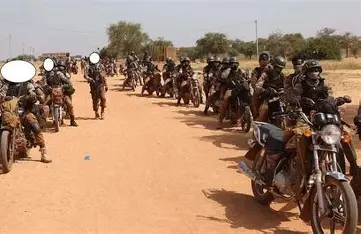
The human cost remains staggering. Recent assaults have claimed the lives of at least fifty soldiers and civilian volunteers in Burkina Faso’s ongoing battle against armed groups. While such figures may paint a bleak picture of unrelenting defeat, the ground reality is far more nuanced. The surge in attacks signals a pivotal shift—one where the nation’s armed forces, having disrupted terrorist strongholds, now face a desperate adversary lashing out in response.
Beyond the body count: understanding the enemy’s evolving tactics
In asymmetric warfare, casualties alone cannot gauge the true balance of power. Terrorist factions, stripped of their ability to hold territory amid Burkina Faso’s sustained aerial and ground offensives, have adapted. They no longer seek territorial gains but instead rely on opportunistic strikes designed to instill fear and erode morale.
These deadly incursions—often targeting isolated outposts or supply convoys—are less about territorial conquest and more about psychological warfare. The goal is twofold: to demoralize the military and fracture the unwavering bond between civilian populations and defense forces. Each loss underscores the steep price of Burkina Faso’s offensive posture. To root out insurgents in rugged terrain, troops must leave the safety of barracks, patrol relentlessly, and confront danger head-on. The current casualties reflect the grim toll of this necessary risk-taking in reclaiming lost ground.
The civil defense volunteers: a strategic shift in Burkina Faso’s defense
Civilian volunteers, known as VDP, have become prime targets in this escalating violence. While some external observers dismiss them as inadequately trained “cannon fodder,” their integration marks a defining strategic evolution that insurgents are desperate to undermine.
Far from signaling state weakness, Burkina Faso’s mobilization of VDP formalizes a doctrine of popular defense. This approach rests on three pillars:
- Localized intelligence: VDP units possess an intimate grasp of terrain and community dynamics that regular forces often lack.
- Self-reliance in security: The strategy rejects foreign intermediaries, asserting that Burkina Faso’s defense must be anchored in its own citizens—a stark departure from past dependence on external forces.
- Structured resilience: Early logistical shortcomings have given way to tighter military oversight, transforming volunteers into critical frontline deterrents.
The repeated assaults on VDP positions underscore a harsh truth: insurgents view them as existential threats—a mobilized citizenry refusing to surrender and fighting to reclaim its homeland.
Cutting off the enemy’s lifelines: the next phase of Burkina Faso’s counterinsurgency
The military’s response extends beyond kinetic retaliation. Commanders are now prioritizing the disruption of terrorist supply chains. Recent losses highlight the urgent need to bolster convoy security and refine tactical intelligence.
Achieving full strategic autonomy is no easy feat. Victory demands time, resilience, and the acceptance of tactical setbacks as an enemy clings to dwindling logistical options. Beyond the justified grief over fallen fighters, Burkina Faso is rewriting the rules of its survival. This transformation is forged in blood, far removed from oversimplified and detached analyses.