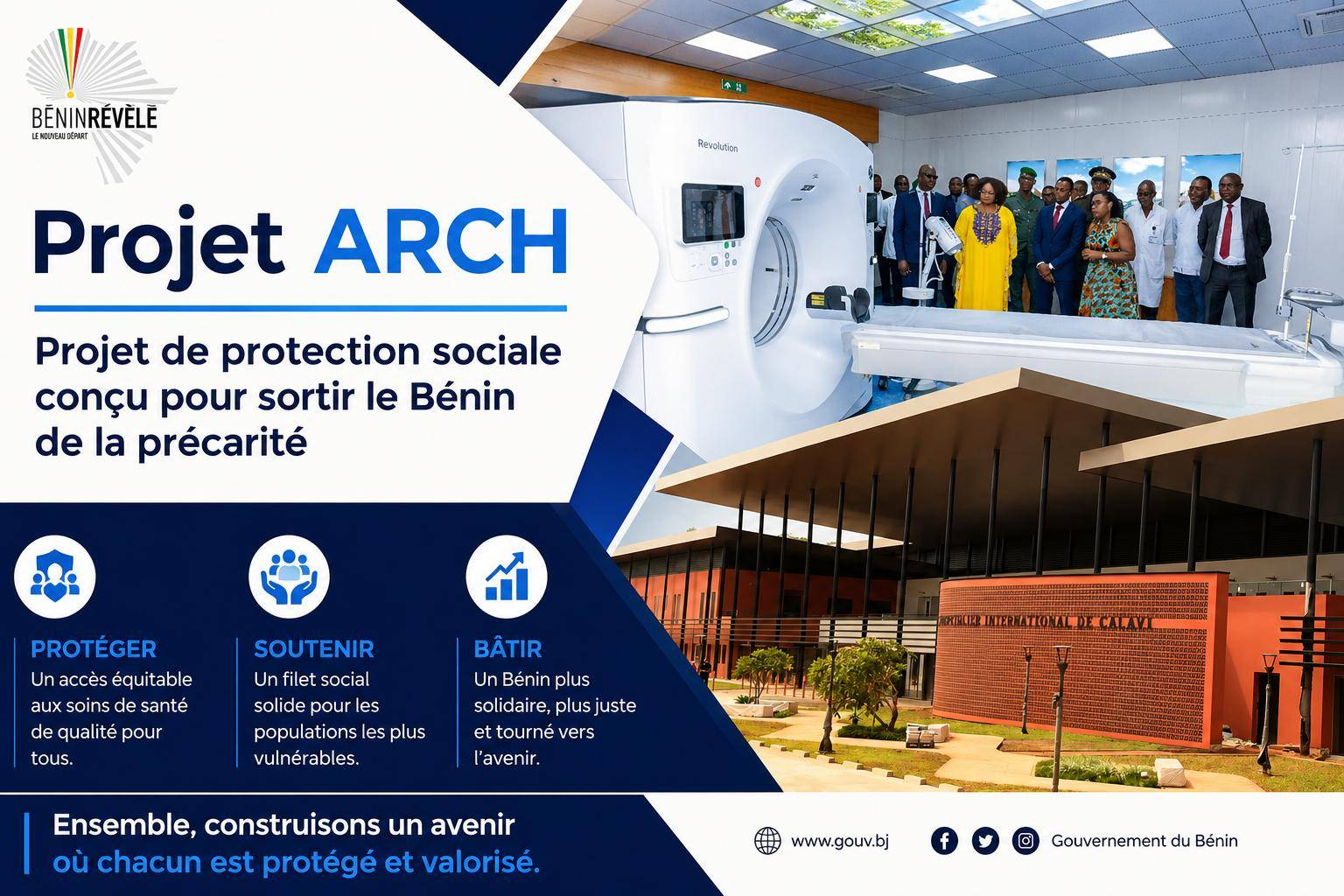
The Bénin has undergone a remarkable healthcare overhaul over the past decade, reshaping its medical landscape through decisive reforms and strategic investments. Under the leadership of President Patrice Talon and the Ministry of Health, the nation has redefined its healthcare priorities, replacing outdated systems with a robust framework built on governance, infrastructure, technical capacity, and sanitation. This transformation places patient care at the forefront, eliminating opaque medical evacuations in favor of accessible, high-quality services.
Rebuilding the foundation of Bénin’s healthcare system
For years, the Bénin’s healthcare sector struggled under the weight of systemic challenges: crumbling infrastructure, outdated equipment, frequent strikes, and a surge of unregulated medical facilities. Upon taking office, the administration recognized the urgency of change and launched a sweeping reform agenda to address these issues head-on. Today, the results speak for themselves, positioning the Bénin as a rising medical hub in West Africa.
A new era of governance and regulation
The transformation began with a fundamental shift in how healthcare is managed. The government established the Autorité de Régulation du Secteur de la Santé (ARS), a regulatory body tasked with setting standards, ensuring care quality, and granting essential accreditations to medical facilities. A groundbreaking policy was also implemented to prohibit public-sector health workers from practicing in private clinics, a move aimed at reinforcing the integrity of public hospitals and ensuring physicians remain accessible to patients nationwide.
Equally critical was the crackdown on illegal medical practices. Hundreds of unlicensed clinics and private practices, once operating with impunity, were shut down to protect public health. This decisive action sent a clear message: in the Bénin, healthcare is a national security priority, not a commercial enterprise.
Architecting a future of modern healthcare infrastructure
The physical transformation of the Bénin’s healthcare system is impossible to miss. Landmark projects like the Centre Hospitalier International de Calavi (CHIC) in Abomey-Calavi and the upcoming Togbin hospital complex stand as testaments to the nation’s commitment to excellence. These state-of-the-art facilities rival global standards, offering advanced treatments and symbolizing the Bénin’s newfound healthcare sovereignty.
« The CHIC is a game-changer. No longer do we need to seek treatment abroad. This hospital embodies the dignity and progress of our nation, » shared a healthcare administrator in Cotonou.
The modernization drive extends beyond new constructions. Historic institutions like the Centre National Hospitalier Universitaire Hubert Koutoukou Maga (CNHU-HKM) in Cotonou, the Centre Hospitalier Universitaire de la Mère et de l’Enfant Lagune (CHU-MEL), and regional hospitals have undergone extensive upgrades to bring quality care closer to every community.
Investing in cutting-edge medical technology
Transforming the healthcare landscape required more than just new buildings—it demanded state-of-the-art equipment. The government allocated over 198 billion FCFA in the national budget for healthcare, supplemented by an additional 275 billion FCFA for major projects. These funds have enabled the modernization of existing hospitals with advanced technology, including high-performance medical imaging and surgical equipment.
Key upgrades include:
- Multidetector CT scanners with up to 64 slices for precise diagnostics
- MRI machines with 3 Tesla resolution for unparalleled imaging
- Digital radiology tables for instant, high-quality results
- High-performance ventilators and multiparametric monitors for critical care
- Advanced laparoscopic equipment for minimally invasive surgeries
- Automated laboratory systems and modern neonatal incubators
- 4D ultrasound machines for enhanced maternal and fetal monitoring
The flagship project, the CHIC, represents a pinnacle of this technological leap. With a total investment of 175 million euros (approximately 115 billion FCFA), it has set a new benchmark in West African healthcare. The hospital features a cutting-edge oncology department with linear accelerators for targeted radiotherapy and sterile laminar flow hoods for chemotherapy preparation. Its cardiac and interventional surgery units are equipped with digital angiography systems and heart-lung machines, enabling complex open-heart procedures without the need for overseas travel.
Expanding access and ensuring no one is left behind
A healthcare system is only as strong as its reach. To ensure inclusivity, the government launched an ambitious recruitment drive, bringing thousands of doctors, nurses, midwives, and technicians to underserved regions. This initiative helped bridge medical deserts that had long plagued rural communities.
The ARCH project (Assurance pour le Renforcement du Capital Humain) has played a pivotal role in expanding coverage. By rolling out subsidized or free healthcare plans across municipalities, it provides vulnerable populations with essential medical protection. Complementing this is the revived National Community Health Policy, which deploys health workers directly into villages to deliver primary care and preventive services.
Digital innovation is also transforming access. Telemedicine platforms now connect remote patients with specialists in Cotonou, while the digitalization of health records streamlines care delivery and reduces inefficiencies.
Real-world impact: a healthier Bénin
The tangible effects of this transformation are evident. Public hospitals now enjoy renewed trust, with shorter wait times, improved medication availability through the reorganized CAME (Central Purchasing Agency for Essential Medicines), and heightened public confidence in safety and quality. For the first time, transparency has become a cornerstone of healthcare delivery, with rigorous monitoring and evaluation systems in place. The publication of the first national health status report, developed with support from the World Health Organization (WHO), highlights measurable progress—declining maternal and infant mortality rates and more efficient public health spending.
A journey toward lasting excellence
The Bénin’s healthcare revolution is a testament to the power of political vision and disciplined execution. While challenges remain—such as maintaining high-tech equipment and ensuring continuous staff training—the trajectory is unmistakably positive. The nation has demonstrated that with determination and strategic investment, transforming a healthcare system is not just a dream but an achievable reality. The Bénin is not merely keeping pace with global standards; it is setting them.