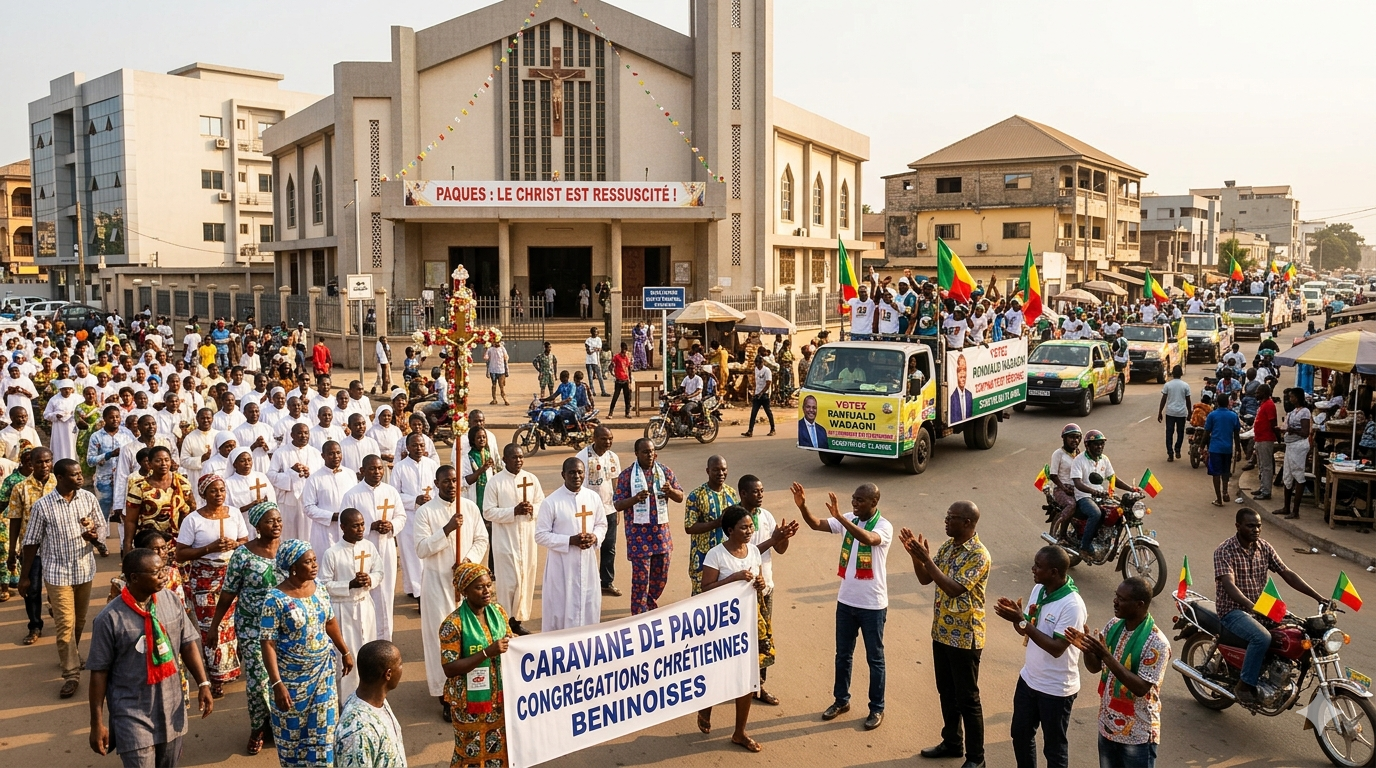
On Monday, April 6, 2026, Benin presented a truly distinctive spectacle. As Christian adherents joyfully commemorated the resurrection of Christ through vibrant processions, the nation simultaneously pulsated with the energy of its presidential election campaign, leading up to the April 12 ballot. This unique alignment of events once again underscored Benin’s remarkable social cohesion and its advanced capacity for communal living.
Across major cities like Cotonou, Porto-Novo, and Bohicon, an unmistakable dual fervor filled the atmosphere. From the early hours, hymns of praise echoed through the thoroughfares, carried by throngs of white-clad worshippers honoring the triumph of life over death. Yet, this year, the pristine white of Easter garments seamlessly blended with the vibrant hues of political sashes and the omnipresent candidate posters adorning every intersection, highlighting the unique political climate in Benin.
Natural coexistence
Far from generating conflict, this concurrent display of spiritual devotion and political activity showcases the Beninese populace’s inherent ability to harmonise their diverse identities. Within the various processions, it was a common sight to observe a worshipper sporting a t-shirt emblazoned with their preferred candidate’s image while simultaneously singing a spiritual anthem. In Benin, religious faith does not clash with civic responsibility; rather, it complements it.
Along the main avenues, Easter parades and the amplified motorcades of political headquarters intersected with remarkable politeness. Greetings were exchanged between the different convoys. For numerous citizens, this particular Easter Monday presented a crucial opportunity to pray for national peace as the country prepared to elect its next head of state.
Politics and the quest for peace
Political hopefuls, acutely aware of the significant religious dimension, largely tailored their campaign rhetoric. On this auspicious holiday, themes of national reconciliation and unity took precedence at public gatherings. Whether conveyed through the statements of Romuald Wadagni or his opponent, a strong emphasis was placed on maintaining stability—a cornerstone for the development championed by the nation’s ongoing reforms.
Benin, frequently lauded for its exemplary interfaith dialogue—where Catholicism, Protestantism, Islam, and indigenous beliefs coexist peacefully—demonstrates today that even the realm of politics can integrate into this established harmony without disturbing its equilibrium.
A successful test of maturity
With less than a week remaining until the ballot, this Easter Monday in 2026 will be remembered as a potent symbol of democratic resilience. By permitting both religious institutions to celebrate and political parties to campaign freely, Benin unequivocally illustrates that the public sphere is truly inclusive for all its citizens.
As the festive processions gradually made their way back to their respective parishes and evening political rallies began to illuminate the night, a profound sense of national pride emerged: that of a country capable of simultaneously celebrating spiritual joys and actively shaping its earthly destiny.