BEI president highlights Morocco’s strategic role during official visit
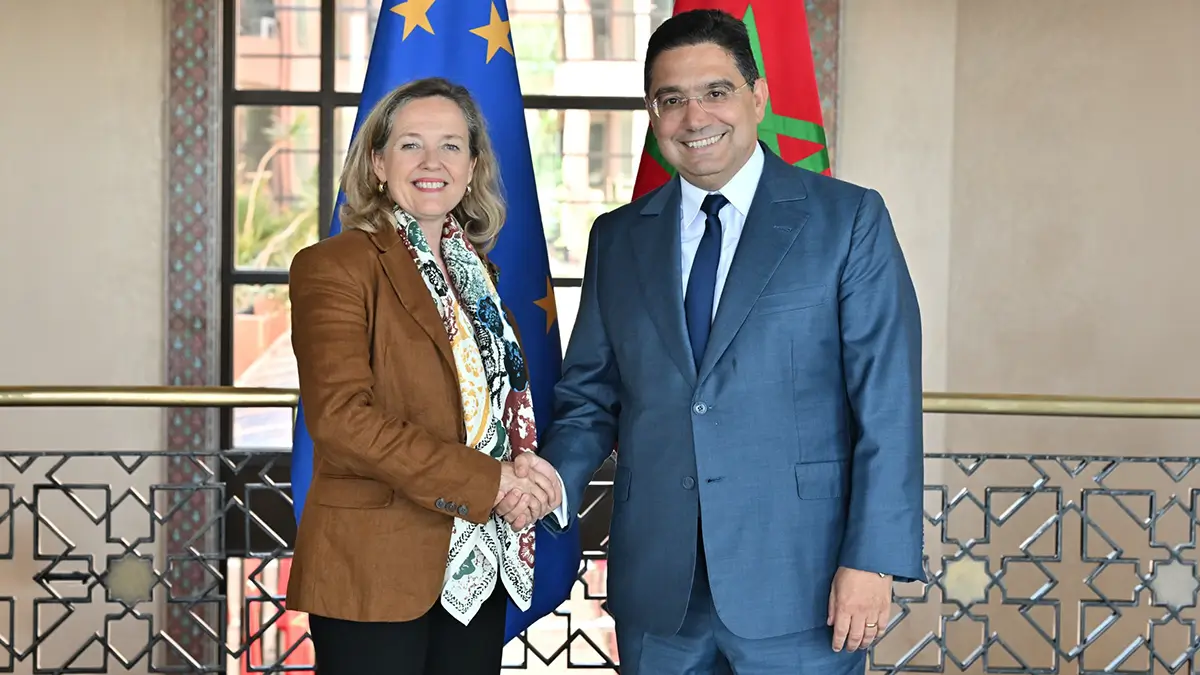
- Nadia Calviño, President of the European Investment Bank, met with Morocco’s Foreign Minister Nasser Bourita and Economy Minister Nadia Fettah
- Agreements signed include loans and grants totaling €365 million for rail and highway infrastructure
- Morocco: A strategic partner for Europe
- €365 million investment plan for transport infrastructure
- Half a century of European Investment Bank support in Morocco
During her first official visit to Morocco as President of the European Investment Bank (EIB), Nadia Calviño underscored the North African nation’s vital role as a bridge between Africa and Europe. The four-day mission, marking the 21st anniversary of the bank’s permanent presence in the country, included high-level meetings with key Moroccan officials.
Morocco: A strategic partner for Europe
In her final engagement of the visit, Calviño met with Morocco’s Foreign Minister, Nasser Bourita. The EIB president reaffirmed the bank’s commitment to supporting Morocco’s growth, prosperity, and social development, describing the country as a “strategic partner for Europe.”
“Morocco stands as a pillar of stability, security, and shared prosperity for both Africa and Europe,” Calviño stated. She emphasized that this visit strengthens the strategic partnership between the EIB and Morocco, highlighting the bank’s long-term dedication to the country’s progress.
€365 million investment plan for transport infrastructure
Calviño also held talks with Morocco’s Minister of Economy and Finance, Nadia Fettah, to review the European bank’s investment strategy and concrete cooperation projects. During her stay in Rabat, she signed agreements combining loans and grants totaling €365 million for transport and structural resilience initiatives.
The transport-focused plan allocates €300 million to enhance the resilience and safety of Morocco’s national highway network, managed by the Société nationale des autoroutes du Maroc. Additionally, €50 million in EIB loans will support climate adaptation measures for the railway system, while a €15 million EU grant will fund specific climate resilience projects in the rail sector, overseen by the Office national des chemins de fer.
These investments align with the EIB’s broader strategy to promote safer, more sustainable transport systems across its partner countries.
Half a century of European Investment Bank support in Morocco
Over nearly five decades, the EIB has mobilized more than €12 billion in financing for Morocco, backing diverse sectors including SMEs, renewable energy, healthcare, water management, and education.
During her visit, Calviño visited a public school in Rabat to attend a student musical performance as part of the “Morocco 88” initiative. This extracurricular music club program, supported by Morocco’s Ministry of National Education and the EIB, fosters youth development, social cohesion, and educational enrichment.
In an interview with the official press agency, Calviño praised Morocco’s economic reforms under King Mohammed VI, which have bolstered the country’s macroeconomic and financial stability. These reforms have enhanced international investor confidence, enabling large-scale capital mobilization and reinforcing Morocco’s appeal as a stable investment destination.