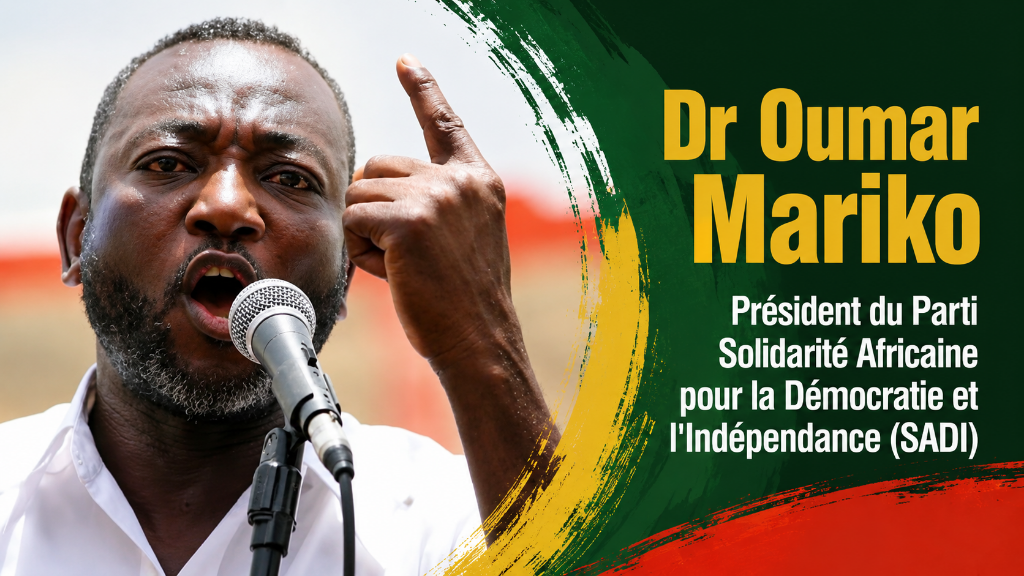
In an increasingly volatile political climate across Mali, the Bamako residence of exiled opposition figure Dr. Oumar Mariko was subjected to a thorough search by armed, masked individuals on May 30. This operation, which spanned nearly three hours, concluded with the confiscation of numerous documents. The incident appears to be part of a heightened wave of repression by transitional authorities, a response seemingly intensified by recent significant military setbacks in the country’s northern regions against rebel and terrorist forces.
An intrusive nocturnal raid
The tranquility of the neighborhood hosting the leader of the African Solidarity for Democracy and Independence (SADI) party was abruptly shattered on Saturday, May 30. A commando unit, heavily armed and wearing balaclavas, stormed Dr. Oumar Mariko’s home.
According to individuals close to the family, the operation lasted approximately three hours. While no physical violence was inflicted upon the occupants present, the method employed was undeniably forceful: a main door was reportedly broken down to access certain locked rooms. The assailants systematically searched the premises before departing with a substantial quantity of administrative and personal documents. For the politician’s associates, the objective is clear: to intimidate and uncover potentially compromising information against a voice that refuses to be silenced, even from thousands of kilometers away from Bamako.
Amidst military reverses, Bamako’s regime shows paranoia
This violation of a prominent figure’s home in Malian democracy is not an isolated event. It directly reflects a growing unease within the ruling military junta. Since the large-scale offensive on May 25, the security landscape on the ground has undergone a radical shift.
During that major assault, an alliance between the Azawad Liberation Forces (FLA) and jihadists from the Group for the Support of Islam and Muslims (JNIM) launched a devastating attack. Government forces and their partners were compelled to retreat, losing control of several strategic villages, as well as the highly symbolic city of Kidal. This significant military defeat undermined the official narrative of a complete territorial reconquest. Faced with the failure of their security strategy, a palpable sense of paranoia seems to have gripped the coup leaders in Bamako, who now perceive conspiracies and internal complicity everywhere.