
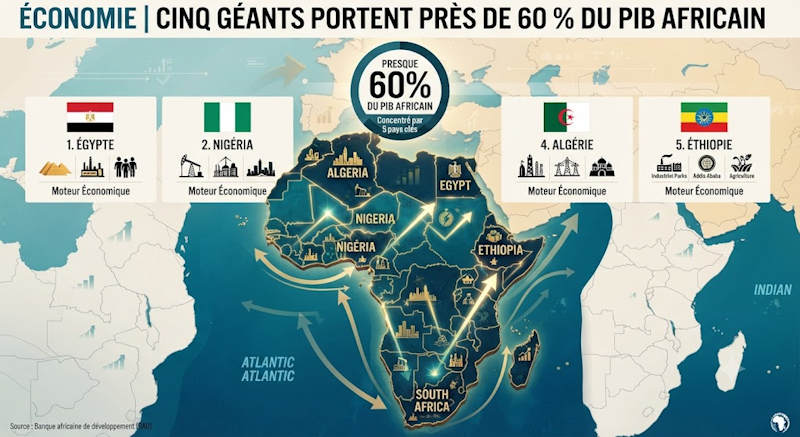
Fresh data from the African Development Bank reveals that five nations collectively account for nearly 60% of Africa’s gross domestic product (GDP). These economic powerhouses—Egypt, Nigeria, South Africa, Algeria and Ethiopia—remain the primary drivers of the continent’s economic momentum.
Their outsized influence reflects their strategic advantages: vast natural resources, expansive domestic markets, robust industrial bases and heavy investment in critical infrastructure. These factors combine to position them as the engines of Africa’s economic growth.
Among them, Egypt and Nigeria stand out for their massive populations and increasingly diversified economies. South Africa maintains its lead as the continent’s industrial and financial powerhouse, while Algeria leverages its energy wealth and public investment programs to fuel expansion. Meanwhile, Ethiopia continues its rapid ascent, fueled by accelerated industrialization and sweeping infrastructure projects.
This concentration of economic output also highlights the stark disparities across African nations. While these five countries dominate the continental economy, many others struggle with industrial lag, limited economic diversification, restricted access to financing and sluggish job creation.
Economists emphasize that fostering a more balanced growth model will be crucial in the coming years. Spreading the benefits of economic dynamism beyond these regional heavyweights is essential to ensuring that development reaches every corner of the continent.
You may also like
-
Imam Kanté clarifies stance on Ousmane Sonko amid political debate
-
Niger infrastructure loans highlight risks of governance challenges
-
Beninese customs foil major explosive smuggling plot
-
Five african economies drive nearly 60% of continent’s gdp growth
-
Côte d’Ivoire’s digital economy surges 4% in global tech index