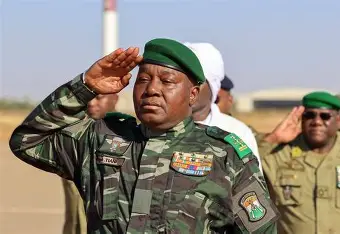
Three years after General Abdourahamane Tiani seized power in Niamey, citing an unmanageable security crisis, the Nigerien government’s initial promises have yielded few tangible results. Instead, the nation now faces a compounding web of challenges: persistent insecurity, economic stagnation, frayed diplomatic ties, and shrinking fiscal space.
Security promises unfulfilled despite military escalation
The primary justification for the July 26, 2023 coup was the restoration of security, a pledge meant to legitimize the transition. Yet, the threat landscape has only grown more complex. Armed factions linked to the Jama’at Nusrat al-Islam wal Muslimin (JNIM) and the Islamic State in the Greater Sahara (ISGS) continue to expand their operational reach across multiple regions.
The nature of attacks has shifted from sporadic strikes on remote military outposts to a more systematic campaign targeting:
- military and logistical convoys;
- civilian villages and settlements;
- key road networks;
- critical infrastructure;
- supply chain hubs.
In some areas, daily life operates under near-constant threat, severely constraining mobility for civilians and public services alike. The consequences are severe:
- abandonment of farmlands;
- decline in domestic trade;
- school closures in affected zones;
- restricted access to healthcare;
- a surge in internally displaced persons.
The human toll underscores a conflict that shows no signs of abating, despite the change in leadership.
Military spending rises, but operational gains remain elusive
Public funds have increasingly been diverted toward defense, yet the expanded budget has not translated into decisive battlefield advantages. The armed forces now contend with:
- an expansive and difficult-to-secure territory;
- multiple active fronts;
- highly mobile insurgent groups;
- logistical bottlenecks.
The relentless operational tempo has led to equipment strain, personnel fatigue, and soaring operational costs. Each new assault underscores the limitations of a purely military response to a crisis rooted in economic, social, and territorial inequities.
Economic lifelines severed amid diplomatic strain
Niger’s economy remains deeply intertwined with regional trade, particularly through the Cotonou-Niamey corridor—a vital artery for imports and exports. The prolonged closure of the border with Bénin, compounded by broader regional tensions, has disrupted traditional supply chains. The fallout includes:
- prolonged delivery delays;
- skyrocketing transport costs;
- frequent stock shortages;
- widespread price inflation.
Households are grappling with eroding purchasing power, as essential goods—from food and medicine to construction materials—grow increasingly unaffordable. Frontline cities like Gaya, once bustling with cross-border commerce, now face diminished activity among transporters, logistics firms, small traders, and hospitality businesses.
This contraction has also weakened state revenue, further constraining public investment.
Foreign investment stalls amid instability
Investors require stability, predictability, and viable legal frameworks—conditions increasingly absent in Niger. The current climate, marked by:
- recurring sanctions and diplomatic friction;
- logistical bottlenecks;
- heightened security risks;
- regulatory unpredictability;
has dampened investor confidence. Capital inflows have slowed, and some projects have been deferred indefinitely. The stalled Niger-Bénin pipeline, once touted as a cornerstone of economic revival, now exemplifies this uncertainty. Any delay or dispute over this infrastructure sends a chilling signal to international backers, who favor long-term stability for major commitments.
Diplomatic realignment yields limited dividends
The regime has pursued a strategic pivot, severing long-standing partnerships with Western allies while embracing new ties—most notably with Russia—and joining the Alliance of Sahel States alongside Mali and Burkina Faso. This repositioning rests on a narrative of regained sovereignty.
Yet, the practical outcomes have been mixed:
- reduced access to international financing;
- diminished technical cooperation;
- strained relations with neighboring states;
- exclusion from certain regional mechanisms.
The vaunted independence from external influence has not eliminated dependency—it has merely shifted its form. Security cooperation with Russian partners now fills the void left by departing Western forces, raising questions about the true extent of national autonomy.
Public services under strain as priorities skew toward defense
The redirection of funds toward military efforts has left social sectors underfunded. Schools, hospitals, and public infrastructure projects face chronic shortages, with delayed implementation and degraded service quality. A vicious cycle emerges: escalating defense spending crowds out development investment, even as long-term stability hinges on addressing the underlying drivers of insecurity.
A population caught between rhetoric and reality
Amid the government’s emphasis on external threats and sovereignty, daily hardships mount. Nigeriens contend with:
- persistent inflation;
- youth unemployment;
- limited access to public services;
- declining real incomes;
- food insecurity.
While political discourse focuses on external adversaries, citizens increasingly demand concrete improvements in living conditions. The gap between stated ambitions and lived experience continues to widen.
A governance model tested by compounding crises
Three years into the transition, Niger stands at a crossroads. The junta arrived promising security, sovereignty, and prosperity. Yet the data reveal a different reality: entrenched insecurity, economic contraction, fiscal strain, and deepening isolation. As military expenditures surge, regional tensions persist, and structural economic flaws fester, the crises reinforce one another, making an exit from the impasse ever more elusive.
You may also like
Atonfack Guemo’s vigilance appeal sparks nationwide debate: what Cameroonians are saying now
Mali’s 514 billion FCFA Russian mercenary contract sparks public outcry and doubts over Bamako’s next move
Molodo ambush fallout: Mali’s public debate shifts as Africa Corps credibility crumbles
United Russia’s 355 seats: the fallout, the debate, and what comes next for Russia’s Douma
After the flames: Moscow refinery strike sparks debate over where this war is heading