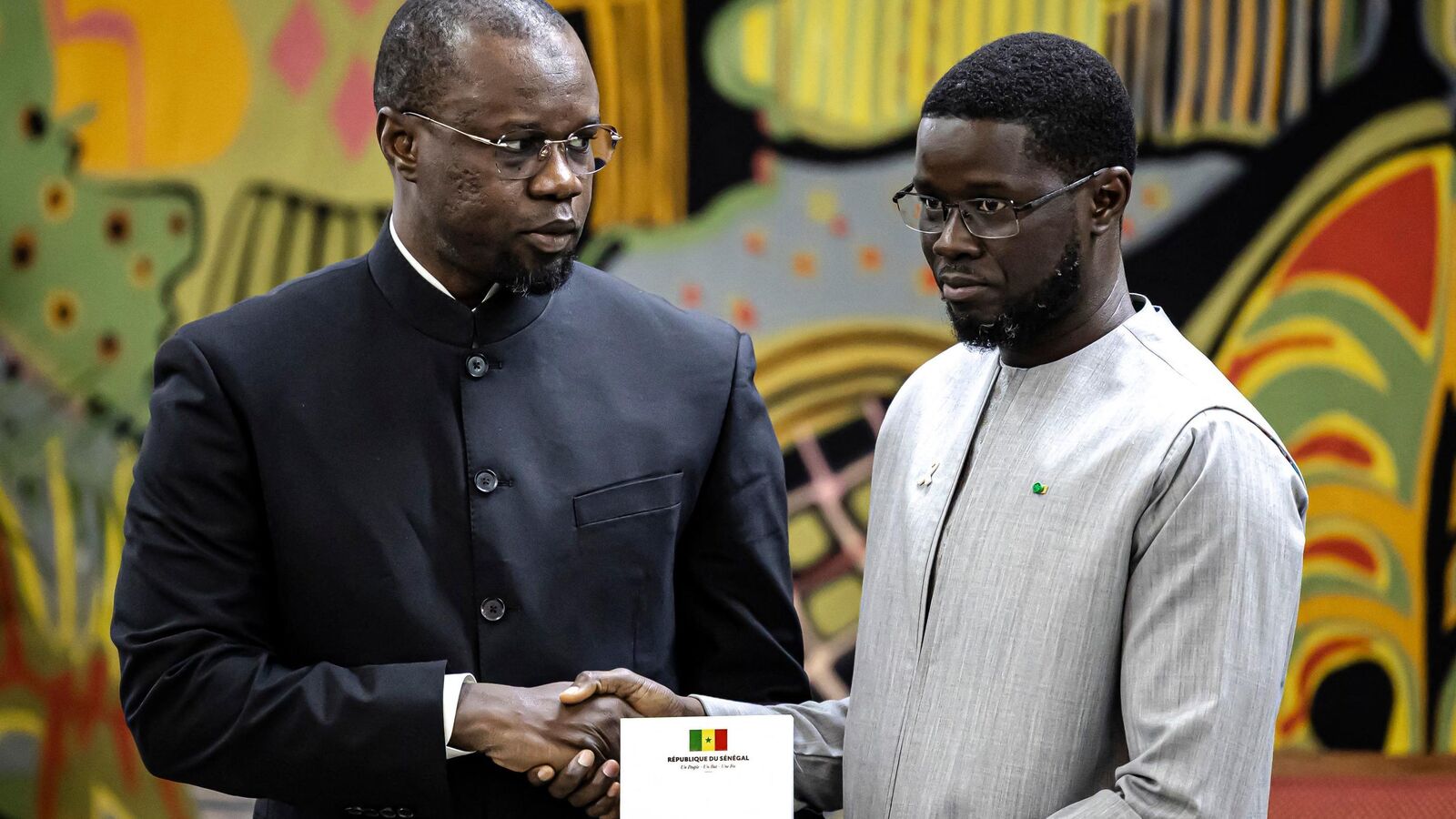
Rivalités politiques, crise économique : au Sénégal, la lune de miel est terminée entre Sonko et Faye
Limogé de son poste par le président Faye, le Premier ministre, Ousmane Sonko vient de se faire élire à la tête de l’Assemblée nationale. Un poste qui le désigne comme rival numéro un du chef de l’État.
The once unbreakable bond between President Bassirou Diomaye Faye and his former Prime Minister Ousmane Sonko has fractured, marking a significant shift in Senegal’s political landscape. During the 2024 Senegalese presidential campaign, their shared Wolof slogan, “Diomaye Moy Sonko” (“Diomaye is Sonko”), epitomized their unified front. However, this political “honeymoon” proved fleeting, lasting only long enough to oust former President Macky Sall, who served from 2012 to 2024.
The complexities of governing, coupled with escalating political rivalries and Senegal’s precarious economic situation, ultimately dissolved their close partnership. What began as a powerful duumvirate has now transformed into a direct confrontation for influence within the state.
Following his dismissal as Prime Minister by President Faye on May 22, Sonko swiftly reclaimed his parliamentary seat in the National Assembly. Demonstrating his enduring charisma and political acumen, he was subsequently elected as the body’s Speaker. This pivotal new role elevates him to the second most powerful position in the Senegalese government, constitutionally designating him as President Faye’s successor, but also firmly establishing him as the President’s foremost political rival.
 Lire le journal