security challenges in Mali after recent jihadist attacks
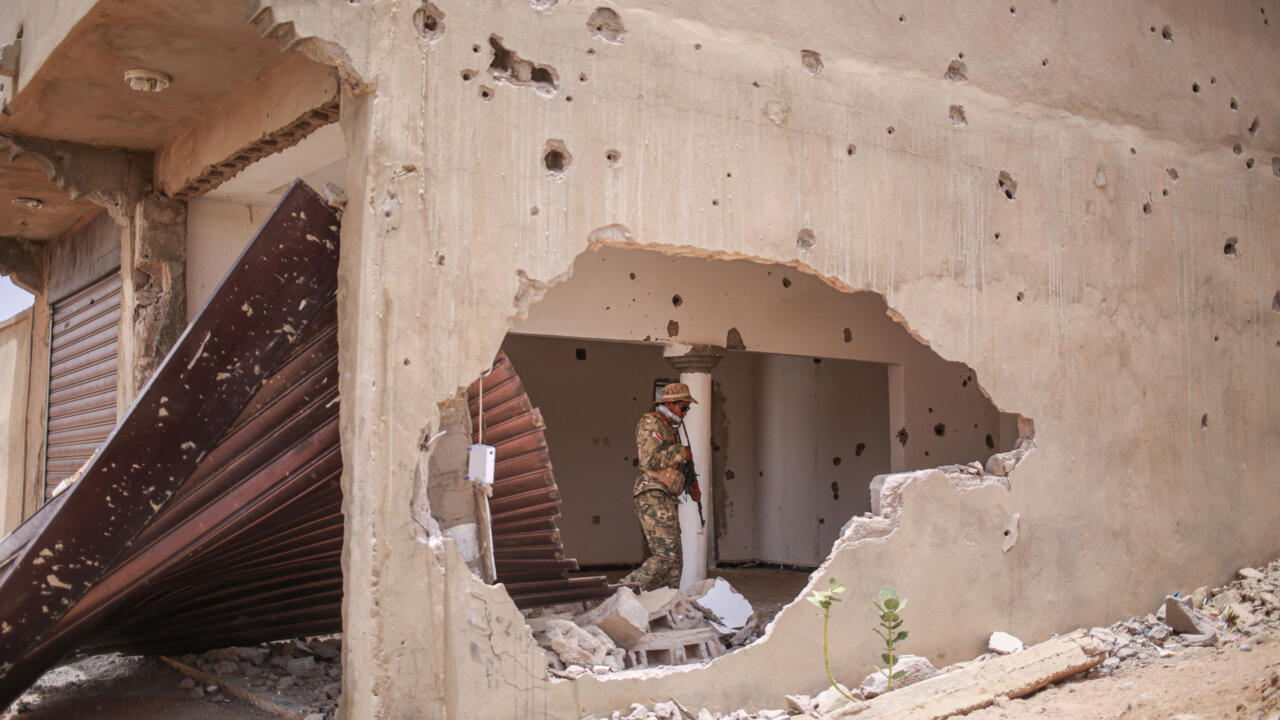
The April 25 attacks in Mali, which claimed the life of Defense Minister General Sadio Camara and led to the fall of Kidal, have exposed critical weaknesses in the country’s security framework. A new analysis from the Timbuktu Institute, an African peace research center based in Senegal, examines the implications of these coordinated assaults by jihadist groups and separatist rebels. What do these attacks reveal about Mali’s security partnerships, particularly with Russia and the Alliance of Sahel States? How has public opinion in Bamako reacted? And what can we expect from the growing collaboration between the Group for the Support of Islam and Muslims (JNIM) and the National Liberation Front of Azawad (FLA)? Bakary Sambe, Director of the Timbuktu Institute in Dakar, provides key insights.
analysis of Mali’s security partnership with Russia
Bakary Sambe: The April 25 attacks in Mali have shattered the illusion of outsourced security through partnerships with Russia. The death of General Sadio Camara and the chaotic withdrawal of Russian forces from Kidal symbolize the failure of the Wagner-Africa Corps strategy. While Operation Barkhane had civil-military components, outsourcing security to Moscow has proven ineffective against locally rooted guerrilla warfare. Without immediate results on the ground, the Assimi Goïta regime risks losing its primary narrative tool: the promise of security restoration.
despite ongoing russian support, security gaps remain
Yes, Russia’s Africa Corps continues to operate alongside Malian forces, as evidenced by recent footage and official statements. However, the collapse in Kidal and the retreat from Tessalit demonstrate that outsourcing security has not worked in Mali. These setbacks highlight the limitations of relying on external military support to address complex insurgencies.
alliance of Sahel states fails to deliver on defense commitments
The Alliance of Sahel States (AES) was designed as a mutual defense pact, with Article 5 of the Liptako-Gourma Charter mirroring NATO’s collective defense clauses. Yet, after the April 25 attacks, no military support materialized from member states like Niger or Burkina Faso. While leaders like Burkina Faso’s President Traoré condemned the attacks as a “monstrous plot,” the alliance’s response was limited to declarations. The reality is that these nations face severe internal security threats, leaving little capacity for external missions.
public opinion in Mali shows paradoxical response to crisis
While the Goïta regime appears weakened externally, the attacks paradoxically strengthened national unity. The government’s legitimacy hinges almost entirely on its security promises. The crisis has revived painful memories of 2012, when armed groups rapidly seized northern regions. However, a unique Malian paradox persists: despite unmet security promises, public rallies around the national flag have temporarily reinforced the regime’s standing.
tactical alliance between jihadists and separatists raises concerns
The JNIM and FLA alliance, though tactically effective, is not a sustainable coalition. The coordinated attacks reveal a convergence of interests—opposition to Bamako’s rule and pragmatic gains from trafficking—but long-term cohesion is unlikely. Fundamental ideological differences, such as JNIM’s push for Sharia law versus FLA’s demand for Azawad autonomy, create irreconcilable goals. Additionally, JNIM’s dominance by figures like Iyad Ag Ghaly complicates its commitment to Azawad’s independence.
could the jihadist-separatist alliance evolve into a political force?
There is potential for the JNIM to rebrand itself as a national political actor. By leveraging figures like Bina Diarra, the group seeks to shed its image as an external movement and position itself as a legitimate player in Mali’s future. This alliance could serve as a bridge toward eventual political negotiations, though its long-term viability remains uncertain.
is dialogue the solution to Mali’s insurgency?
National dialogue has become a widely supported necessity. The jihadist threat is no longer external but deeply rooted within Malian society. Many Malians argue that the time has come to engage with all citizens, even those considered lost. While the transitional authorities favor a military response, opposition figures like the Coalition of Forces for the Republic (CFR) insist that dialogue is the only path forward to silence the guns and restore stability.