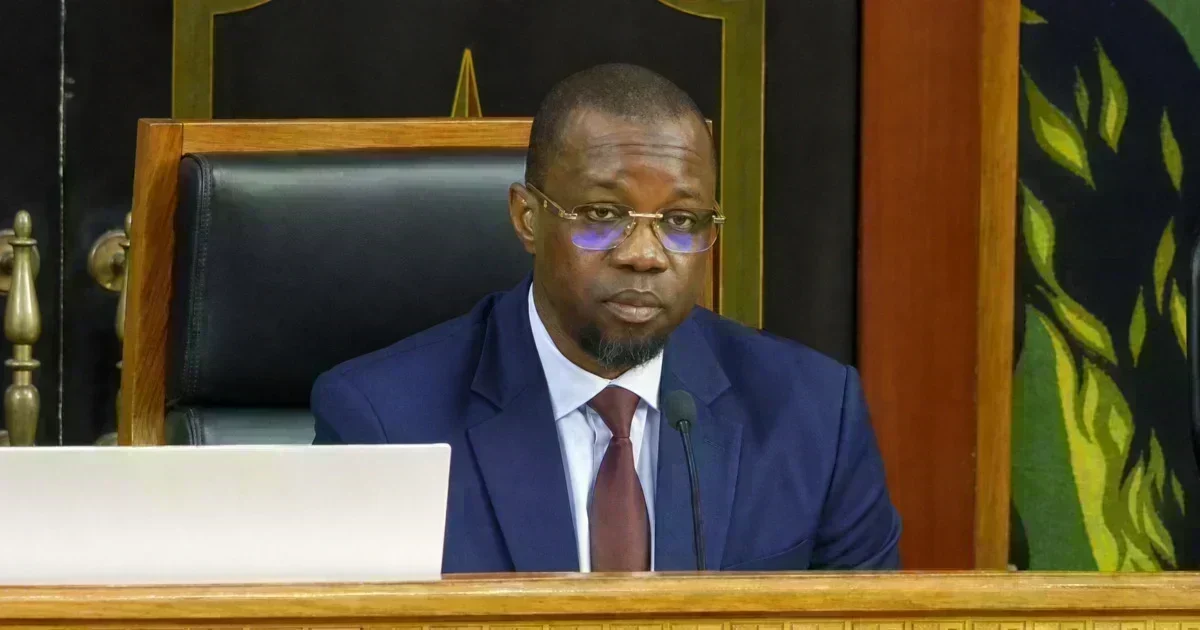
With the inaugural ordinary congress of the Parti des Patriotes Africains du Sénégal pour le Travail, l’Éthique et la Fraternité (PASTEF) scheduled for Saturday, June 6, 2026, its Secretary-General, Ousmane Sonko, recently issued an extensive statement. This document meticulously chronicles the movement’s journey and articulates the ambitious objectives for the upcoming gathering.
In his address, the former Prime Minister adopts a dual perspective: that of a founder reflecting on the party’s origins, established in 2014 “without financial resources” or “influential connections,” and that of a strategist contemplating the crucial question of post-electoral success. He asserts, “History demonstrates that political shifts can be neutralized if they lack a clear doctrine, a robust organizational structure, and a long-term strategy.”
Sonko’s tribune outlines a compelling narrative arc, extending from the popular mobilizations of 2021-2024 – which he characterizes as “one of the most intense periods in recent Senegalese history” – through to the June 2026 congress. This pivotal event, he envisions, will mark PASTEF’s transformation from a “movement of rupture” into a “fully organized political party.” Delegates representing national sections and the diaspora will be tasked with endorsing an ideological charter, a strategic orientation document, comprehensive party theses, and a general resolution.
A central theme woven throughout the text is the concept of sovereignty, which Sonko defines not merely as a slogan but as “a method of governance.” This expansive definition encompasses control over natural resources, budgetary decisions, agricultural policy, the educational framework, and Senegal’s standing on the global stage. He further integrates a cultural dimension, advocating for the promotion of national languages, a re-engagement with historical identity, mastery of modern technologies, and a profound pan-African ambition: to seamlessly integrate national sovereignty with economic and scientific cooperation across the continent.
Released amidst prevailing tensions within the executive branch and his own removal from government, Sonko’s tribune also serves as a clear signal: the founder of PASTEF intends to exert significant influence over the party’s ideological direction, irrespective of institutional fluctuations or personal political circumstances.