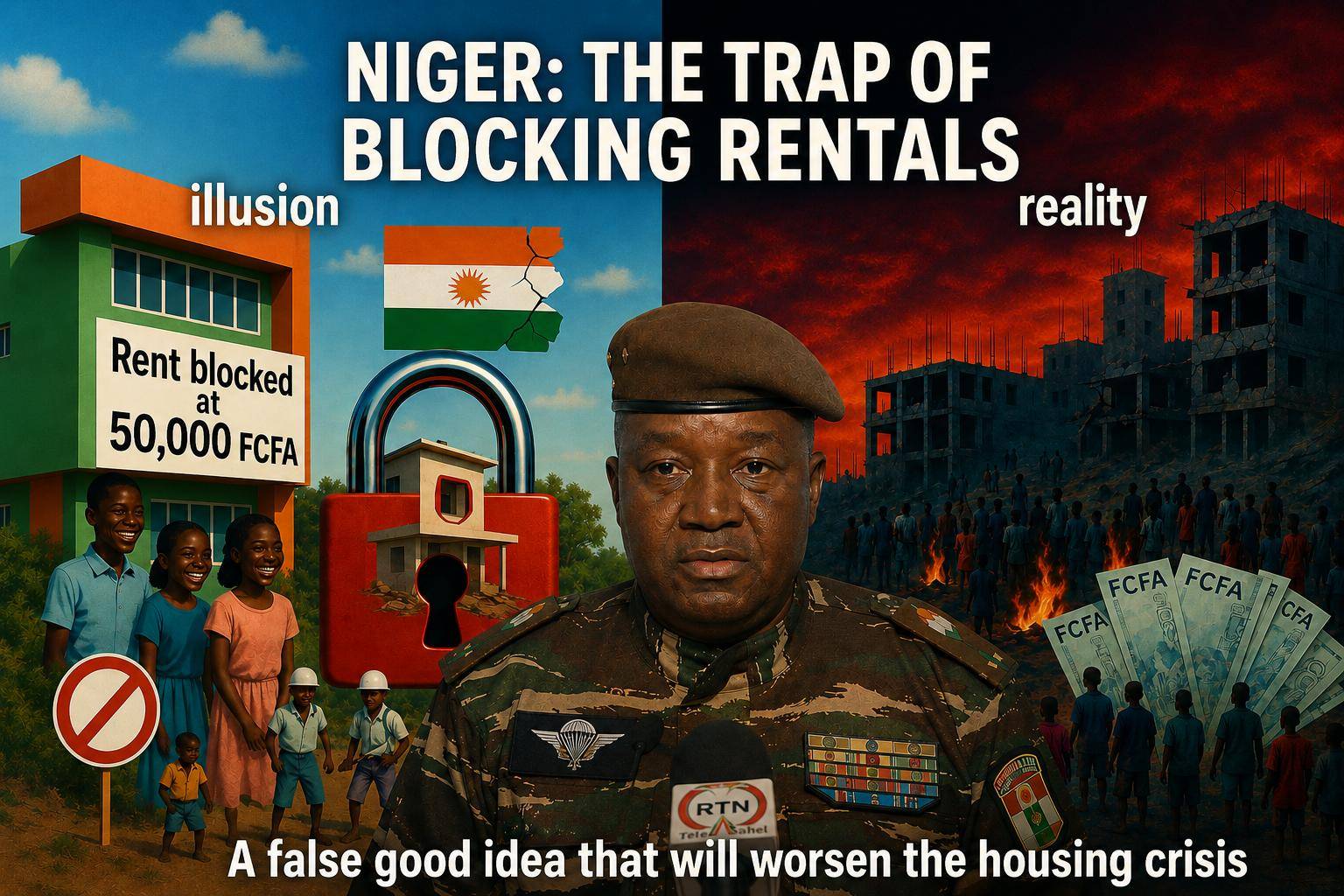
The Nigerien authorities have recently enacted a decree to cap rental prices between 15,000 and 80,000 FCFA in Niamey. While the measure aims to appeal to low-income households, it disregards fundamental economic principles. Intended as a lifeline for tenants, this policy may instead suffocate the housing market and exacerbate existing shortages.
Noble intentions, flawed execution
The transitional government’s objective—to curb real estate speculation, prevent excessive price hikes, and ensure affordable housing—appears commendable. However, history demonstrates that price controls imposed by administrative fiat rarely yield sustainable results. Behind the promise of cheaper accommodation lies a looming threat to Niger’s real estate sector.
A fundamental economic misstep
The rental market, like any other, operates on the immutable principle of supply and demand. When housing supply falls short of demand, prices rise. The only effective long-term solution is to increase the number of available units. By imposing artificially low price ceilings—80,000 FCFA at most for social housing in Niamey—the government inadvertently triggers a chain reaction of unintended consequences.
Consequences of the decree
- Investment paralysis: Developers and property owners will abandon new construction projects if profitability is stifled by rigid price controls. Capital will seek more favorable sectors, leaving the housing deficit unaddressed.
- Neglect of existing properties: Reduced rental income discourages maintenance, leading to rapid deterioration of buildings. Over time, Niamey’s urban landscape could face widespread dilapidation.
- Shadow markets and corruption: Scarcity breeds opportunism. Desperate tenants may resort to under-the-table payments to secure housing, undermining the decree’s legitimacy and fostering unethical practices.
State’s inability to fill the void
The decree’s success hinges on the government’s capacity to construct thousands of social housing units to offset private sector withdrawal. Yet, with state coffers strained by political turbulence and reduced international aid, such an endeavor is financially out of reach. Additionally, the policy sends a chilling signal to local banks, discouraging mortgage lending and further throttling economic activity—from construction workers to cement suppliers.
A short-sighted political gamble
This decree is a classic case of populist policymaking, prioritizing immediate public approval over structural economic health. By attempting to manipulate prices, the military-led administration risks converting a cost-of-living crisis into an acute housing shortage. In Niamey, securing decent shelter could soon become an insurmountable challenge, turning what was once a housing problem into a humanitarian dilemma.