Can a nation boasting robust oil production, exporting millions of barrels annually, and claiming energy sovereignty still depend on foreign fuel imports to meet its own citizens’ needs? This pressing question now confronts Niger’s transitional military regime under General Abdourahamane Tiani. The hydrocarbon crisis gripping the country has laid bare systemic failures in the management of petroleum production, refining, supply, and distribution a stark contrast to the official narrative of energy self-sufficiency.
From oil wells to empty fuel pumps: the paradox of Niger’s energy strategy
The paradox is unmistakable. Niger has produced oil from the Agadem Basin since 2011 and operates the Zinder refinery (SORAZ). With daily output reaching approximately 110,000 barrels 20,000 refined domestically and 90,000 exported one would expect fuel availability to be secure. Yet, Nigerians face persistent shortages of gasoline and diesel, with long queues at service stations and repeated stockouts disrupting daily life.
The scale of the deficit is startling. According to official figures released in October 2026 by Petroleum Minister Hamadou Tini, Nigeria’s national oil company, the shortfall in super gasoline surged from 47.25 million liters in 2024 to 159.74 million in 2025, reaching 196.62 million liters in the first eight months of 2026. Diesel deficits over the same periods rose to 52.60 million liters. These numbers are not anomalies they reveal a structural imbalance between production capacity and domestic demand.
The illusion of energy independence: why oil production isn’t enough
The challenge facing Niger is not merely technical; it is deeply institutional. While the country extracts vast quantities of crude, refining and distributing refined products require coordinated infrastructure, financing, and governance. The SORAZ refinery continues to operate, supplying products to the Niger National Oil Products Company (SONIDEP). Yet the gap between refinery output, national consumption, financial constraints, and logistical bottlenecks persists undermining the very foundation of energy sovereignty.
This discrepancy raises a critical question: if Niger can export oil and operate a refinery, why can’t it reliably supply its own citizens? The answer lies not in resource scarcity but in systemic disorganization weak supply chains, opaque financial flows between state entities and operators, and insufficient transparency in procurement and distribution.
Algeria to the rescue? The strategic cost of imported fuel
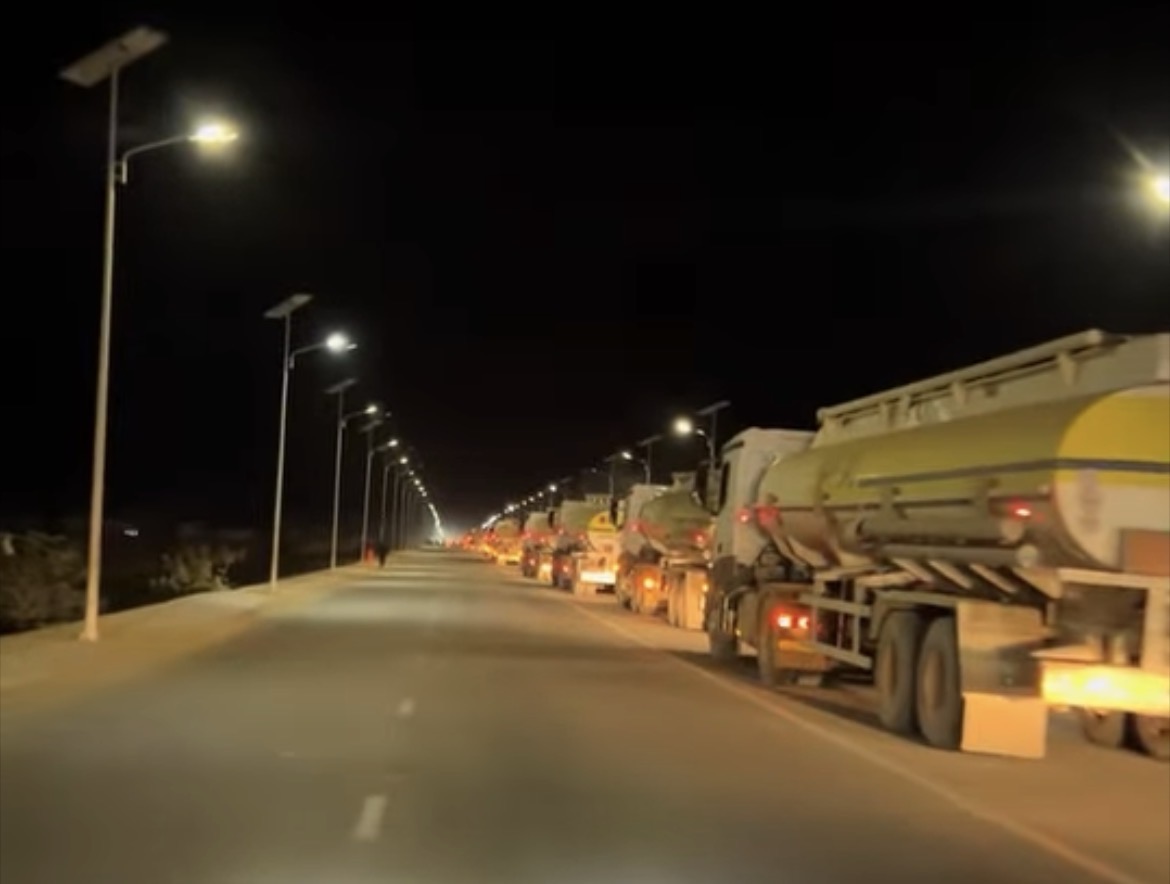
In March 2026, Niger and Algeria signed a hydrocarbon cooperation memorandum, followed by three agreements in June between SONIDEP and subsidiaries of Algeria’s Sonatrach. By November 2026, Algeria dispatched 53 fuel tankers delivering 1.65 million liters of gasoline and diesel to Niamey a temporary fix that highlights a troubling reality: despite domestic production, external imports remain essential.
Yet while cooperation with Algeria may alleviate immediate shortages, it also exposes Niger’s weakened negotiating position. How much does the country pay for these imports? What terms govern delivery schedules and pricing? What are the long-term liabilities or compensations attached to these agreements? Without clarity, each shipment from Algiers underscores a deeper vulnerability: the inability to secure energy autonomy despite control over national resources.
Sovereignty, after all, is not declared through diplomatic agreements or production reports. It is proven through reliable access to fuel at stable prices, fair to consumers and sustainable for the economy.
Financial opacity and systemic debt: the root of the crisis
In October 2026, authorities announced the formation of a technical committee to manage supply crises and restructure cross-debts among key players: the state, SONIDEP, SORAZ, Niger Electricity Company (NIGELEC), and China National Petroleum Corporation (CNPCNP). This move implicitly acknowledges a harsh truth: the strategic oil sector has accumulated financial obligations so severe that they now threaten continuity of supply.
The committee’s three-month mandate to develop a debt resolution plan raises urgent questions. What are the outstanding amounts? Who owes whom and under what terms? How did a sector meant to be a revenue engine for the state devolve into a financial liability? Transparency is non-negotiable when national assets are at stake.
The public deserves more than appeals to corruption or vague references to “oil mafias.” It deserves audited accounts, named responsibilities, and verifiable remedies.
A crisis with human and economic consequences
The ripple effects of fuel scarcity extend far beyond political speeches. Drivers waste hours seeking gasoline. Transporters reduce trips, raising transport costs. Small businesses stall. Artisans with generators cannot work. Service sector employees arrive late. The informal economy critical to survival grinds to a halt. The cost of this disorganization is not abstract; it is paid in lost income, disrupted schooling, and eroded public trust.
This crisis underscores a fundamental principle: natural resources only serve a nation when they deliver tangible improvements to daily life. For Niger, energy wealth must translate into energy security not a privilege for the few, but a right for all.
General Tiani’s test: from rhetoric to results
Since assuming leadership in July 2023, General Tiani has positioned energy sovereignty as a cornerstone of his governance. Yet the fuel crisis tests that commitment. Niger boasts oil fields, a refinery, and export deals yet its people endure shortages, financial opacity, and reliance on foreign imports. These contradictions demand answers.
The November 2026 delivery from Algeria is a bandage, not a cure. To restore confidence, the regime must go beyond temporary imports and public relations. It must implement transparent financial governance, strengthen the supply chain, and ensure that every liter of refined fuel reaches Nigerians without delay or cost burden.
Energy sovereignty is not a slogan. It is measured in the length of gas station lines, the availability of diesel for generators, and the reliability of public transport. For General Tiani and his government, the real trial lies not in international accords or production volumes, but in whether Niger’s citizens can fill their tanks and their livelihoods without waiting in vain.
By Daniel Mbami — Journalist