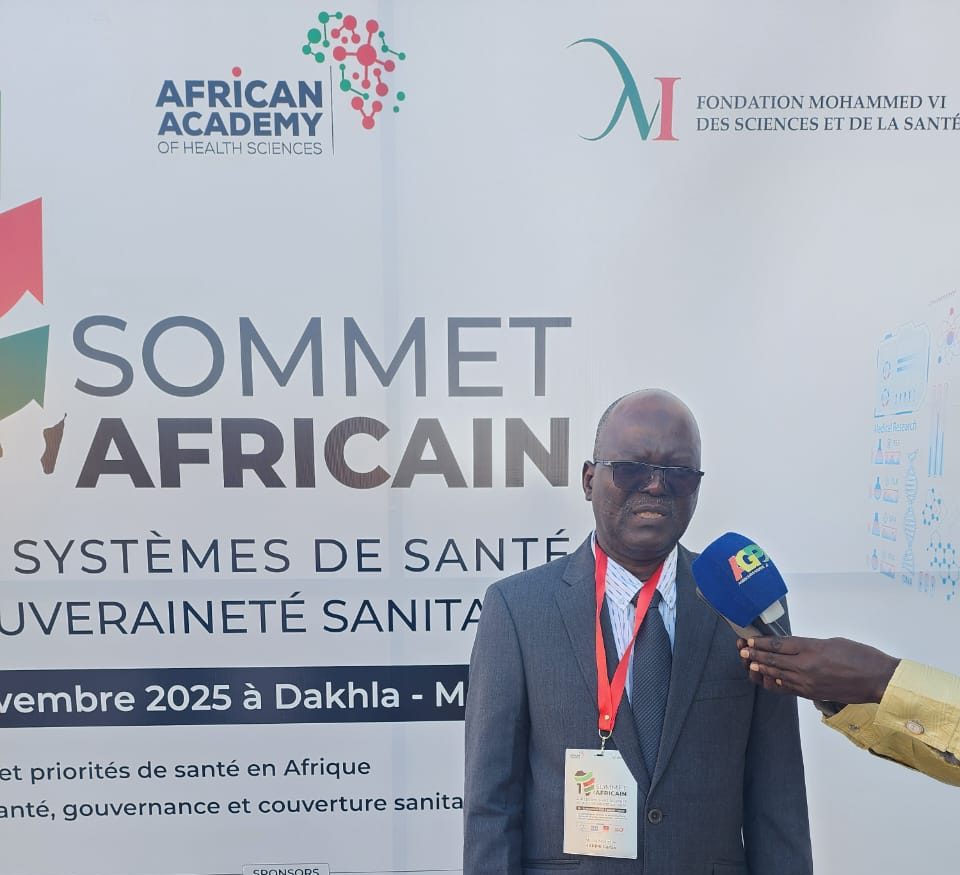
Niger is firmly committed to achieving health sovereignty, a declaration made by Colonel Major Garba Hakimi, the country’s Minister of Health and Public Hygiene. Speaking to the ANP on Saturday, November 29, in Dakhla, Morocco, following the conclusion of the inaugural African Summit on Health Systems and Health Sovereignty, Minister Hakimi underscored Niger’s proactive stance in this critical area.
This pursuit of Niger health sovereignty aligns directly with the vision of the nation’s highest authorities, including President General Abdourahmane Tiani and the Prime Minister, who also serves as the Minister of Economy and Finance. These leaders are spearheading substantial investments and reforms within Niger’s healthcare sector.
Significant progress has already been made, marked by the ongoing construction of vital healthcare infrastructure across the national territory. This includes new hospitals and integrated health centers, designed to significantly enhance primary healthcare services at the community level. The minister stressed that a robust health system is unattainable without foundational infrastructure capable of delivering essential primary care.
Furthermore, Minister Hakimi highlighted the strategic acquisition of state-of-the-art medical equipment, representing major investments nationwide. This initiative aims to empower medical professionals and technicians with the tools necessary for precise diagnostics and effective curative care. Crucially, the focus extends beyond equipment to include comprehensive training. “It’s not enough to have equipment; you also need personnel trained to utilize these tools,” he noted, explaining that healthcare agents are undergoing specialized and continuous training programs.
As part of the Nigerien authorities’ commitment, the health sector receives substantial budgetary allocations. These are complemented by measures providing free healthcare for specific vulnerable groups and a 50% reduction in treatment costs at public health facilities.
The minister emphasized that initiatives like free childbirth services, care for children under five, and the widespread development of infrastructure are crucial for ensuring universal access to healthcare. “This new momentum will enable us to move towards the universal health coverage advocated by all administrations. I believe Niger is on this path, and God willing, we will achieve it,” he asserted.
Reflecting on the outcomes of the Dakhla summit, Minister Hakimi observed that African experts spent 48 hours meticulously reviewing the continent’s health systems. While progress was acknowledged, numerous challenges were identified, notably the inherent fragility of health systems, governance deficiencies, and persistent funding issues.
For the Nigerien official, merely identifying challenges is insufficient; the imperative is to formulate effective strategies to cultivate health systems that are robust, resilient, and high-performing, ultimately realizing the objective of health sovereignty. He reiterated, “These are the conditions for truly advancing towards this health sovereignty.”
The minister further praised the summit as an “excellent success,” particularly for underscoring the vision of His Majesty King Mohammed VI of Morocco for a health-sovereign Africa. This vision was tangible during the inauguration of the African Academy of Health Sciences headquarters on Saturday, November 29.
He elaborated on Morocco’s dedication, which includes constructing university hospitals, universities, and other health facilities, such as a comprehensive complex in Dakhla that delegates visited. Colonel-Major Garba Hakimi stressed, “Human resources are paramount for health sovereignty; you cannot have a strong, robust, and efficient health system without quality human resources.” He expressed his belief that “this vision of His Majesty the King should be embraced by other heads of state to truly enable Africa to progress.”
The Minister of Health and Public Hygiene also recalled past initiatives by heads of state recommending that 15% of national budgets be allocated to the health sector. This funding is vital for acquiring necessary equipment, developing sufficient human resources, and building a solid health system capable of achieving the desired health sovereignty. “We should not await assistance from others, from the West or partners, to attain sovereignty. It is achievable; it simply requires concerted effort,” affirmed Colonel-Major Garba Hakimi.
He additionally noted a growing awareness among countries regarding the need for innovative financing mechanisms beyond traditional budget allocations. This blend of funding approaches is expected to forge a strong and sustainable health system.
The minister conveyed optimism regarding the Dakhla declaration’s five-pillar roadmap: Epidemiology; Human Capital/Training; Research and Innovation; Financing/Governance; and Infrastructure and Equitable Access. “I believe that by focusing on these five axes, we can indeed achieve the much-sought-after health sovereignty. It is certainly feasible. The main thing is to get to work,” he concluded.
The first African Summit on Health Systems and Health Sovereignty convened approximately 200 African experts in Dakhla from November 28 to 29, 2025, for discussions centered on health sovereignty, a project strongly backed by the King of Morocco.