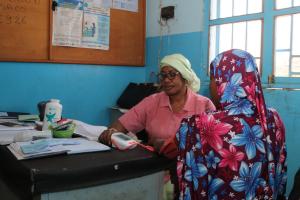
In the heart of Bamako, young women like Kadidia, 19, are breaking long-standing taboos. «I was once too ashamed to discuss contraception, fearing judgment from my community,» she recalls. «Now, I understand the importance of protecting my health and future.» Her journey reflects a broader transformation in Mali, where trained midwives and improved healthcare services are reshaping lives.
Overcoming barriers to reproductive health in Mali
Despite progress, Mali continues to face significant challenges in sexual and reproductive health. In 2024, the country recorded 583 maternal deaths, with 89 occurring among adolescents aged 15–19. Early and unintended pregnancies remain a major concern, particularly for young women in vulnerable communities. While access to modern contraception has increased—from 480,682 users in 2023 to 559,493 in 2024—the need for accessible, stigma-free services persists. With nearly 4.8 million women of reproductive age in the country, ensuring their health and autonomy is a critical public health priority.
How training midwives strengthens health systems
Midwives are at the forefront of this change, providing essential care to women and girls across Mali. Their training extends beyond clinical skills to include counseling, consent-based care, and the treatment of sexually transmitted infections (STIs), including HIV/AIDS. Programs funded by the World Health Organization (WHO) and partners have equipped midwives with tools to deliver respectful, judgment-free services, empowering young women to make informed decisions about their bodies and futures.
«The training I received transformed how I interact with patients,» says Aïssata, a midwife at a community health center in Kebila. «I now offer prenatal care with a renewed focus on family planning and STI prevention, ensuring every young woman feels heard and respected.» Her experience mirrors that of Assetou, a mentor midwife in Yanfolila, where adolescent visits to the health center more than doubled from 2,330 in 2019 to 5,121 in 2025.
National initiatives driving systemic change
The WHO’s support in Mali goes beyond training. Through strategic partnerships with the Malian government, the organization has:
- Strengthened the legal framework for reproductive health rights;
- Launched a National Health Observatory to monitor maternal mortality and guide policy;
- Established mobile health teams to reach remote and humanitarian zones, such as Macina;
- Developed Mali’s first national bulletin on sexual and reproductive health indicators, alongside the 2022 National Health Accounts.
«These initiatives are not just about numbers—they’re about changing attitudes,» explains Dr. N’Tji Keita, Head of the Maternal and Child Health Department at Mali’s National Reproductive Health Office. «By training magistrates, health workers, and midwives, we’re ensuring that every young woman receives care without stigma or discrimination.»
Breaking taboos through education and awareness
Cultural barriers often silence discussions about sexual health. To address this, Mali has integrated awareness campaigns in schools and radio programs, normalizing conversations about contraception, consent, and bodily autonomy. These efforts, combined with midwife training, have fostered trust in health services. Kadidia’s story is a testament to this shift: «The midwife who attended me listened without judgment and gave me clear advice. Services like these are lifelines—don’t be afraid to seek help,» she urges other young women.
The impact of these programs extends beyond individual health. By reducing unintended pregnancies and maternal deaths, Mali is taking strides toward achieving the Sustainable Development Goals (SDGs), particularly those related to gender equality and good health. As midwives like Aïssata and Assetou continue their vital work, they’re not just transforming health outcomes—they’re redefining futures.