Libreville’s bold urban makeover at the baie des cochons
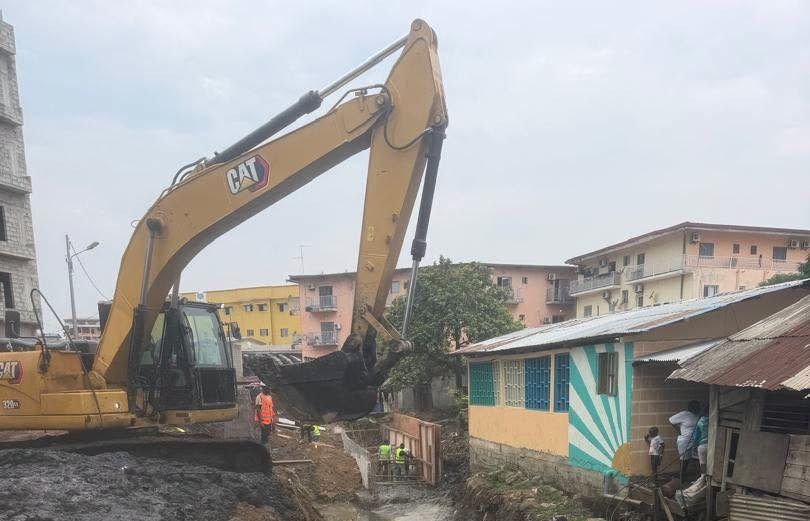
Libreville, june 25 2026 – On june 26, a pivotal moment will mark the start of Libreville’s urban transformation journey. After weeks of consultations and planning, demolition work is set to begin in the strategic Baie des Cochons area, located in the capital’s third arrondissement.
Beyond the machinery poised for action lies a project far greater than mere road construction. This initiative represents one of the flagship undertakings of President Brice Clotaire Oligui Nguema’s urban modernization agenda, aiming to reshape traffic flow, sanitation systems, and territorial integration across multiple Libreville neighborhoods.
Focusing on key locations such as Sipagel, the Léon Mba roundabout, and the corridor extending from the Gabon Energy and Water Company facilities to the Petit-Paris roundabout, authorities have made a deliberate choice to prioritize foundational infrastructure capable of supporting urban growth. Yet this ambitious plan also brings to light a pressing challenge faced by many African metropolises: how can cities be modernized without disrupting long-established communities?
Unlocking a capital city in transformation
The Baie des Cochons area plays a critical role in Libreville’s spatial organization. Positioned at the heart of dense economic and human traffic flows, this zone has long been a major bottleneck between Mont-Bouët market, the city center, Bessieux Boulevard, and several peripheral districts.
Government plans include creating a new main thoroughfare alongside multiple secondary roads designed to ease movement and strengthen connections between the Libreville University Teaching Hospital, Petit-Paris, the Léon Mba roundabout, and surrounding areas.
During a site visit on june 23, Housing and Urban Planning Minister Mays Mouissi directly addressed residents to outline project objectives. Authorities emphasize that freeing up public land is an essential precursor to the actual commencement of construction by the awarded contractor.
The initiative also aims to tackle a recurring issue affecting thousands of nearby residents: flooding. The program includes clearing existing gutters, rehabilitating degraded drainage structures, and installing new stormwater evacuation systems.
For public officials, this represents an opportunity to address two critical urban challenges simultaneously: mobility and sanitation.
Navigating the human impact of major urban projects
As with any large-scale development, the future benefits come with immediate consequences for affected populations. Some families have occupied the targeted spaces for decades, while others rely on economic activities in the area for their daily livelihoods. The prospect of demolitions understandably raises questions, concerns, and expectations among residents.
Recent experiences from major urban projects across Africa show that project success isn’t measured solely by the quality of roads or modernity of infrastructure. It also hinges on authorities’ ability to manage the transition humanely.
Issues surrounding compensation, potential relocations, protection of local businesses, and social support become just as crucial as the construction work itself.
Mindful of this responsibility, the ministry claims to have prioritized dialogue with residents before beginning operations. The coming weeks will reveal the effectiveness of this approach and the government’s ability to balance public interest with protecting affected communities.
A litmus test for urban modernization
The Baie des Cochons has become emblematic of a city that can no longer grow according to outdated patterns.
With rapid population growth, fast-paced urbanization, and mounting environmental pressures, Libreville must adapt its infrastructure to meet new realities. Chronic traffic jams, limited emergency access, sanitation problems, and neighborhood isolation now pose significant barriers to economic development.
This is precisely what authorities aim to address through this project. Yet the initiative also serves as a critical political test, evaluating the state’s capacity to implement ambitious urban reforms while preserving social cohesion. Because a modern city isn’t built with concrete and roads alone—it’s built with the support of its people.
At the Baie des Cochons, Gabon is playing a key role in its urban modernization strategy. The first bulldozer strokes will launch construction, but it’s the project’s tangible impact on daily life that will ultimately determine the success of this much-anticipated transformation.