
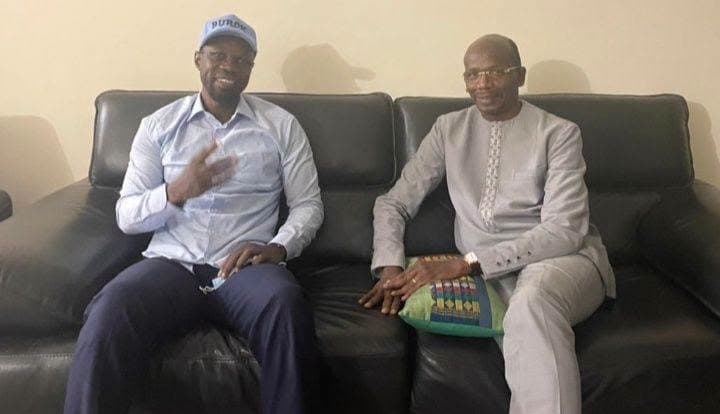
In a candid interview, Lansana Gagny Sakho, Chairman of the APIX Board of Directors, shared his perspective on the political rift that led him to distance himself from Ousmane Sonko, leader of Pastef. Speaking from his unwavering commitment to the Republic, he revealed the motivations behind his decision to prioritize institutional integrity over partisan loyalty.
From supporter to critic: the turning point
Sakho admitted that he initially aligned with Pastef’s vision, drawn by the credibility of its key figures. However, he made it clear that his allegiance never extended to Sonko personally. ‘I joined the movement based on the people behind it, not the man,’ he stated. When offered a ministerial position post-alternance, he declined, choosing instead to uphold his principles. ‘I refused to let power dictate my values,’ he asserted. ‘This decision allowed me to walk away with my conscience intact.’
Sonko’s stance on the Republic under scrutiny
Sakho’s criticism of Sonko sharpened when he pointed to public statements that, in his view, undermined state authority. He highlighted a controversial remark made by Sonko while President Faye was abroad, accusing Sonko of openly questioning the government’s competence. ‘Such comments do not reflect the spirit of unity our institutions require,’ Sakho noted. He argued that leadership demands more than dissent—it requires constructive engagement with the challenges of governance.
Justice reform: progress amid skepticism
Acknowledging that challenges exist on both sides, Sakho emphasized the strides made in judicial reform under President Faye’s administration. He referenced the replacement of the former Minister of Justice, Ousmane Diagne, who had publicly denied manipulation attempts. Sakho dismissed claims that the reshuffle aimed to control the judiciary, insisting that magistrates are ‘anything but puppets.’ ‘The reality of power is far more nuanced than opposition narratives suggest,’ he commented.
Institutional continuity vs. political upheaval
Sakho’s remarks come at a pivotal moment as Pastef faces internal fractures, with several party members defecting to the presidential camp ahead of the launch of the Kiiraay party. He framed his support for President Diomaye Faye as a defense of stability, stressing that institutional continuity must prevail over factionalism. ‘The state is a living entity that requires steady hands, not political games,’ he concluded.
You may also like
-
Lansana Gagny Sakho clarifies stance on Ousmane Sonko and Senegal’s institutions
-
Lansana Gagny Sakho clarifies stance on Ousmane Sonko and republican values
-
Lansana Gagny Sakho clarifies his break with Ousmane Sonko over Niger’s republican values
-
« On a tenté de manipuler les magistrats » : Les propos très surprenants de Lansana Gagny Sakho
-
Ousmane Sonko’s firm stance on 2027 local elections in Senegal