Le JNIM à la veille d’un contrôle total du Mali
Même catégorie
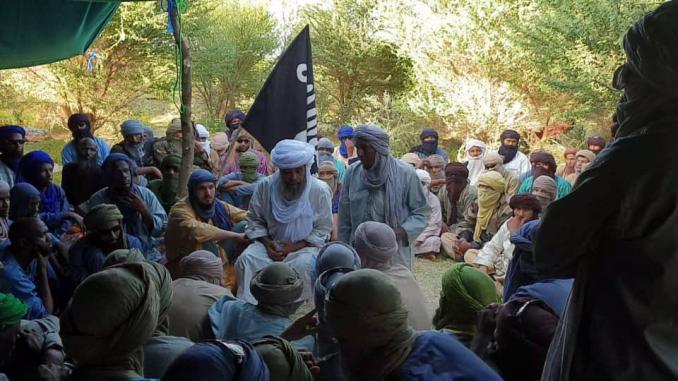
The al-Qaeda-affiliated Group for the Support of Islam and Muslims (JNIM) is intensifying its campaign in Mali, despite ongoing military operations by Bamako and its allies. The group’s sustained attacks, including ambushes on the army, assaults on military outposts, and pressure on vital transport routes, demonstrate its expanding operational reach across various regions of the country.
This surge in the jihadist organization’s power now extends beyond Mali’s borders, impacting the entire Sahelian region. This development causes significant alarm for regional nations and numerous second-tier African countries surrounding the area. Given the inherent fragility of existing governments and a severe economic crisis, the risk of Islamist terrorism metastasizing across the region is a grave concern.
A strategy of entrenchment, not just conquest
Reports emerging from several Malian regions paint a disquieting picture. For instance, five villages in the central Bandiagara region were subjected to attacks on Thursday, May 21, 2026. The Group for the Support of Islam and Muslims (JNIM), linked to al-Qaeda, claimed responsibility for these incidents, though casualty figures were not provided. With the military junta in Bamako seemingly preoccupied, the hinterland appears increasingly vulnerable.
Far from being merely a clandestine and mobile entity, JNIM has, over several years, cultivated a strategy of territorial entrenchment. The group skillfully exploits communal conflicts, local rivalries, and the absence of public services to forge extensive networks of influence. In numerous rural areas, it imposes its own forms of mediation, regulates movement, and implements parallel taxation systems. Essentially, where the state’s presence diminishes, JNIM endeavors to establish an alternative order.
This strategic approach clarifies why purely military responses quickly reach their limitations. While an operation might temporarily reclaim an area, it often fails to restore the essential administrative, judicial, or economic authority required for lasting stability.
Mali’s security pivot
Following the withdrawal of French forces and the deepening of its security partnership with Russia, Malian authorities have strongly emphasized a policy of assertive military sovereignty.
The transitional government frames this strategy as a decisive break from Western security dependence. However, on the ground, violence persists, and armed groups retain significant mobility.
Furthermore, several international organizations have documented allegations of human rights violations involving Malian armed forces and their Russian-allied groups. Bamako consistently refutes these accusations, denouncing them as foreign destabilization campaigns.
This growing polarization further constricts avenues for political mediation.
The Sahel: fragmentation and international competition
The Sahelian crisis is also evolving into a theater of geopolitical rivalries. Russia, Turkey, the Emirates, Western states, and various regional powers are all vying to maintain or expand their influence.
Within this complex environment, jihadist groups adeptly exploit state divisions, border closures, and the breakdown of regional cooperation.
The primary danger lies in the gradual normalization of chronic insecurity. Entire regions now exist in a precarious balance where neither the state nor armed groups exercise complete territorial control. The pressing question remains: how far will this instability spread? Concerns are mounting as mercenary forces from the Africa Corps group, which supported the military junta in Bamako, begin to disengage from conflict zones. The implications of a complete withdrawal of these mercenaries from Mali are yet to be fully understood.
Dernières actualités