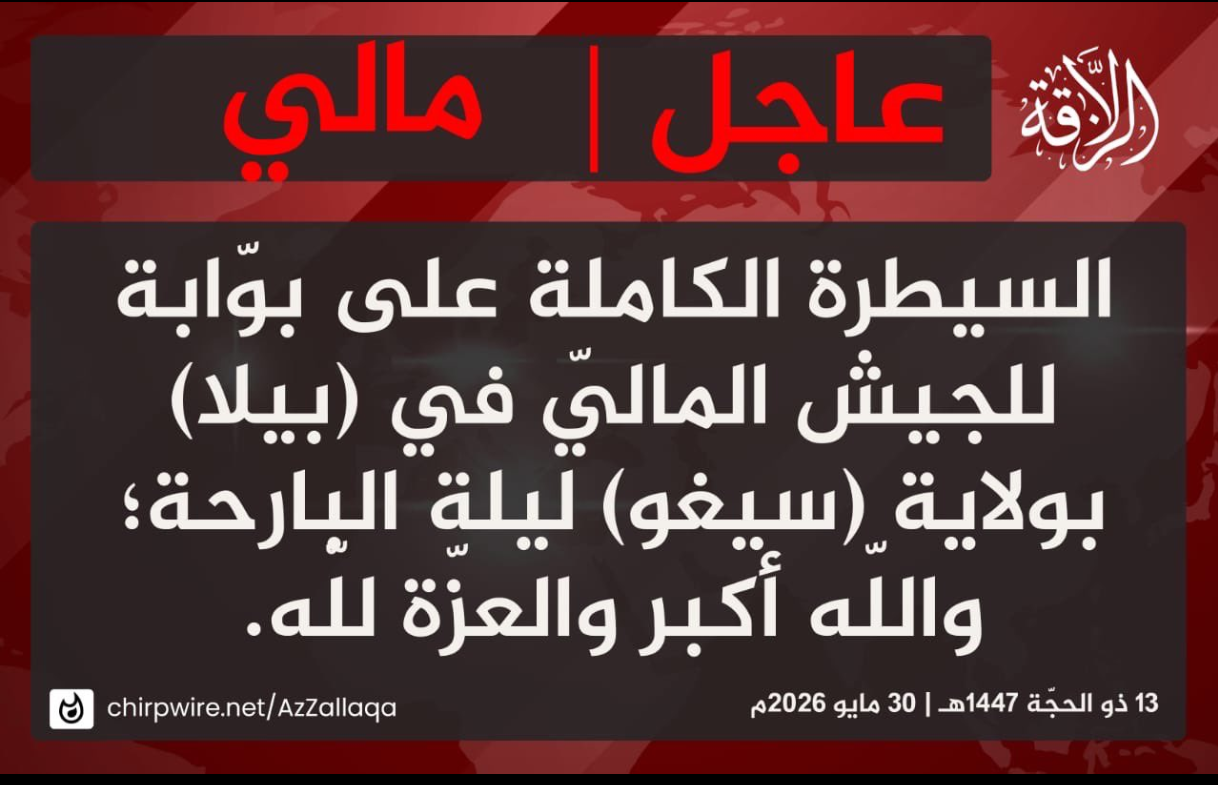
In the early hours of May 30, the Group for the Support of Islam and Muslims (JNIM) announced it had seized a Malian military outpost in the Ségou region. The jihadist coalition, affiliated with al-Qaeda, not only claimed control of the strategic site but also reported seizing substantial weaponry and ammunition. The assault underscores the persistent threat posed by armed groups despite intensified military efforts.
A night of terror in Ségou
The group’s propaganda channels broadcast details of the coordinated overnight raid on a Malian army position. While local sources confirm the intensity of the clashes, an independent assessment of casualties and damage remains challenging. This latest incursion into central Mali highlights the enduring operational capacity of jihadist factions, even in areas heavily fortified by security forces.
The Malian government’s initial silence gave way to cautious official statements acknowledging the severity of the attack. Yet the lack of transparency surrounding the incident only fuels concerns about the military’s ability to counter asymmetric warfare tactics employed by the JNIM.
A failing security strategy and the Russian partnership’s shortcomings
Since the military junta took power, promises of reclaiming lost territories and restoring stability have dominated public discourse. The abrupt shift in foreign alliances—marked by the departure of Western forces and the arrival of Russian military advisors and mercenaries—was supposed to turn the tide. The reality, however, tells a different story.
The Ségou attack lays bare the inadequacies of the current security approach. The Russian-backed strategy, centered on aerial demonstrations and large-scale sweep operations, has proven ineffective against the JNIM’s mobile warfare tactics. Rather than weakening the insurgency, the violence has intensified, signaling a loss of control over the central regions.
From insecurity to famine: a vicious cycle
The escalating violence has triggered a secondary crisis: a severe food shortage gripping the Ségou region. Once a vital agricultural hub due to its proximity to the Niger River, Ségou now faces a dire humanitarian situation exacerbated by jihadist blockades.
Farmers are abandoning their fields, cattle markets are being looted, and improvised explosive devices (IEDs) block key trade routes. The disruption of local production and urban supply chains has turned food scarcity into a weapon of war. With no meaningful state response, malnutrition is spreading silently through communities already weakened by displacement.
Mass displacement as civilians flee violence
Faced with relentless attacks and the looming threat of famine, civilians are abandoning their homes in droves. Entire villages in Ségou are being emptied as residents seek refuge in larger towns or the capital, Bamako. These internally displaced persons (IDPs) are crowding into makeshift camps with little access to clean water, healthcare, or sanitation.
The human cost is staggering, with women and children bearing the brunt of the crisis. The state’s preoccupation with military operations has left social services in shambles, leaving thousands of displaced families at the mercy of overstretched local NGOs.
The JNIM’s recent strike in Ségou serves as a stark reminder of the widening gap between official narratives of military progress and the harsh realities on the ground. By prioritizing a purely coercive approach and an unproven foreign partnership, the junta has failed to address the root causes of the conflict. Without a holistic strategy—one that prioritizes civilian protection, restores essential services, and tackles hunger—the fabric of Malian society risks unraveling under the weight of prolonged violence.