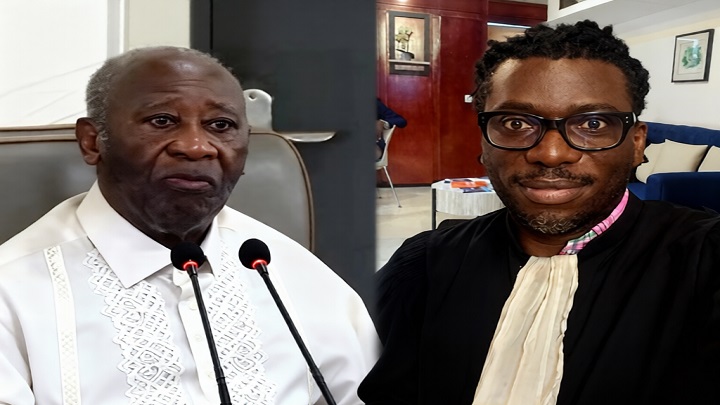
The decision by Laurent Gbagbo to remain at the helm of the Parti des Peuples Africains – Côte d’Ivoire (PPA-CI) has reignited intense discussions in Ivorian political circles. Following the party’s first ordinary congress in Abidjan, legal expert Ange Rodrigue Dadjé made a bold assertion: criticisms against President Alassane Ouattara for his sustained political career are no longer valid.
The shifting sands of political retirement in Côte d’Ivoire
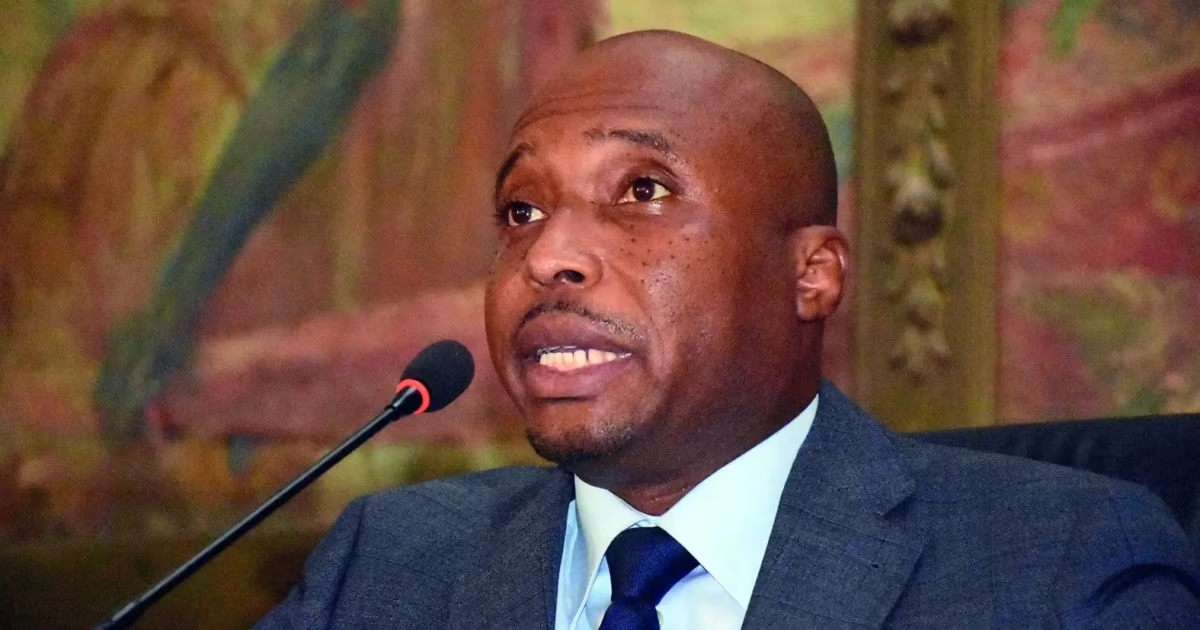
Ange Rodrigue Dadjé emphasized this point in a statement that has since sparked widespread debate among politicians and on social media platforms. « Ultimately, President Ouattara should no longer be criticized for choosing to remain in politics after pledging retirement,» he declared on May 15, 2026, underscoring a sentiment that challenges long-held assumptions about political transitions in the country.
This statement comes at a pivotal moment, as Laurent Gbagbo—once thought to be easing into political retirement—reaffirmed his leadership role in the PPA-CI during the party’s recent congress. His unexpected decision to stay on follows months of speculation about his intentions. Just seven months prior, in an interview with journalist Alain Foka on AFO Media, the former president had indicated his desire to step back from political responsibilities after the December 2025 legislative elections.
« There is no retirement in politics, but I will refrain from holding political office, whether within my party or in the state. I have given enough,» Gbagbo had stated at the time. At 81 years old and having been acquitted by the International Criminal Court (ICC) in 2021, many anticipated a gradual handover to a new generation of PPA-CI leaders. However, the party’s congress on May 14–15, 2026, took a definitive turn.
From retirement plans to political resurgence
Addressing militants and party officials, Laurent Gbagbo declared, « I remain for the struggle, » under thunderous applause. This declaration effectively ended months of speculation about his retirement, leaving political observers to reconsider the dynamics of leadership transitions in Côte d’Ivoire. The decision has reignited debates about whether prominent Ivorian figures—particularly Ouattara—can truly step away as long as their supporters demand their continued leadership.
This wasn’t the first time Ouattara faced scrutiny for altering his retirement plans. In 2020, his announcement of a third presidential term—after previously suggesting he would step aside—provoked sharp criticism from opposition groups, including the PPA-CI. Critics argued that his decision contradicted earlier promises. However, Ange Rodrigue Dadjé contends that political realities often force leaders to revisit their commitments, as evidenced by Gbagbo’s recent decision.
In July 2025, Alassane Ouattara officially declared his candidacy for the October 2025 presidential election, seeking a fourth term at 83 years of age. He framed his decision as a patriotic duty amid regional security and economic challenges. « This carefully considered choice is a duty to our nation, » he stated, emphasizing that his actions were guided by the « supreme interest of the country. »
The implications of Gbagbo’s decision on Ivorian politics
The PPA-CI’s decision to retain Laurent Gbagbo has reshaped the political discourse in Côte d’Ivoire. Observers now see it as a reflection of the influence of party militants and grassroots realities in shaping leadership decisions—even when leaders have previously signaled their retirement. This raises a persistent question in Ivorian politics: Can historical figures truly disengage from the political arena while their supporters continue to rally behind them?