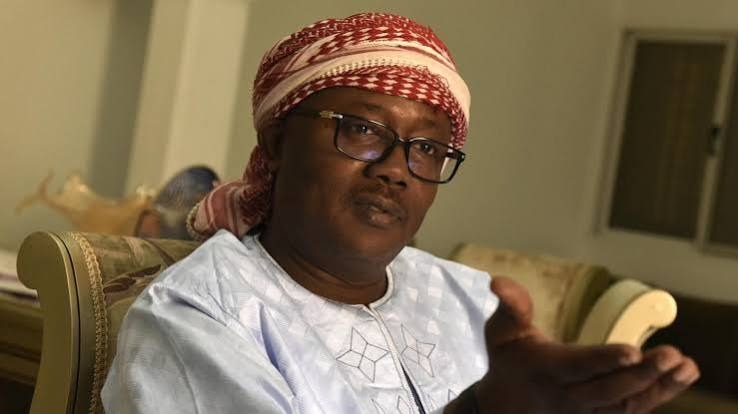
The president of Guinea-Bissau, Umaro Sissoco Embaló, has formally declared his intention to run in the upcoming presidential election, ending months of speculation. The move carries immediate consequences for a nation whose institutional life has been anything but calm.
The uncertainty is over in Bissau. After repeatedly hinting he might step aside, the incumbent has now confirmed he will seek a second term. By doing so, he answers the calls of his supporters and the leaders of his political coalition.
With this announcement, the president places himself back at the heart of the political game as the country prepares to enter a decisive electoral period.
A presidency defined by reforms and persistent instability
In power since his contested election in late 2019 and his swearing-in in early 2020, Umaro Sissoco Embaló points to a record focused on strengthening Guinea-Bissau’s diplomatic role and modernizing infrastructure. During his time in office, he chaired the ECOWAS Authority of Heads of State and Government, bringing international visibility back to Bissau.
Yet his five-year term has also been marked by deep internal political turbulence:
- Repeated dissolution of parliament: The president dissolved the National People’s Assembly twice (in 2022 and late 2023), citing destabilization attempts and institutional crises.
- Clashes with the opposition: The opposition coalition, led by the PAIGC (African Party for the Independence of Guinea and Cape Verde), has regularly accused the government of authoritarian drift and restricting public freedoms.
- Securing the regime: The authorities have had to deal with several episodes of military tension and alleged coup attempts in the capital.
What the vote means for citizens and the economy
By making his candidacy official, Umaro Sissoco Embaló kicks off the electoral battle. The key challenge in the coming months will be the practical organization of the vote and the level of participation by opposition forces.
For regional observers and international partners, the priority remains an inclusive, transparent and peaceful electoral process to preserve the still fragile political stability of this West African nation.
The consequences for ordinary Bissau-Guineans are direct: a prolonged political standoff could delay public investments, disrupt trade routes and scare off foreign investors. Small businesses, already struggling with unreliable electricity and poor roads, may face further uncertainty if the campaign turns confrontational. Farmers and traders who depend on cross-border commerce with Senegal and Guinea could see their livelihoods affected by any unrest or border closures.
How the election is conducted will determine whether Guinea-Bissau can consolidate its fragile gains or slide back into the cycle of coups and instability that has plagued its post-independence history.