global forum in geneva highlights how corruption undermines human rights
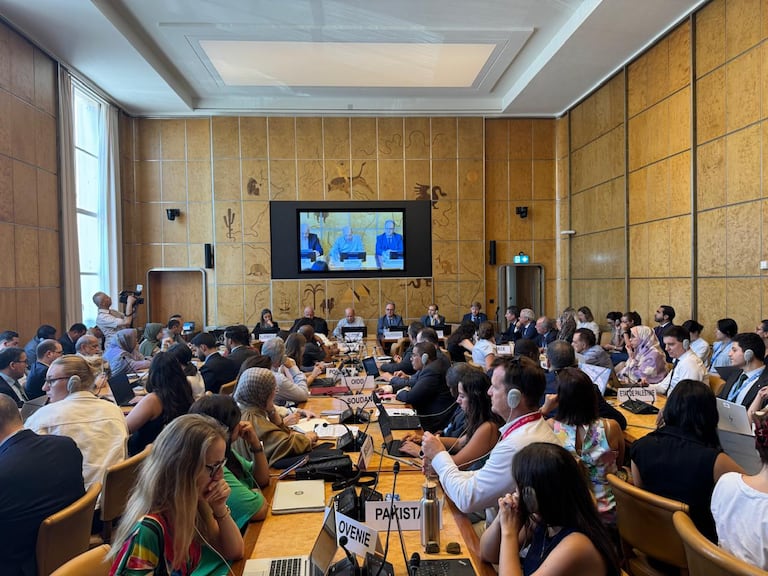
An international gathering in Geneva has spotlighted the deepening connection between corruption and the erosion of fundamental human rights. Held amid growing global recognition of corruption’s far-reaching consequences, the event aligns with ongoing efforts at the Human Rights Council, particularly the landmark resolution adopted in July 2025. This resolution underscores a shared consensus: combating corruption and safeguarding human rights are not isolated objectives but mutually reinforcing pillars of a just society.
The international framework guiding this dialogue includes key instruments such as the United Nations Convention against Corruption, the Marrakech Declaration of 2011, and the political declaration from the UNGASS 2021. All emphasize the need for preventive strategies rooted in the rule of law, democratic governance, and respect for human dignity.
Morocco leads the charge with an integrated anti-corruption strategy
Morocco took center stage at the forum, presenting a holistic approach that bridges public policy, national institutions, and international commitments. Addressing the assembly, Ambassador Omar Zniber, Morocco’s Permanent Representative to the United Nations in Geneva, described the initiative as “a pivotal moment for multilateral cooperation.” He highlighted the country’s leadership role, pointing to the coordinated efforts of its institutions and their alignment with national transparency and governance goals.
El Habib Belkouch, Morocco’s interministerial delegate for human rights, framed the debate around tangible realities. He warned that corruption isn’t just an abstract governance issue—it strips people of their most basic rights. “When corruption infiltrates justice systems, healthcare, education, or employment, it directly denies individuals their fundamental entitlements,” he stated. Every diverted or wasted resource, he stressed, represents a missed opportunity to fund schools, hospitals, or essential public services.
Belkouch also drew attention to the disproportionate impact on vulnerable groups, particularly women and marginalized communities. He advocated for prevention as the most effective tool, emphasizing transparency, access to information, civic participation, and accountability as both fundamental rights and vital anti-corruption mechanisms. “Strengthening institutional synergies is not just beneficial—it’s essential for making public policies work,” he asserted.
structural insights: corruption as a systemic human rights crisis
Mohamed Benalilou, Chair of Morocco’s National Authority for Integrity, Prevention, and Anti-Corruption, expanded the discussion to structural dimensions. He argued that the relationship between corruption and human rights is evolving into a “structural interdependence,” reshaping how we understand and address both challenges. “We are no longer talking about mere financial losses—we are talking about real victims denied their rights,” he declared.
Benalilou also highlighted underaddressed dimensions, such as “gender-based corruption,” which he described as “an intrinsic barrier to equality.” He called for a paradigm shift, positioning corruption prevention not just as a governance tool but as a “positive obligation for states to protect rights and freedoms.”
In his vision, prevention must become a cornerstone of human rights diligence. He urged the preservation of civic space and the recognition of whistleblowers as human rights defenders. “True integrity means institutions don’t just avoid corruption—they actively uphold rights and ensure fairness,” he emphasized. On the global stage, he stressed the need for coherence between processes in Geneva, Vienna, and New York, noting that anti-corruption and human rights obligations are “two sides of the same commitment.” He advocated for structural bridges between institutions and a governance model rooted in human rights prevention.
a call for collective action and systemic change
As discussions progressed, a consensus emerged: urgent collaboration among states, international bodies, and civil society is vital to make corruption prevention a powerful lever for human rights protection. Key tools identified included education, capacity-building, civic engagement, and digital innovation—all essential for fostering transparency, strengthening governance, and preventing abuses.