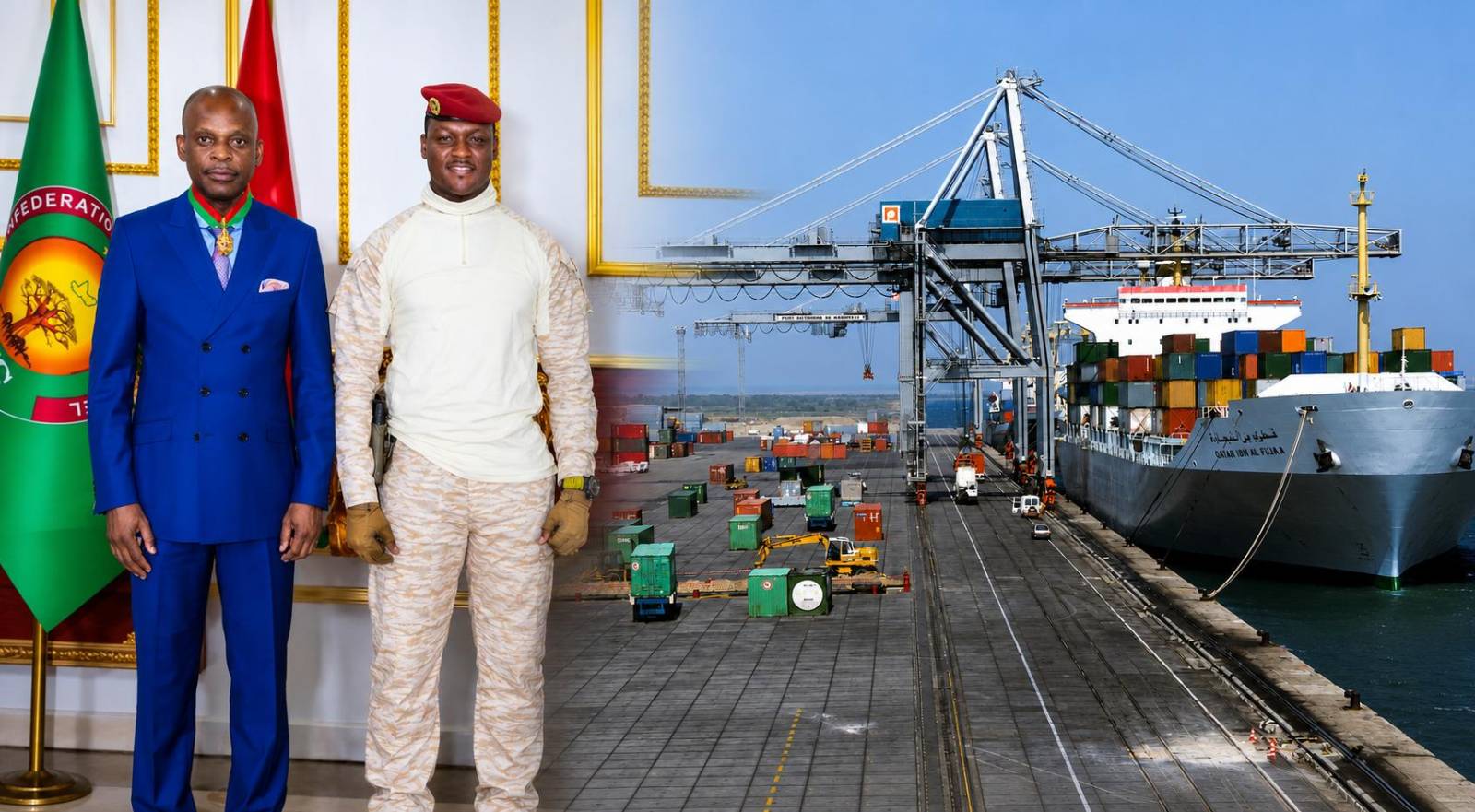
On May 20, 2026, a significant investment agreement was formalized at the Palais Rénovation in Libreville. Anas Sefrioui, Chairman and CEO of Ciments de l’Afrique (CIMAF), and Brice Clotaire Oligui Nguema, Gabon’s Transitional President, sealed a pivotal 40-million-euro investment deal. This substantial financial injection is earmarked for the comprehensive modernization of CIMAF’s Owendo plant, which includes the crucial integration of a third production line. This expansion is essential to meet the rapidly increasing local demand for construction materials, primarily driven by Gabon’s ambitious national infrastructure projects.
Beyond its industrial implications, this strategic operation signifies a notable shift in the company’s governance structure. The Gabonese government has expressed its clear intention to elevate its equity stake in the local subsidiary to a significant 20%. This move follows an initial acquisition of a 10% shareholding in December 2025. For Libreville, this increased ownership aims to establish direct oversight and align with the broader economic policy implemented since August 2023, which seeks to transform substantial foreign investments into national co-owned ventures.
From CIMAF’s perspective, this strengthened partnership aligns perfectly with the completion of its overarching strategic reorientation. The group led by Anas Sefrioui is systematically withdrawing from the European market, a strategy underscored by the simultaneous announcement of the divestment of its final cement plant in France. Facing a European market characterized by maturity and intense competitive pressures, the Moroccan cement giant is strategically redirecting its capital and focus towards the African continent, where the demand for urbanization and fundamental infrastructure—such as roads, bridges, and housing—remains exceptionally high.
This transaction also highlights an evolving landscape of Morocco’s economic influence. Historically, major Moroccan private sector operators have primarily established their presence in West Africa. However, they are now strategically consolidating their footprint in Central Africa, targeting key industrial sectors. For Gabon, an economy traditionally reliant on oil revenues, this public-private alliance serves as a critical testbed. It aims to develop a diversified industrial model that effectively combines Moroccan private capital, Gabonese public sector guidance, and robust regional economic integration.