

Gabon has successfully returned to the international financial markets with a $920 million bond issuance—equivalent to over 526 billion CFA francs—marking a pivotal moment in its economic strategy.
The bond carries a three-year repayment grace period starting in 2029, with a final maturity in 2033. Proceeds will primarily fund key state investment projects and settle outstanding arrears, aligning with the revised 2026 budget framework.
This milestone follows intensive negotiations led by the Minister of Economy and Finance, who engaged with top global institutional investors to secure favorable terms. The oversubscription reflects strong investor confidence in Gabon’s economic reform agenda and the 2026–2030 National Growth and Development Plan (PNCD), aimed at driving economic transformation and improving living standards.

Economic strategy gains momentum
The transaction underscores Gabon’s commitment to strengthening ties with international investors, while also advancing discussions with the International Monetary Fund (IMF). A technical mission is expected in Libreville in September 2026, with negotiations underway to finalize an economic and financial program by year-end.
Expert insights: A path to financial stability?
An economist at Omar Bongo University in Libreville highlights the significance of this achievement. The bond issuance signals Gabon’s renewed eligibility for multilateral funding, a critical step toward addressing its financial challenges. However, the professor warns that such financing often comes with stringent conditions, reinforcing dependence on institutions like the IMF and World Bank.
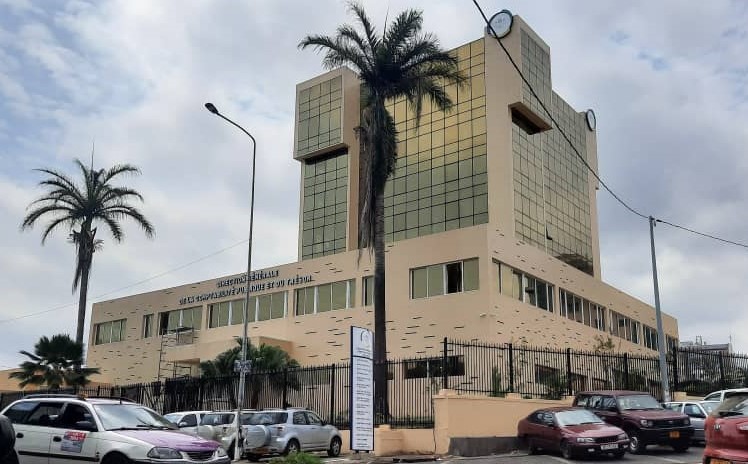
The economist cautions that while the funds provide temporary relief for state operations, the long-term risks of over-reliance on external lenders remain. «The state’s financial health, like a household’s, requires prioritizing debt servicing before new spending. This debt is a tool of servitude if mismanaged,» the professor emphasizes.
With Gabon poised to deepen its engagement with international partners, the success of this bond issuance hinges on disciplined fiscal management and transformative reforms to benefit the population.
You may also like
Sonidep’s 2026 loss: how Niger’s cheap fuel policy is draining the state oil company
Texforces-BF: a textile plant built on Burkina Faso’s retirement savings
Niger’s external liabilities reach 12,900 billion CFA francs as dependence deepens
Benin’s school canteens now feed 1.9 million children every school day
Sifi Grine in Bamako: Assimi Goïta’s junta swallows its pride before Algiers