The Gabonese government has declared war on its food dependence, aiming to produce locally what is currently massively imported and transform a foreign expense into a driver of national growth.
The country, long reliant on external markets for feeding its population, is now making the choice of an assumed economic break. The objective is simple in principle but significant in implementation. Produce locally what is today massively imported and turn a foreign expense into a driver of national growth.
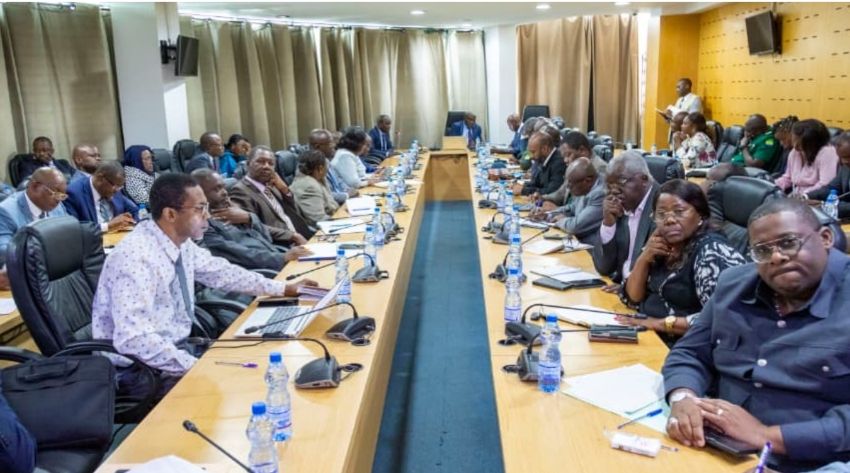
The fifth meeting of the committee tasked with monitoring this reform, presided over by the government’s secretary general Abdu Razzaq Guy Kambogo this week, shows the acceleration of preparations and the determination of authorities to respect the deadline set.
The consumption of poultry meat represents today one of the main posts of African food imports. For many countries on the continent, imported poultry is becoming a symbol of a structural dependence that weakens local economies, destroys national agricultural networks and exposes consumers to international market fluctuations.
The Gabon intends to now invert this logic. The planned ban on imports aims to stimulate local production, secure food supplies and retain hundreds of millions of francs CFA currently feeding foreign aviculture industries.
This strategy fits into a trend observed in several African countries that are seeking to regain their food sovereignty after global crises caused by the pandemic, international conflicts and logistical tensions. Food is becoming an issue of national security as much as an economic one.
The success of this reform depends on a simple but impossible equation. Disallowing imports without having a sufficient local offer would be tantamount to provoking shortages and inflation.
It is precisely for avoiding this scenario that Gabonese authorities are multiplying preparatory investments. The Operational Urgency Plan of the Avian Sector already provides for the development of several production sites across the country with support from military engineering.
The Nzamaligué and Ntoum-Tchad sites have been secured, while the plains of Ayémé and Woleu-Ntem are expected to produce around five thousand tons of poultry meat per year. The parallel development of maize and soybean crops is also a central element of this plan as animal feed represents one of the main costs of the avian sector.
Energy is also part of the strategy with the planned installation of solar kits on future industrial sites. However, the challenge of access to water remains one of the major technical obstacles that will require the realization of numerous wells.
The most symbolic decision in this rise is undoubtedly the announcement of a command for three million chicks to be purchased in the coming weeks. A first delivery of more than 262,000 chicks is expected as early as September next year, with an increasing supply until the end of the year.
Cheese gives an idea of the scope of this operation. Beyond simple breeding, the Gabon is actually building a real industrial ecosystem associating agricultural production, logistics, animal feed, transformation and distribution, and massive job creation.
The project could become one of the first large-scale laboratories for reindustrialization agriculture in Central Africa. The decisive question now is execution.
Financial difficulties, land constraints, inadequate infrastructure, logistical challenges and other obstacles may slow down this ambition. But the political choice is now assumed. The Gabon no longer wants to only import its food.
It wants to produce its security, create its agricultural wealth and regain control over a significant part of its economic sovereignty. In a world where supply chains are becoming increasingly fragile every year, this bet could well become tomorrow not an exception but a necessity for many African countries.