A national landscaping program is set to reshape the urban environment in Burkina Faso, reflecting a clear ambition to transform the nation’s cities. The plan includes the development of 80 green spaces, the beautification of 60 roundabouts, and the creation of 65 kilometers of vegetated roadways.
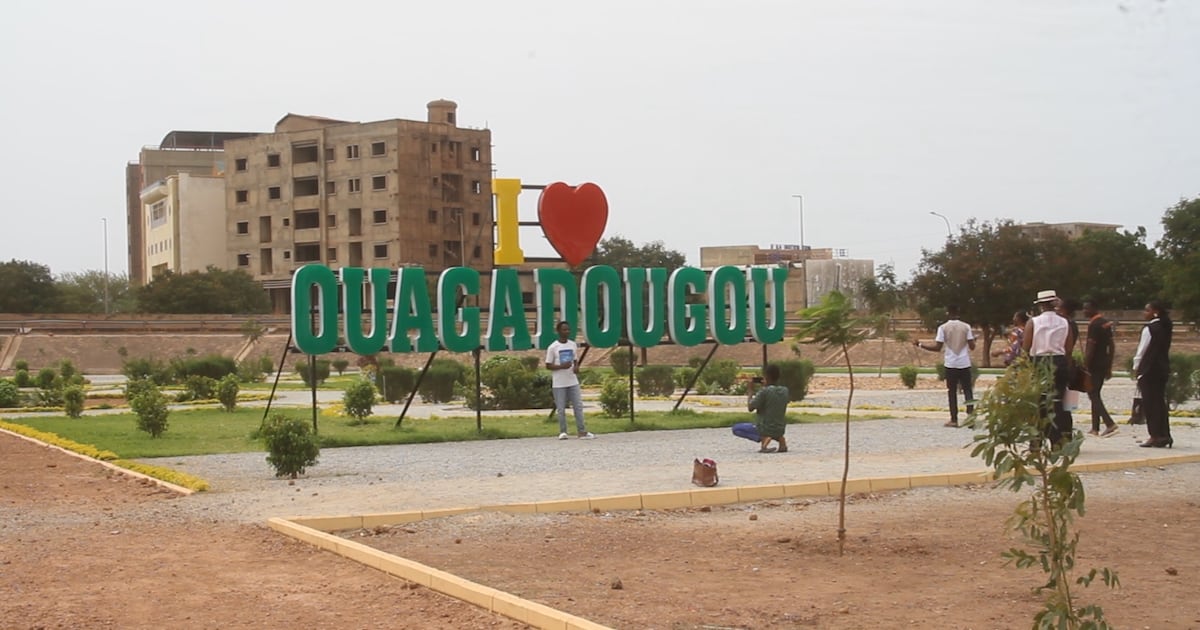
In many urban centers plagued by dust, oppressive heat, and a scarcity of recreational areas, these new developments offer a significant improvement to daily life. The green space at the base of the Ouaga 2000 interchange stands as a prime example of this effort to enhance the well-being of residents.
The change has not gone unnoticed. Dr. Ines Bationo, a member of the Burkinabè diaspora visiting from Sénégal, shared her enthusiasm. “You cannot imagine the joy I felt seeing these developed spaces,” she said. “I arrived a week ago and was completely captivated by what I found.”
Mahamadi Ouedraogo, a community leader, also commented on the transformation. “It changes the whole environment. Before, it was just red earth, nothing special. But now, it’s beautiful, a microclimate has been created, and that’s exactly what we need,” he explained. “We may be a Sahelian country, but when the heat rises, the concern for ecology must be more widely shared.”
Numerous global studies support this approach, demonstrating that urban vegetation is a natural and effective response to rising city temperatures. Street trees, for instance, provide shade and significantly reduce the perceived heat.
Research confirms that increasing the number of green spaces, vegetated roofs, and trees can lower a city’s average temperature by about 2°C, thereby lessening the health impacts of heatwaves. Data also shows that under a forest canopy, the maximum temperature is, on average, 4°C lower than in open areas.
Beyond the environmental advantages, this initiative has the potential to cultivate civic pride and a stronger sense of belonging among citizens. These green areas are becoming vital locations for community gatherings, relaxation, and social cohesion.
However, the program’s ultimate success will depend on its long-term viability. Planting trees is one part of the equation; ensuring their continued care is another critical challenge.
Lassané Sawadogo, a civil society actor, suggested a path forward. “After the development phase, it will be necessary to establish access conditions for these spaces. This would allow the city and the Ministry of Environment to generate revenue that can be used for their upkeep.”
The public response has been overwhelmingly positive. “We are very happy,” said Sidoine Nakanabo, a visitor. “It’s a place to relax, first and foremost, and it also helps to develop Burkinabè tourism.”
Through this operation, Burkina Faso is making a powerful statement: a truly modern city is composed not only of roads and buildings but also of trees, shade, and spaces where people can breathe and come together.