For years, accessing healthcare in Burkina Faso was a financial hurdle many could not overcome. Medical costs often stood between patients and life-saving treatments, turning what should be a basic right into a distant privilege. But a transformative shift is underway. Since March 2024, the Burkinabè government has taken bold steps to dismantle these barriers, slashing the cost of critical medical exams and eliminating financial deposits for dialysis in public hospitals. This groundbreaking reform is reshaping healthcare access across the country.
In the bustling corridors of the Bogodogo University Hospital in Ouagadougou, the weight of past struggles is palpable. Madi Diallo shares a heartbreaking memory: “Three years ago, my sister needed urgent dialysis. But we had to pay a deposit of 500,000 FCFA—an amount we simply couldn’t afford. She passed away before treatment could begin.” Today, that deposit no longer exists. “The measure is just, but for us, it’s tragically late.”
Madi’s story reflects a harsh reality shared by countless families. Too often, the decision between illness and survival came down to one factor: financial means. Medical exams and treatments were priced out of reach, leaving patients with impossible choices. But the tide is turning.
breaking down financial barriers in public healthcare
On March 13, 2024, the Burkinabè government announced sweeping reforms to slash medical costs and remove financial obstacles in public healthcare facilities. The changes were both immediate and impactful:
- Imaging exams: CT scans dropped from 50,000 FCFA to 25,000 FCFA, while MRI costs fell from 100,000 FCFA to 40,000 FCFA.
- Dialysis: The mandatory deposit of 500,000 FCFA for emergency dialysis was completely abolished.
- Emergency care: Dialysis sessions in public hospitals now cost a mere 2,500 FCFA.
These adjustments were announced by Dr. Robert Lucien Jean Claude Kargougou, Minister of Health, following the March 13, 2024 cabinet meeting. The reforms aim to ease the financial strain on patients, particularly the most vulnerable, by making essential diagnostics and specialized care more accessible.
real-world impact: voices from Burkina Faso’s hospitals
At the Bogodogo University Hospital, patients like Dame Ouédraogo Nikiéma Élodie are feeling the difference. She recently underwent an MRI for a pelvic exam and was pleasantly surprised:”The cost is now very affordable—just 40,000 FCFA, all included. Elsewhere, the same exam can cost up to 150,000 FCFA or more. It’s a huge relief.”
For Dame Ouédraogo, the savings are life-changing. The reduction from her previous estimate spared her over 100,000 FCFA, allowing her to continue participating in community savings groups and meet other social obligations. Such financial breathing room is invaluable for families already stretched thin by medical expenses.
Seydou Nombré, Director General of the Bogodogo University Hospital, confirms the reforms are fully implemented: “The MRI now costs 40,000 FCFA, and the 500,000 FCFA deposit for dialysis has been removed. Patients no longer need to pay an advance. Emergency dialysis now costs just 2,500 FCFA.”
extending care beyond the capital
The impact of these changes isn’t limited to Ouagadougou. In Ziniaré, a rural region in the Oubritenga province, the Ziniaré Regional Hospital has also adopted the new tariffs without delay. The reform is making a tangible difference in the lives of people who previously had to travel long distances to the capital for care.
Mady Zorné, Director General of the Ziniaré Hospital, highlights the broader benefits: “Since the tariff reduction, referrals to Ouagadougou have dropped significantly. Practitioners now have access to essential imaging exams, improving diagnostic accuracy and the overall quality of care.”
The reform is not just about affordability—it’s about bringing care closer to home. For many Burkinabè, this means avoiding the logistical and financial burden of long-distance travel, a critical step in reducing delays in treatment and improving health outcomes.
dialysis: a lifeline for patients with kidney disease
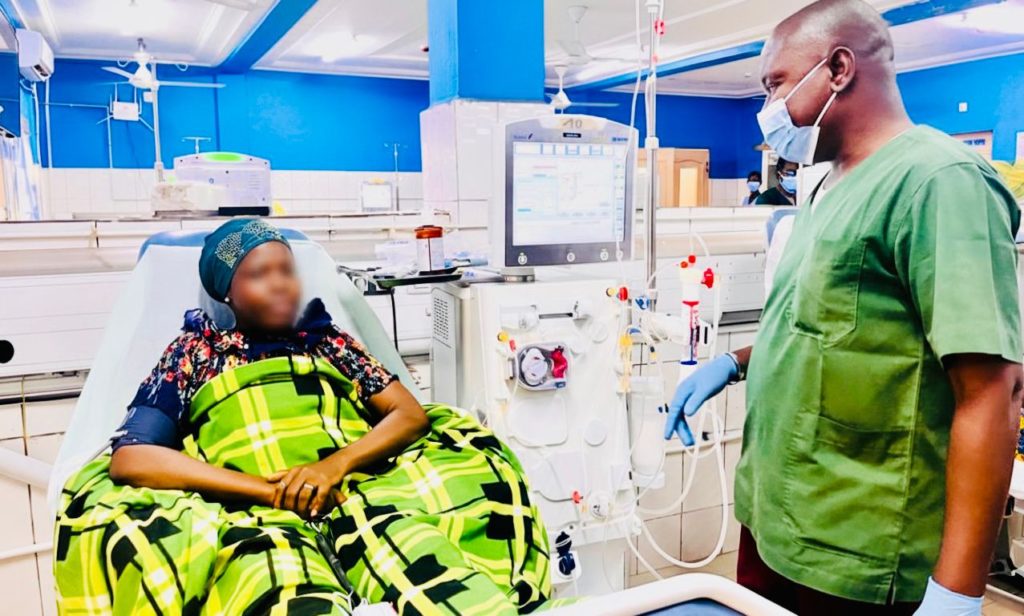
In the dialysis unit of the Yalgado Ouédraogo University Hospital in Ouagadougou, the stakes are especially high. The unit serves nearly 100 patients daily across three shifts, with emergency cases handled outside regular hours. Tuina Nsoma Hélène, head of the unit, explains the daily challenge: “Every death frees up a spot for someone waiting.” The limited number of machines means long waitlists, a harsh reality that underscores the urgent need for more resources.
But since the reform, 16 new patients have begun dialysis without having to pay the 500,000 FCFA deposit—a lifeline for those who would otherwise be excluded. Still, the unit’s capacity remains constrained. Tuina Nsoma Hélène calls for further reductions in additional fees: “Every month, patients must carefully budget for what they can afford. It’s still a heavy burden. We hope the government will address these ancillary costs as well.”
In the same hospital, the radiology department has seen a surge in activity. Professor Nina Astrid Ouédraogo, Head of Radiology and Medical Imaging, reports a 38% increase in CT scans performed since the reform. “It’s a real relief for us,” she says. The numbers speak to the pent-up demand and the necessity of affordable diagnostic care.
a national movement toward equitable healthcare
The impact of these reforms extends beyond Ouagadougou and Ziniaré. In Bobo-Dioulasso, the economic capital of Burkina Faso, the Sourou Sanou University Hospital is also feeling the positive effects of the new tariffs. The hospital serves a vast population, many of whom travel long distances for care.
Élie Ouattara, a patient at the hospital, shares his experience: “I came to buy medical supplies, and the prices are truly affordable. It’s a huge relief.” These savings extend beyond costly exams to everyday medical products, easing the financial strain on households.
In the dialysis unit, patients like Dame Sanou Traoré Salimata, who has lived with kidney disease since 2018, reflect the human impact of the reforms. She began dialysis in 2020 but faced immense financial barriers due to the 500,000 FCFA deposit—a hurdle she overcame with the help of family. Today, she applauds the government’s actions: “This measure symbolizes the recognition of dignity for patients with chronic illnesses.”
Youl Sié, another dialysis patient, echoes the call for decentralization: “We need more dialysis centers closer to our communities. If patients could receive treatment locally, it would be a tremendous relief. Right now, we must travel far from home, disrupting our roles as pillars of our families and affecting our children’s education.”
acknowledging progress, addressing remaining gaps
While the reforms mark a significant step forward, challenges remain. The number of dialysis machines is still insufficient to meet demand, and long waitlists persist. The government is also urged to address additional costs for chronic patients, which continue to pose a financial burden.
In the words of a local proverb, “Little by little, the bird builds its nest.” In Burkina Faso, this sentiment resonates deeply in the healthcare sector. The government’s efforts to ensure a minimum standard of care are beginning to bear fruit. Though the journey is far from over, the message is clear: healthcare is no longer a privilege reserved for the few—it’s becoming a right for all.