From military leadership to ideological shift in Burkina Faso
Since seizing power in September 2022, Burkina Faso’s transitional government under Captain Ibrahim Traoré has undergone a striking transformation in its political and security strategies. Observers note a deliberate pivot toward centralized control and isolationist policies reminiscent of Cold War-era regimes. This shift is most evident in the junta’s approach to governance, media regulation, and regional diplomacy.
Centralized control and ideological alignment
The military-led administration has increasingly centralized decision-making processes, mirroring the top-down governance models historically associated with the Soviet Union. Key institutions, including security forces and state-owned media, now operate under tighter military oversight. Simultaneously, the junta has adopted rhetoric and policies that echo Pyongyang’s emphasis on self-reliance and resistance to external influence—principles enshrined in its “Burkina Faso first” doctrine.
Media censorship and narrative control
Independent journalism in Burkina Faso faces growing restrictions, with several outlets suspended or forced to align with state narratives. The government has justified these measures as necessary to combat disinformation and foreign interference. Critics argue that the crackdown extends beyond security concerns, targeting dissent and limiting public access to diverse viewpoints. Social media platforms have also come under scrutiny, with reports of content filtering and account suspensions targeting opposition voices.
Security strategies and regional isolation
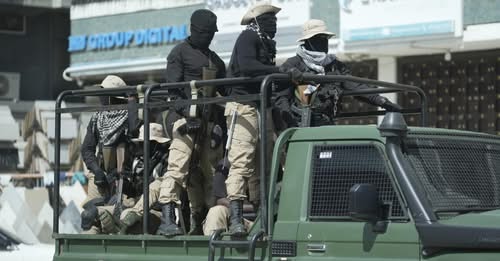
The junta’s security policies have diverged sharply from those of its West African peers. While neighboring countries pursue diplomatic solutions to insurgencies, Burkina Faso’s leadership has doubled down on military-first approaches, including the deployment of Volunteer Defense Forces (VDF) and limited cooperation with international partners. This stance has led to tensions with regional blocs like ECOWAS, which have imposed sanctions in response to delays in civilian transition plans.
Economic implications of the new model
The shift toward isolationist policies has raised concerns about Burkina Faso’s economic stability. Reduced foreign investment and trade restrictions—particularly with former partners—have strained public finances. Meanwhile, the government has promoted local production and barter trade as alternatives, though these efforts have yet to offset broader economic challenges.
What’s next for Burkina Faso?
As the junta consolidates its power, questions linger about the long-term sustainability of its governance model. Will the Soviet and North Korean-inspired approach stabilize the country, or will it deepen internal divisions and economic hardship? With regional partners watching closely, Burkina Faso’s trajectory remains one of the most closely watched in West Africa today.