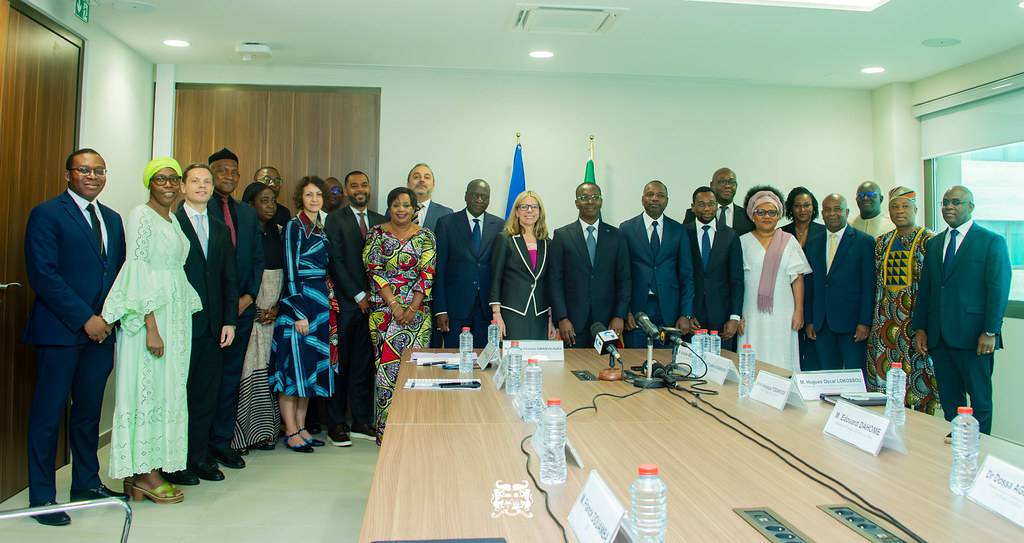
The capital of Bénin is accelerating its structural transformation. On Friday, July 17, 2026, the government and the World Bank sealed two major financing agreements totaling $320 million. These investments target energy sovereignty, agricultural revitalization, and human capital enhancement, marking a decisive turning point for the country’s economy and its people’s well-being. Here’s how these efforts are reshaping Bénin’s future.
Cotonou’s strategic partnership with the World Bank
The signing ceremony took place at the modern Cité ministérielle in Cotonou, where government officials, World Bank representatives, and technical partners gathered to finalize the agreements. This financial and political milestone underscores Bénin’s commitment to inclusive growth, blending heavy infrastructure with social development to create lasting impact.
The World Bank’s dual investment isn’t just about injecting capital—it validates Cotonou’s macroeconomic vision. By addressing critical infrastructure and human resources simultaneously, Bénin is betting on sustainable progress that benefits all citizens while strengthening economic indicators.
Dogo-Bis dam: fueling energy and agricultural progress in Ouémé
The first agreement, worth $150 million, funds the construction of the Dogo-Bis multi-purpose dam. This project is far more than a water reservoir—it’s the backbone of an integrated production ecosystem.
On the energy front, Bénin is inching closer to self-sufficiency. By boosting domestic electricity production, the dam will reduce reliance on regional energy imports—a longstanding vulnerability for local industries. Édouard DahoME, Minister of Energy, Water, and Mines, emphasized that the project will stabilize power supply in the Ouémé Valley, offering a competitive advantage for businesses and households alike.
But the benefits extend beyond megawatts. By ensuring reliable water access, the dam will unlock the agricultural potential of the Ouémé Valley. Historically constrained by water scarcity and limited processing infrastructure, the region now stands to become a thriving agro-industrial hub. The government aims to stabilize year-round agricultural yields and attract private investors to process local crops on-site.
ALAFIA I program: investing in health and nutrition for tomorrow’s workforce
While concrete and steel lay the groundwork for progress, they mean little without a healthy, skilled population. The second $170 million agreement supports ALAFIA I, a program designed to “Nourish Bénin for the Future.”
This initiative tackles the root of economic development: early childhood nutrition, maternal health, and sustainable food systems. By prioritizing integrated, high-quality services, Bénin is choosing prevention over cure—a strategy backed by decades of economic research showing the highest returns on investment in early childhood development.
The long-term payoff? A healthier, more productive population. Improved nutrition in childhood translates to lower public health costs, higher school enrollment rates, and a more skilled workforce. ALAFIA I is building the social foundations for growth that is not just economic but inclusive.
A synergy of investments for structural transformation
The brilliance of this dual financing lies in its complementarity. As Hugues Oscar LOKOSSOU, Minister Delegate for External Resource Mobilization and Debt Management, pointed out, these projects must be viewed as part of a cohesive strategy.
Linking food security (ALAFIA I) to expanded agricultural and industrial capacity (Dogo-Bis) creates a virtuous cycle. Crops from the Ouémé Valley will feed urban and rural communities, cutting food import bills. Meanwhile, better public health ensures a robust labor force to drive industrial growth. Enhanced territorial connectivity guarantees that these gains spread efficiently across the country.
Bénin’s path to sustainable, inclusive development
With this $320 million commitment, the World Bank signals strong confidence in Bénin’s financial governance and macroeconomic stability. In a West African region often marked by uncertainty, Cotonou is positioning itself as a magnet for international investors.
The goal is clear: transition from a transit economy and subsistence agriculture to a semi-industrial, diversified, and resilient economy. Bénin’s focus on sustainable infrastructure and inclusion—especially for women and children in rural areas—shows it’s pioneering a growth model that leaves no one behind.
The July 17, 2026, agreements aren’t just administrative formalities or diplomatic victories. They’re foundational steps toward Bénin’s future. By simultaneously investing in the Ouémé Valley’s productive energy and its youth through ALAFIA I, the government has embraced the modern development equation: durable economic power requires a thriving, well-nourished human capital. Now, the challenge shifts to flawless execution—a task keenly watched by citizens and economists alike.