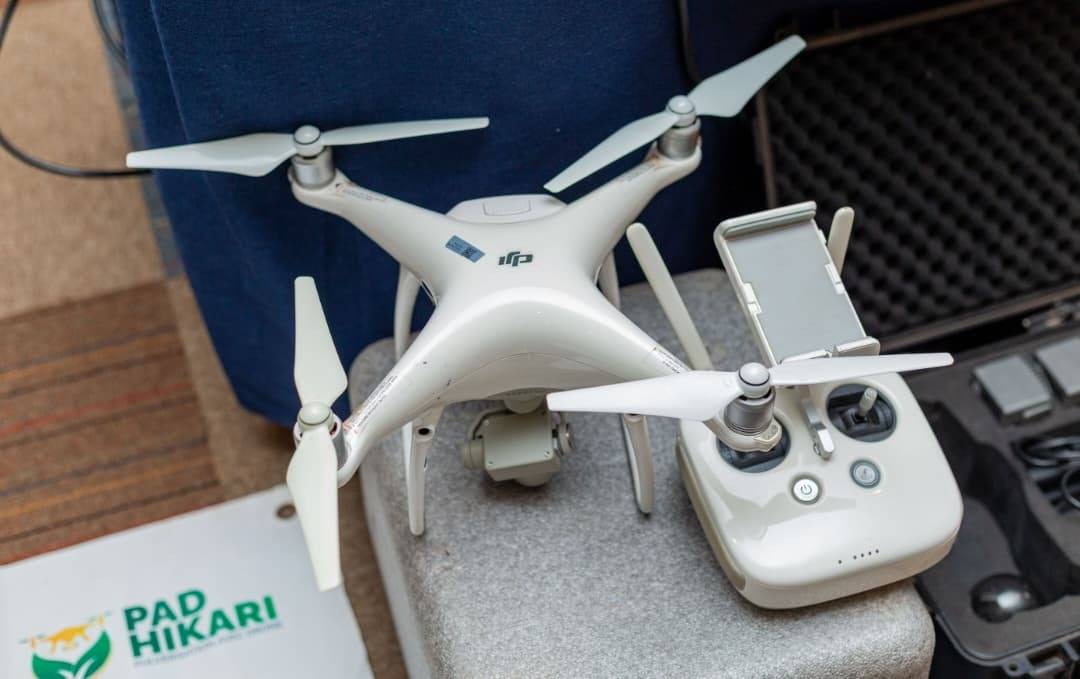
Bénin launches cutting-edge drone program to combat malaria hotspots
On a landmark Tuesday in June 2026, the Bénin government unveiled an ambitious initiative merging artificial intelligence, geospatial mapping, and advanced drones to eliminate mosquito breeding grounds. Funded by Japan with a $2.3 million grant and supported by UNICEF, this pilot program targets six municipalities grappling with persistent malaria challenges. The move marks a paradigm shift from reactive to proactive malaria control across the country.
A new era in vector control
The initiative, dubbed the Integrated Malaria Prevention Action, brings together three technological pillars. First, AI-driven geospatial systems analyze terrain and weather patterns to pinpoint high-risk areas with meter-level accuracy. Next, state-of-the-art drones take to the skies over endemic zones, releasing WHO-approved larvicides directly into mosquito breeding sites. This targeted approach ensures swift, precise intervention, even in hard-to-reach wetland and rural areas.
Speaking at the launch in Cotonou, Health Minister Professor Benjamin Hounkpatin emphasized the breakthrough: « This isn’t just about deploying drones; it’s about disrupting the cycle of transmission before it begins. The larvicide meets all WHO safety standards, and drone deployment allows us to act faster and smarter than ever before, especially in communities where traditional methods struggle. »
Six municipalities at the forefront
The pilot phase focuses on six diverse communities: Copargo, Djougou, Tchaourou, Ouidah, Abomey-Calavi, and Cotonou. These locations represent the spectrum of malaria challenges in Bénin—from dense urban centers to remote rural pockets where vector control has long been a struggle. Japan’s investment aligns with its commitment to strengthening health systems in Africa, as outlined in the TICAD9 framework and Bénin’s Vision Bénin 2060 Alafia plan.
Local voices: a burden lifted
For families and small-scale entrepreneurs, the initiative offers more than just technological promise—it promises economic relief. Malaria doesn’t just steal health; it drains household budgets. Take Amavi, a market vendor in Abomey-Calavi and mother of four. Last rainy season, two of her children required hospitalization. « Between medical bills and lost days at the market, I spent over 60,000 CFA francs—enough to cover a month’s earnings. Without those funds, my business would have collapsed, » she shared. « If these drones can stop mosquitoes before they bite, we might finally breathe easier. »
Her story echoes across Tchaourou’s workshops and Cotonou’s bustling markets, where malaria outbreaks mean lost income for artisans, farmers, and micro-entrepreneurs. A reduction in malaria cases in these pilot zones could translate into immediate financial stability for thousands of informal workers who form the backbone of Bénin’s economy.
Youth take the lead in community defense
UNICEF underscored the human element of the project: engaging young people as frontline defenders. Trained as community health monitors, local youth will conduct ground follow-ups, raise awareness about preventing stagnant water sources, and ensure larvicide interventions reach their targets. « Technology alone won’t win this fight—it’s the people on the ground who make the difference, » noted UNICEF’s Deputy Representative in Bénin during the launch.
Building a malaria-free future
By combining drone precision with grassroots mobilization, Bénin is forging a new model of preventive healthcare. If the pilot succeeds, this public-private partnership could scale nationwide and even inspire neighboring West African nations. For now, the hum of drones over Bénin’s landscapes carries more than payloads—it carries hope for a future unshackled from malaria’s grip.