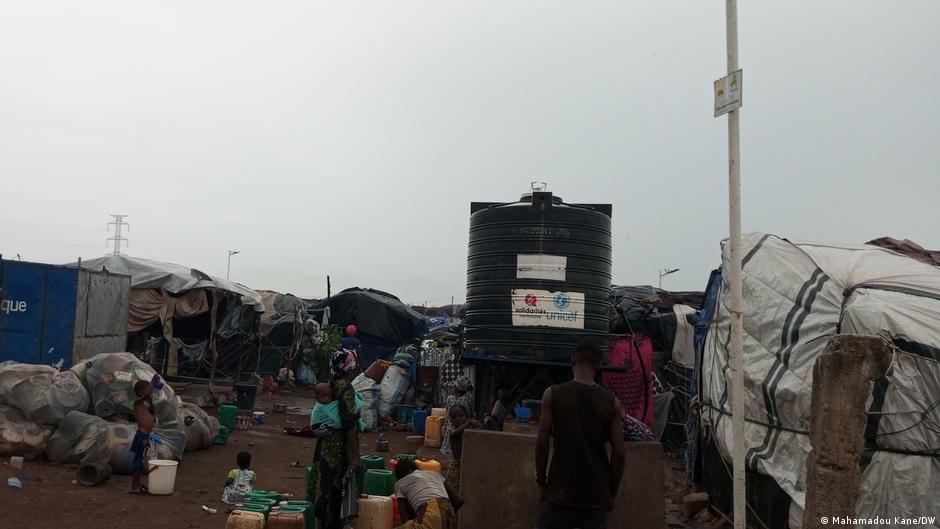
The demolition of the Faladiè livestock market in Bamako has left over 300 displaced families homeless, exacerbating an already dire humanitarian situation. This destruction follows a 2024 government decision to relocate livestock markets after jihadist attacks on military sites in the capital.
The Faladiè market, also known as garbal de Faladiè, served as a shelter for internally displaced persons (IDPs), primarily from central Mali. These families had fled violence years earlier, believing Bamako would offer safety. Their displacement has now been compounded by the demolition, leaving more than 2,000 people—mostly women and children—in a state of acute vulnerability, lacking food, healthcare, and shelter.
urgent need for shelter and support
Dado, a 40-year-old mother who fled Bankass in 2020, shared her plight: “We thought we were safe here. We have seven mouths to feed. The war forced us to leave our village, but now we’re left with nothing.”
The displaced families survived by collecting waste and scraps to sell to livestock traders. With the market gone, their livelihoods—and access to basic needs—have vanished. The situation is critical: no water, no food, and no shelter. Dado pleads, “All we ask is to be relocated somewhere safe. We have no choice but to leave, but where will we go?”
flawed relocation plans
Authorities claim the IDPs should move to Sanankoroba, a relocation site 35 km from Bamako. However, traders and displaced families describe the site as non-functional, with no adequate infrastructure or humanitarian support.
The Faladiè camp, established in 2019, had received aid from local and international organizations. The National Directorate for Social Development has not yet commented, stating it is “too early” to assess the situation.
a humanitarian emergency
With winter approaching, the displaced families face extreme hardship. The loss of their temporary home has stripped them of income, dignity, and hope. Aid organizations warn that without immediate intervention, the crisis will deepen, pushing more families into destitution.