
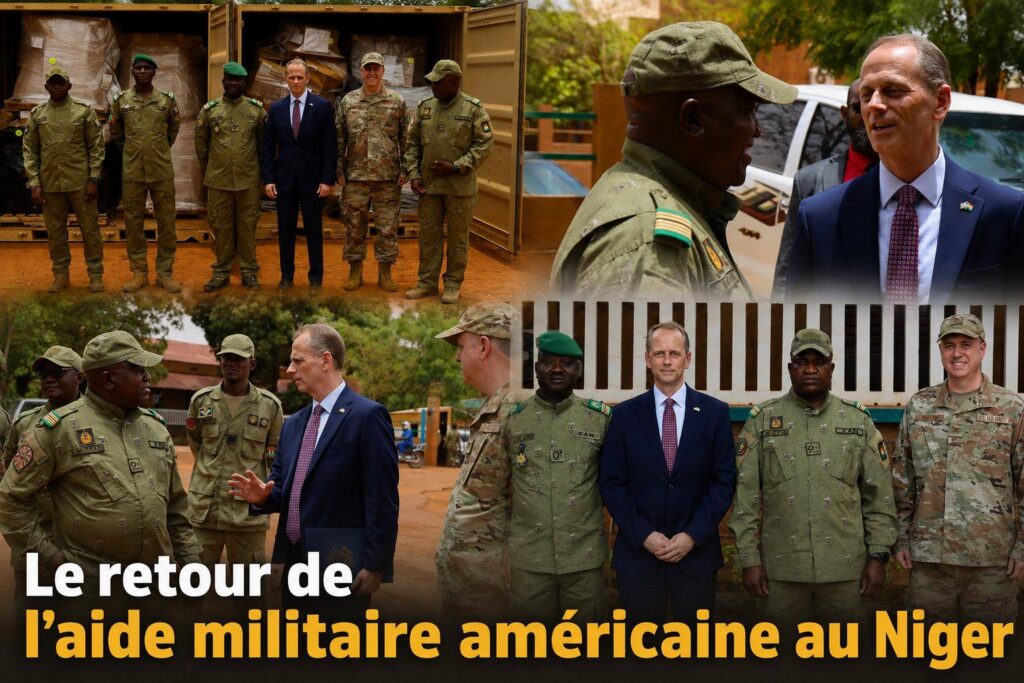
On May 26, 2026, the Logistics Center of Niger’s Armed Forces (FAN) in Niamey received nine shipping containers filled with advanced military equipment donated by the United States. This strategic delivery marks a significant shift in Niger’s defense policy, reinforcing its operational capabilities against terrorism and cross-border crime while highlighting a renewed partnership with Washington.
Enhancing operational readiness for Niger’s troops
The ceremony at the FAN Logistics Center in Niamey underscored the importance of this military aid. The shipment included critical spare parts, tactical communication gear, personal protective equipment, and first-line maintenance tools—all designed to boost the resilience and combat efficiency of Nigerien forces deployed in high-risk zones. In asymmetric warfare, where armed groups move swiftly, rapid repair capacity and secure communications can determine mission success.
Combating terrorism and securing borders
This military donation aligns with ongoing security cooperation between Niger and the United States, aimed at countering persistent threats across the Sahel. The Nigerien Ministry of Defense confirmed that the equipment will be deployed immediately to support counterterrorism operations, disrupt transnational criminal networks, and strengthen border security. For troops operating in remote rural areas, this technical support provides a much-needed advantage in safeguarding vulnerable communities.
Rebuilding trust: A strategic pivot in Niger-US relations
This delivery reflects a pragmatic turn in Niger’s foreign policy. Just two years ago, authorities demanded the withdrawal of US and French military personnel, citing national sovereignty concerns. The closure of the US drone base in Agadez followed this decision. Yet, escalating jihadist threats have since compelled Niamey to reassess its approach. The acceptance of this military aid demonstrates that diplomatic channels with Washington were never fully severed, and now, both nations are rebuilding trust on a selective, needs-based foundation.
The US, in turn, has adopted a flexible stance. Despite suspending direct assistance after political upheavals in 2023, Washington remains committed to maintaining influence in the region to prevent a geopolitical vacuum. This donation signals a mutual willingness to prioritize logistical support over large-scale troop deployments—a pragmatic compromise in the face of shared security challenges.
Diversifying alliances without exclusivity
Niger’s leadership is carefully balancing its defense partnerships to avoid over-reliance on a single ally. While deepening cooperation with new partners like Russia, Turkey, and Iran, Niamey is also re-engaging with Washington. This strategy allows Niger to access critical resources without compromising its strategic autonomy. For its part, the US seeks to preserve its presence in the Sahel, ensuring its interests are represented even amid shifting political landscapes.
As noted in an internal memo from the FAN Logistics Center: “In defense, operational effectiveness on the ground is the only rule that matters.” This principle encapsulates Niger’s current approach—prioritizing tangible results over rigid ideological stances.
A new chapter in Niger’s security strategy
The arrival of these nine containers of US military equipment in Niamey symbolizes a return to pragmatic decision-making. By accepting Washington’s assistance, Niger acknowledges that absolute sovereignty must sometimes yield to practical necessities when national security is at stake. In a region plagued by shared threats, diversifying defense partnerships has become essential for the survival and stability of the Nigerien state.
You may also like
Mamadi Doumbouya de retour à Conakry après une visite d’État en Côte d’Ivoire
Elversberg vs Bayern Munich: kick-off time, tv channel and team news
Gabon : l’association Force ouvre un espace de propositions pour la rentrée
Dakar 2026 : Diomaye Faye confie la flamme olympique à la jeunesse sénégalaise
Mali: at least 80 soldiers killed in deadly assault on Dioura camp