May 14, 2026 Reading time: 2 minutes.
At least four airstrikes targeted rebel-controlled Kidal in the early hours of Thursday, causing significant material damage, according to a local witness who requested anonymity. One strike demolished a residential building near a former marketplace, while another left a deep crater in the expansive courtyard of the regional governor’s office—a site recaptured by the National Liberation Front of Azawad (FLA) on April 25 and 26. The FLA operates in coordination with the Support Group for Islam and Muslims (JNIM), Al-Qaeda’s Sahelian affiliate led by Iyad Ag Ghaly.
«We are striking specific targets. We have our strategy. The frequency of these operations will intensify in the coming days,» declared a Malian army officer stationed at the operational command center in Mopti (central Mali).
Uncertainty grips Kidal
Kidal, a key city in northern Mali, remained eerily quiet on Thursday morning, with minimal traffic and reports of numerous vehicles fleeing under cover of night, the witness noted.
The nation faces a critical security crisis, compounded by unprecedented coordinated attacks carried out by JNIM jihadists and the FLA rebellion against strategic positions held by the junta in Bamako.
FLA advances toward northern Mali’s major cities
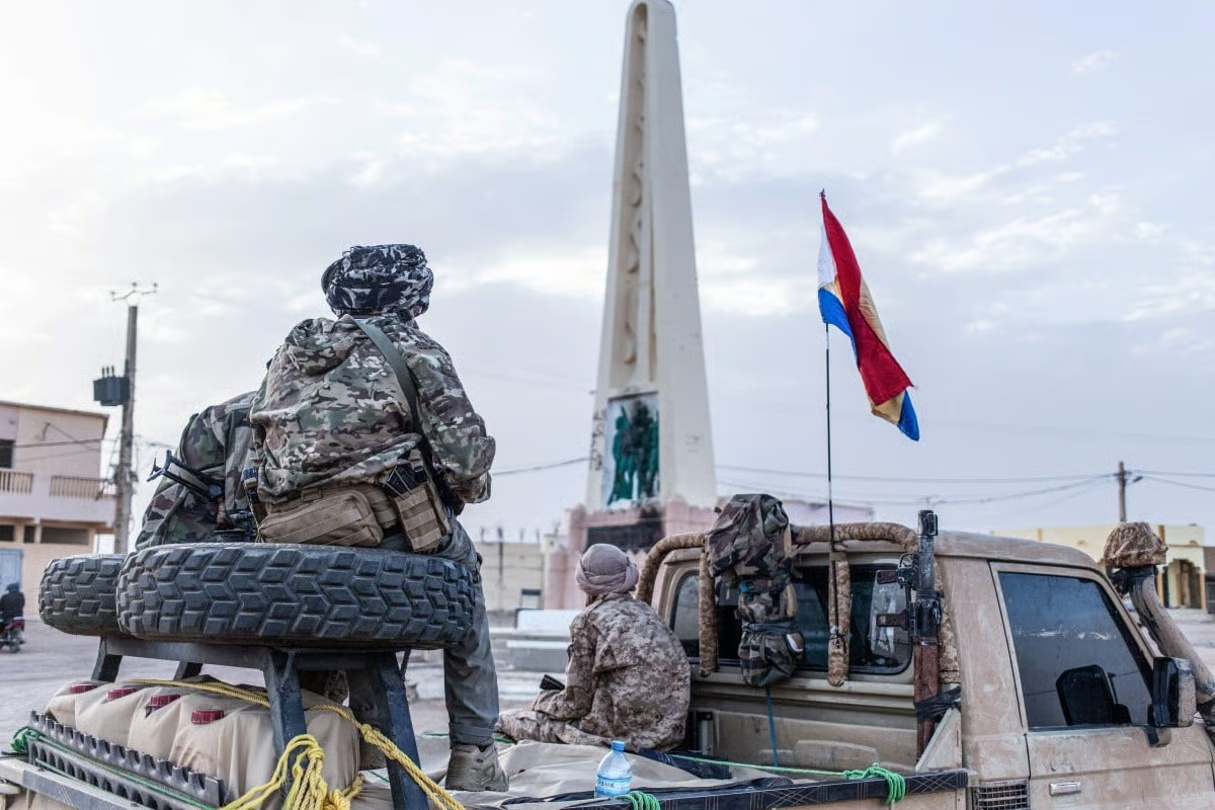
During this offensive, the rebel alliance seized control of Kidal, the largest city in northern Mali, following intense clashes. The FLA, an independence movement predominantly composed of Tuareg fighters alongside Arab communities, claims sovereignty over the Azawad territory in northern Mali. The Azawad region encompasses the administrative areas of Kidal, Gao, Ménaka, and Tombouctou—regions long contested in Tuareg-led armed struggles against perceived marginalization, particularly around the pivotal city of Kidal.