On November 25, 1998, RC Lens etched their name into French football history with a legendary victory over Arsenal at the iconic Wembley Stadium. The match, a Group Stage clash in the UEFA Champions League, saw the Sang et Or become the first French side to triumph on English soil. Two decades later, former goalkeeper Guillaume Warmuz reflects on that unforgettable night when Lens defied all odds.
From arrival to mindset: embracing the moment
« The moment we arrived at our London hotel, we switched gears,» Warmuz recalls. « We immersed ourselves in the English atmosphere, fully aware we were about to play at Wembley. The pressure of the Champions League stage was immense, but our mission was clear: enjoy every second of this unique experience without overthinking the outcome.»
The team’s approach was simple yet bold. « Winning the French league title made this match a reward, not an obligation,» he explains. « We had earned our place in Europe’s elite competition. Our mindset was to attack, to play without fear, and to leave it all on the pitch.»
Tactical daring: cutting the team in two
Daniel Leclercq, affectionately nicknamed Le Druide, devised a daring strategy that would define the match. « He told us to forget about focusing on individual Arsenal stars like Anelka or Overmars,» Warmuz says. « Instead, we were to play our game, aggressively and with high intensity. The idea was to transform the match into a relentless battle.»
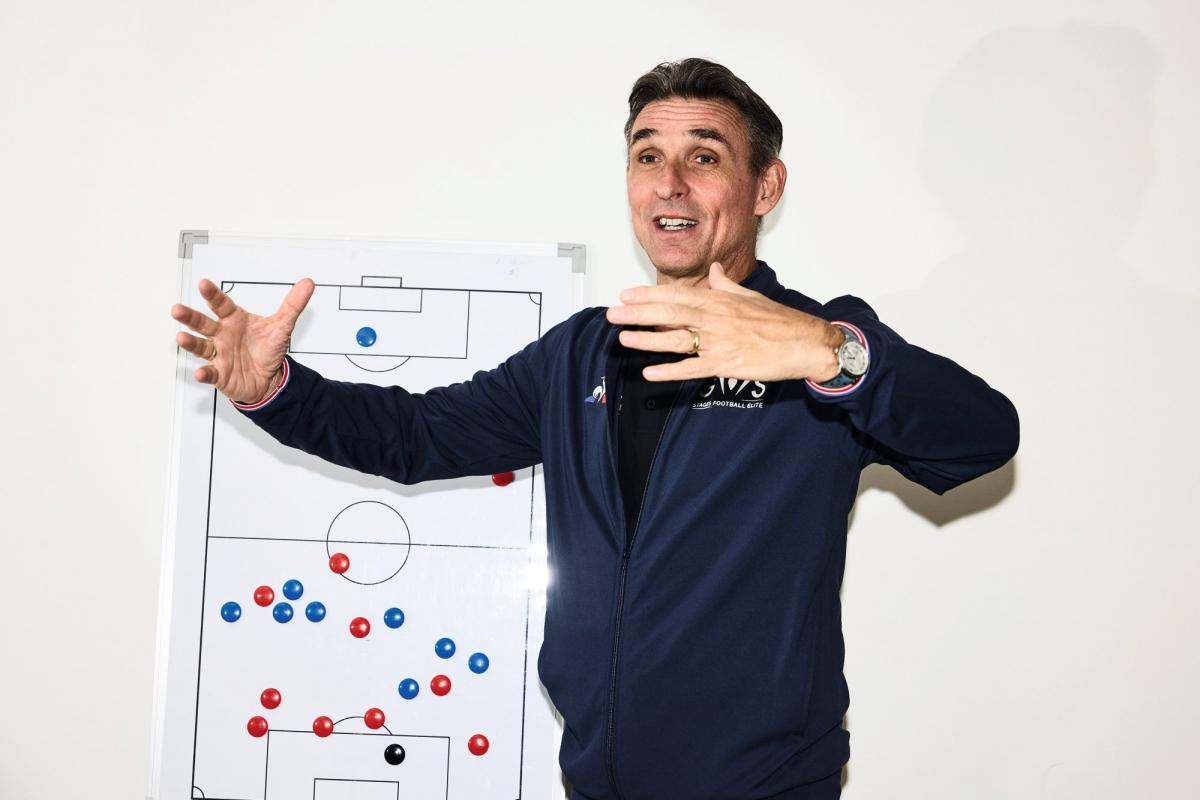
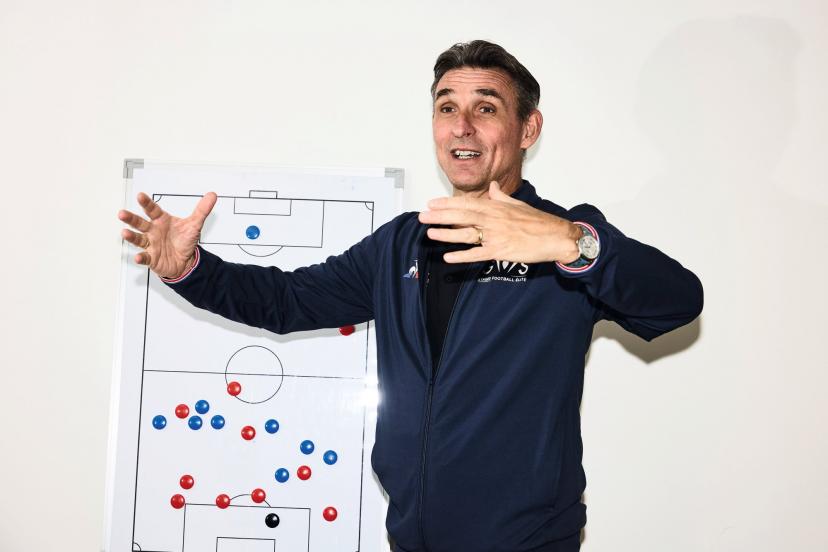
The formation shifted to a 4-3-1-2, with five players in the defensive block and five in the attacking block. « We played high up the pitch, almost on the halfway line,» Warmuz notes. « To achieve this, we had to switch from our usual three-at-the-back system to a four-defender lineup, defending in zones and covering each other.»
Frédéric Déhu and Cyrille Magnier formed the defensive duo at the back, with Déhu covering a wider area to organize the defense. « He was our metronome, ensuring we stayed compact and anticipated danger,» Warmuz adds.
The first half: a baptism of fire
The opening minutes set the tone. Warmuz vividly remembers the tension: « After just three minutes, a cross reached Wreh inside the box. He controlled the ball but missed his shot. I took a deep breath—this was serious business.»
The Lens goalkeeper played a crucial role early on. « I had to step out of my comfort zone,» he admits. « With our defenders playing so high, I needed to cover the runs of Anelka, Overmars, and Wreh behind them. At the 6th minute, I intercepted Overmars’ cross decisively, then at the 31st, I faced Anelka on a breakaway. He tried to dribble past me, but I anticipated his move, tackled cleanly, and won the ball. If he had pushed it just a bit further, it would have been a different story.»
Arsenal’s frustration and Lens’ resilience
« The players from Arsenal were stunned by our intensity,» Warmuz recalls. « They expected an easier game, but we pressed them non-stop. Their physicality was there, but so was our determination. By halftime, we were level at 0-0, and the dressing room was calm but focused. Daniel Leclercq reminded us to stay compact, especially in the phases where we stretched the pitch like an accordion. That’s when Anelka and others found space.»
Warmuz also reveals a key detail: « On the other side of the tunnel, Arsenal’s players were getting a dressing down from their manager. They were furious and determined to turn things around in the second half.»
The turning point: a historic goal
The breakthrough came in the 73rd minute. « We lost the ball during a promising counterattack. Tony Vairelles pressured hard, won the ball back, and played it to Wagneau Éloi, who had just come on. Éloi sent a cross to Vladimir Smicer, and from there, the magic happened.»
« Mickaël Debève, who had followed the play to the second post, was at the limit of the offside but perfectly positioned. He received the ball and slotted it past David Seaman. The goal sent a wave of controlled joy through our team. We were at Wembley, leading 1-0, with 25 minutes left. We couldn’t afford to lose our heads.»
Defending the lead under pressure
The final stages of the match were intense. « Arsenal threw everything at us. Long balls, physical challenges—we were in survival mode,» Warmuz says. « The last real chance came in the 89th minute. Overmars broke through on the left side of the box. I advanced to close him down, and he tried to chip me. He missed, and I gathered the ball safely.»
« I was in a state of hypervigilance throughout the match. It was my best performance—no technical errors, no lapses in concentration, and no goals conceded. When the referee blew the final whistle, the joy was indescribable. It was the pinnacle of our careers as players.»
Legacy of a mythical night
« That victory at Wembley wasn’t just about winning a match—it was about making history,» Warmuz reflects. « No French club had ever won there before, and to this day, no one has replicated what we achieved that night. We played with freedom, with passion, and with a tactical boldness that caught Arsenal off guard.»
« As I stood alone on the pitch after the final whistle, surrounded by the fading lights of Wembley, I realized the magnitude of what we had accomplished. For a boy from Blanzy, it felt surreal. I took a moment to thank God: ‘Not only did I win at Wembley, but I was the first to do so.’ It was a dream beyond imagination.»