Gunfire echoed through the streets of Cotonou, Benin’s economic hub, on Sunday morning as a group of soldiers declared the removal of President Patrice Talon on national television. However, the government swiftly countered the claim, asserting that the attempted coup had been thwarted.

what happened in the attempted coup?
A self-proclaimed Military Committee for Refoundation (CMR), led by eight soldiers wearing berets of various colors, announced on Sunday morning that they had deposed President Patrice Talon on national television. They installed a lieutenant colonel as the committee’s president and cited several grievances, including:
- Deteriorating security conditions in northern Benin
- Neglect of fallen soldiers and their families
- Unfair promotions favoring less deserving individuals
- A disguised undermining of fundamental freedoms
They also highlighted social demands as part of their justification for the power grab.
government response and current situation
The Interior Minister of Benin, Alassane Seidou, later confirmed that the government had regained control. In a televised address, he stated:
“Faced with this situation, the Beninese armed forces, true to their oath, remained republican. Their response allowed them to maintain control of the situation and thwart the maneuver. It was a small group of individuals who only had access to the television. The regular army has retaken control. The city of Cotonou and the country are fully secure.”
According to military and security sources, about a dozen soldiers involved in the coup attempt have been arrested.
who is president patrice talon?
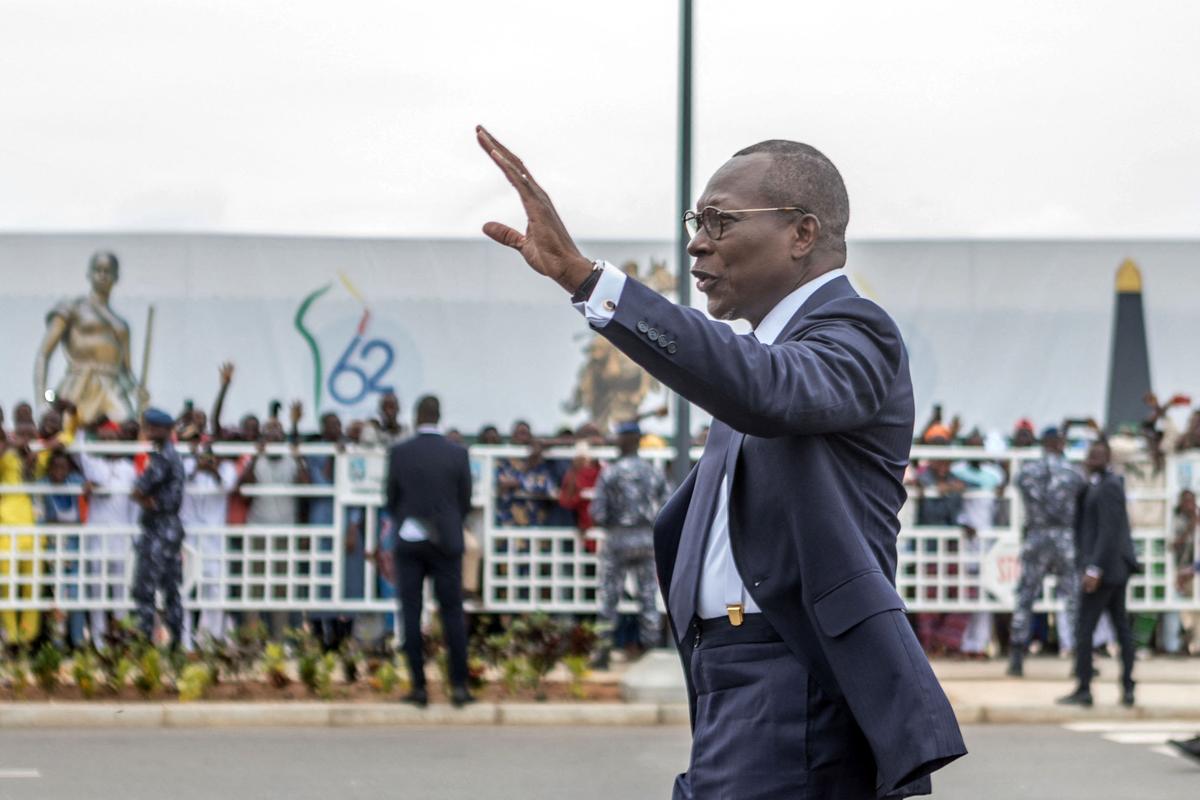
President Patrice Talon, who has served two terms, is set to step down in April 2026 following constitutional term limits. His tenure has been marked by economic growth in Benin despite challenges such as jihadist violence in the northern regions. While praised for economic development, Talon has faced criticism from opponents who accuse him of adopting an authoritarian approach, eroding the country’s once vibrant democratic traditions.
international reactions to the coup attempt
Regional and international bodies have strongly condemned the attempted coup:
- ECOWAS issued a statement condemning the “flagrant unconstitutional act that undermines the will of the Beninese people” and reaffirmed support for the government and people of Benin.
- African Union (AU) also condemned the coup attempt, calling on all involved to cease illegal actions immediately and return to their professional duties.
historical context of political instability in Benin
Benin has a history marked by political instability and coup attempts. Notable historical events include:
- 1963: Military coup led by Colonel Christophe Soglo
- 1965: Another coup reinstated Soglo as head of state
- 1969: A coup ousted Émile Derlin Zinsou
- Recent attempts in 2020 and 2024 were also foiled under Talon’s presidency.
The broader West African region has experienced a surge in coups since 2020, affecting countries such as Mali, Burkina Faso, Niger, Guinea, and Guinea-Bissau.