BÉNIN — POLITICAL SHIFT
Romuald Wadagni inaugurated as Bénin’s president with sweeping 94% victory, opposition sidelined
Romuald Wadagni took the oath of office in Cotonou on May 24, marking the start of a seven-year term. The former Finance minister pledges economic continuity while extending a conciliatory hand to Sahel neighbors in a vote marred by opposition exclusion.

With 94% of the vote in an election where the main opposition party was barred from running, Romuald Wadagni’s inauguration in Cotonou signals both continuity and a narrowing political landscape in West Africa.
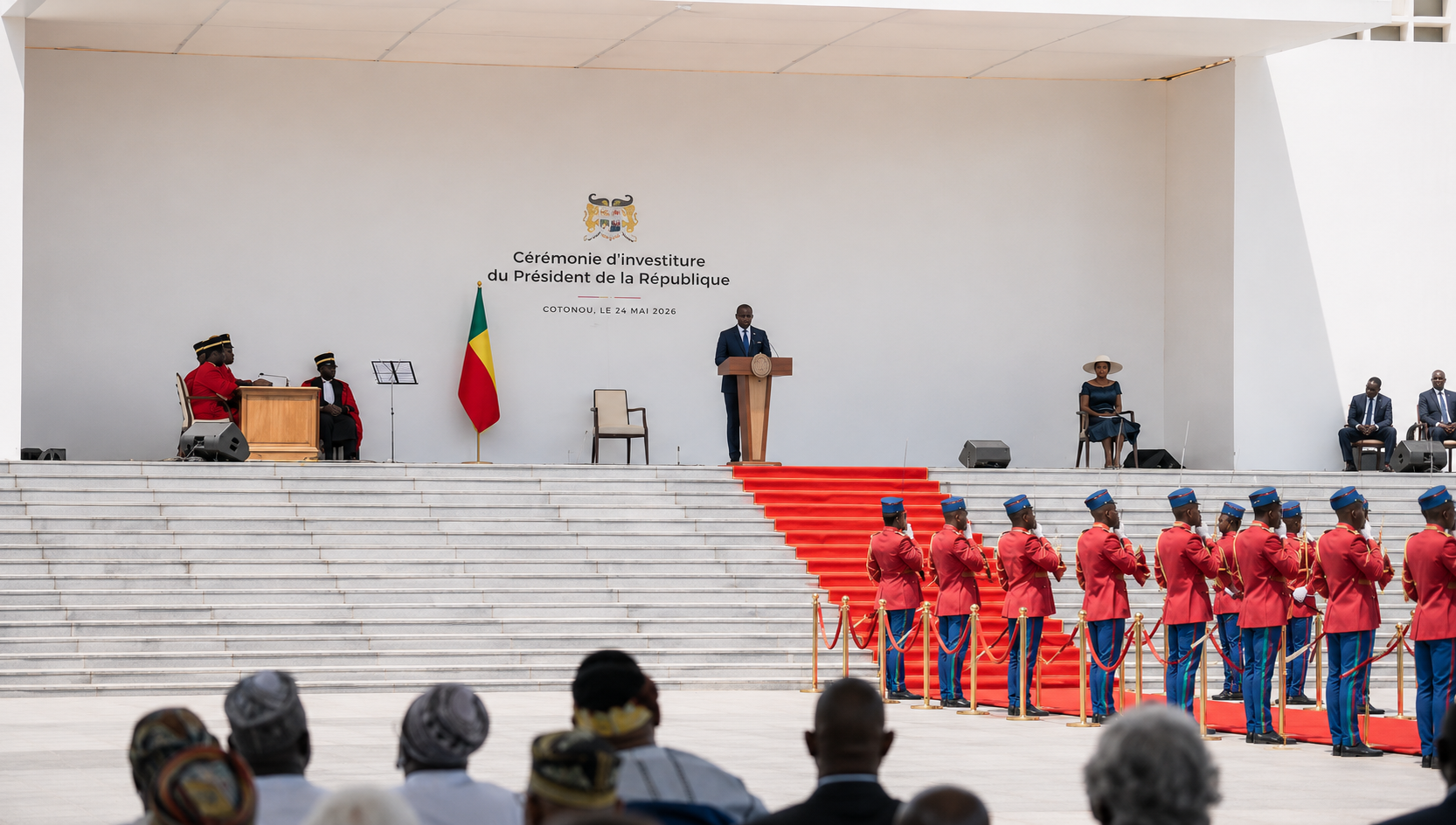
At 49, Wadagni, a former Deloitte consultant turned technocrat, was sworn in at the Palais des Congrès on May 24, becoming Bénin’s fifth democratically elected president since 1990. He succeeds Patrice Talon, who completed two terms under the 2019 constitutional reform that extended presidential mandates to seven years.
Economic steward succeeds political architect
A long-time architect of Bénin’s fiscal strategy, Wadagni served as Finance minister under Talon, overseeing international bond issuances and maintaining the country’s sovereign credit ratings. His victory on April 12, 2026, came against a single challenger, Paul Hounkpè of the FCBE, with results validated by the Constitutional Court. Vice President Mariam Chabi Talata, retained from Talon’s ticket, underscores the administration’s continuity.
The 2025 constitutional change decoupled presidential and legislative elections, extending mandates to seven years—a shift that redefines Bénin’s electoral calendar.
A tightly controlled political stage
The inauguration ceremony unfolded with military precision between 9:30 AM and noon. Talon formally handed over the presidential insignia before the Constitutional Court administered the oath at 11:10 AM, followed by the presentation of the Grand Collar of the National Order and the command flag to the chief of staff. Over 6,000 guests attended, including former presidents Nicéphore Soglo and Thomas Boni Yayi. Observers praised the flawless logistics, though the event highlighted a political climate where opposition participation was effectively nullified.
Opposition systematically excluded
The Democrats, led by former President Yayi, saw their candidacy invalidated in October 2025 after the Electoral Commission rejected their lack of required parliamentary sponsorship—27 out of 28 signatures were secured, but one lawmaker retracted support. The Constitutional Court upheld the decision days later. Critics point to systemic barriers: exorbitant filing fees, restrictive certification processes, and a 20% vote threshold per constituency introduced in 2025, which slashed opposition parliamentary representation to zero in the January 2026 legislative elections.
High-profile opposition figures remain imprisoned, including Reckya Madougou (20-year sentence for “terrorism” in 2021) and academic Joël Aïvo (10 years for “conspiracy”). The Economic and Terrorism Repression Court (CRIET), established in 2016, has drawn criticism from NGOs for its use against political dissent.
Security and regional overtures define inaugural address
Wadagni’s speech outlined two priorities: translating economic growth into tangible benefits for youth, women, rural communities, and the middle class; and adopting a firm stance against armed groups operating in northern Bénin since 2022. The most striking departure, however, was his diplomatic outreach to the Sahel.
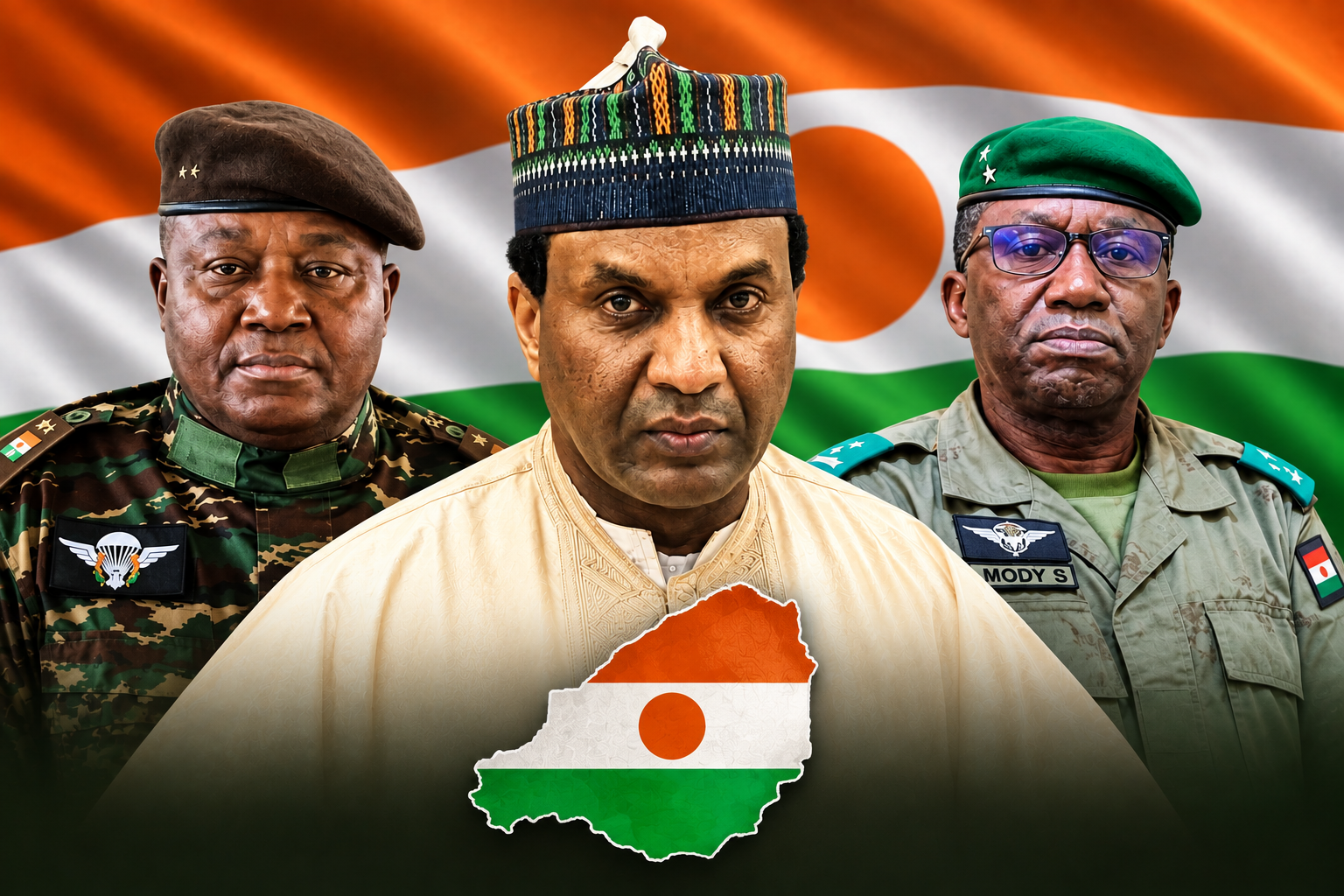
Sixteen foreign delegations attended—the first time Bénin has hosted such a high-level international gathering since 2023. Representation ranged from France’s Francophonie minister to envoys from the Alliance of Sahel States (AES): Mali’s Foreign Minister Abdoulaye Diop, Burkina Faso’s Karamoko Jean-Marie Traoré, and Niger’s Prime Minister Ali Mahaman Lamine Zeine. Nigeria’s vice president also attended as Bola Tinubu’s special envoy. The prolonged applause when Zeine’s name was called underscored a thaw in relations, reversing the frostiness that followed Niamey’s July 2023 coup. The gesture carries weight: the Benin-Niger border, critical for Niger’s oil exports via the Cotonou pipeline, has seen repeated closures.
The address, structured around repeated appeals—“to you, I say”—prioritized women, youth, and the diaspora, with Wadagni reaffirming Bénin’s role as a “house of return” for descendants of the transatlantic slave trade. The visible prominence of Vice President Chabi Talata in the proceedings further highlighted gender representation.
Early indicators to watch
Three developments will reveal Wadagni’s room for maneuver in the coming weeks. First, the composition of the new government will signal whether he distances himself from Talon’s inner circle. Second, the fate of imprisoned opposition leaders—particularly a potential amnesty, long demanded by Les Démocrates—could reshape the political climate. Third, concrete steps toward reconciliation with AES partners, such as an official visit to Niamey, Bamako, or Ouagadougou, will test Bénin’s diplomatic posture.
Bénin enters a seven-year term under an institutional framework largely shaped by its outgoing administration. While economic stability remains a hallmark praised by donors, the inauguration underscores a paradox: a region that once championed pluralism now navigates an increasingly constrained political space.