
Morocco has once again placed the Skhirat Agreement at the center of diplomatic efforts to resolve Libya’s ongoing political crisis. Speaking before the African Union’s Peace and Security Council, Ambassador Mohamed Arrouchi reaffirmed the Kingdom’s dedication to fostering national reconciliation and dialogue among Libya’s divided factions.
The ambassador, who serves as Morocco’s permanent representative to the African Union and the UN Economic Commission for Africa, highlighted the 2015 Skhirat Agreement—brokered under UN auspices—as the most viable framework for achieving a lasting solution. He underscored the critical importance of preserving Libya’s unity, sovereignty, and territorial integrity, calling for a political settlement over military confrontation.
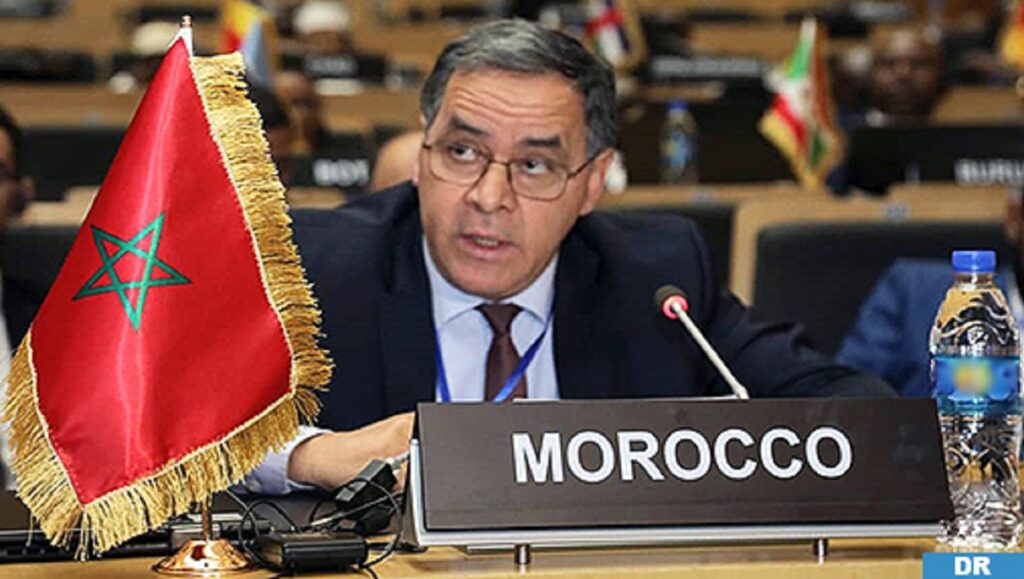
Morocco’s mediation role gains momentum
Arrouchi also praised the African Union’s ongoing efforts to stabilize the region, emphasizing the continental body’s commitment to a political resolution in Libya. He pointed to recent talks in Tripoli and Zenten that culminated in a January 2026 agreement between representatives of the Government of National Unity and Libya’s eastern administration.
The ambassador stressed that Morocco’s mediation efforts align with international legality and the principles outlined in both the Skhirat Agreement and the Bouznika understandings. These initiatives, he noted, aim to strengthen dialogue while rejecting military escalation as a viable path forward.
Diplomatic consistency in a fluid landscape
By reiterating its support for Libya’s political process, Morocco is positioning itself as a key player in shaping the country’s future. The Kingdom has consistently advocated for inclusive negotiations, positioning the Skhirat framework as the cornerstone of Libya’s recovery.
You may also like
-
Mali’s 20-million-euro russian drone: a strategic misstep in asymmetric warfare
-
Algeria powers up Chad with 40mw energy plant to ease electricity shortages
-
Morocco reaffirms backing for Libya’s political process
-
Gabon and EU forge stronger partnership beyond development aid
-
Mali’s high-stakes bounty program raises concerns over counter-terrorism strategy